Israel’s Security Cabinet Reportedly Orders Military to Prepare for Possible Iran Strike
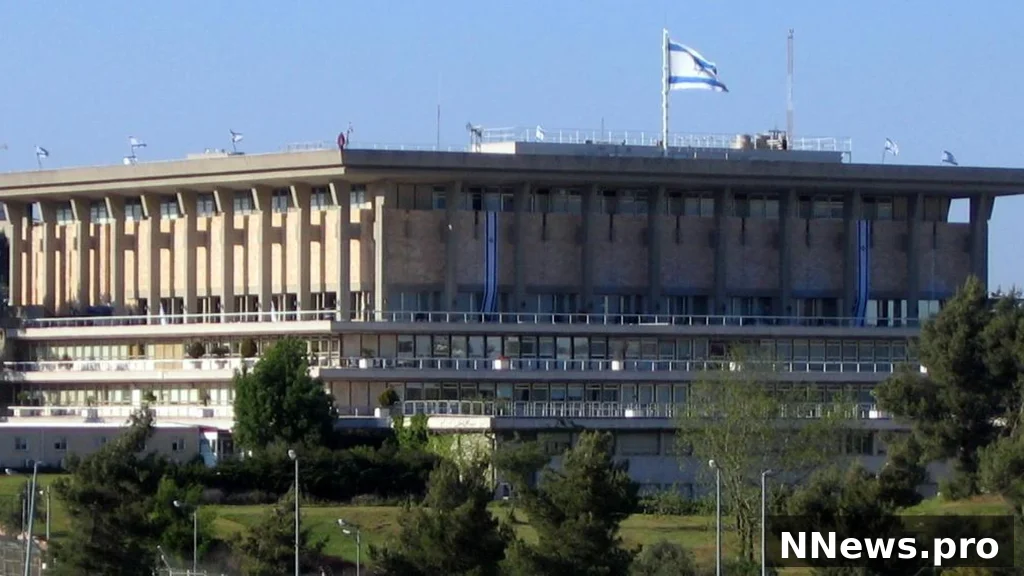
Israel’s security cabinet has reportedly ordered the military to step up preparations for a possible attack on Iran, Israeli media reported on Wednesday evening, raising fears of a new escalation in the Middle East during Israel’s political transition.
Public broadcaster KAN, which first reported the directives, said they “could lead it to carry out activities that could trigger a war.” No strike has been ordered, and neither the prime minister’s office nor the Israel Defense Forces has officially confirmed an imminent attack.
The reported order came from a cabinet chaired by caretaker Prime Minister Benjamin Netanyahu, who continues to lead the government after his coalition lost its parliamentary majority in the October 27 elections. The security cabinet last met on October 5, and KAN reported it will convene on Sunday for the first time since then.
Opposition leader warns against military moves
The directives became public after Gadi Eisenkot, the opposition leader tasked by President Isaac Herzog with forming Israel’s next government, wrote to Netanyahu urging him not to deploy the military “without a direct and immediate threat” until a new government is in place.
Eisenkot’s letter called on Netanyahu to show restraint and avoid unnecessary military operations during the transition. Netanyahu’s office dismissed the criticism, describing the letter as an attempt to introduce political considerations into matters of national security.
Senior security officials told KAN that the army was keeping up its preparations for a possible renewal of the campaign against Iran in line with decisions by the political leadership. Israel’s Channel 12 reported on Tuesday that military chief of staff Eyal Zamir had again opposed unspecified action that Netanyahu wanted to take against Iran.
Opposition circles fear Netanyahu could launch a military strike on Iran to place the country under a state of emergency, potentially paving the way for a unity government, according to reports in Israeli media.
Iran warns US bases in Europe would be targets
Tehran answered the reports within hours by widening the map of what it says it would strike if attacked again.
Mohsen Rezaei, secretary of Iran’s Supreme National Security Council, said in a social media post that if the United States launches another war against Iran, “every military base involved in the aggression, from West Asia to Europe, will be a legitimate target for Iran’s lethal strikes.” He told Al Mayadeen television that Iran may even target American military bases in European countries if US aircraft take off from them to bomb Iran.
Iran’s parliament speaker, Mohammad Bagher Ghalibaf, told Al Jazeera in an interview published on Wednesday that the Strait of Hormuz will “never return” to its status before the US-Israel war on Iran, and that “the ball is now in the American court.”
The head of Iran’s Islamic Revolutionary Guard Corps, Ahmad Vahidi, said the country’s missile development programme would continue despite threats and sanctions. Tehran also rejected a US proposal to transfer its stockpile of 60 percent enriched uranium to a third country. Brent crude rose 1.39 percent to $92.76 after the reports.
Background: a war declared over, but tensions remain
The reports come just days after President Donald Trump said the Iran war is effectively over, following a meeting with Qatar’s prime minister. Secretary of State Marco Rubio said on November 10 that there was “no need for major combat operations” because the economic campaign against Iran was working.
Israel and Iran have fought two rounds of direct conflict since June 2025, with the latest war beginning on February 28, 2026. The fighting was followed by intense diplomatic efforts, including Qatar-led talks, aimed at reaching a lasting settlement.
Related Articles


The new reports underscore how fragile that calm remains. Preparation is not the same as an order to strike, and no date, target or timeline has been made public. But the combination of a caretaker government in Jerusalem, a military on heightened readiness and a defiant Tehran has put the region on edge once again.
Why this matters
A renewed Israeli strike on Iran would carry immediate consequences far beyond the two countries. Oil prices already moved higher on the reports, adding to pressure from hotter-than-expected October inflation that has pushed US interest-rate expectations up. Iran’s threat to hit American bases as far away as Europe would put US forces and allies across the region at risk.
For Americans, the stakes are direct: the United States fought alongside Israel in the February war, and any new round of fighting could draw in US forces again, just as Washington is trying to wind the conflict down through diplomacy.
Latest developments
The security cabinet is expected to meet on Sunday, its first session since October 5. Eisenkot is continuing efforts to form a new government, while Netanyahu remains in office as caretaker prime minister under Israeli law, which allows a caretaker government to approve major military operations through the security cabinet.
No official confirmation of the reported directives has come from the prime minister’s office or the military. What happens at Sunday’s meeting, and whether any preparations turn into action, will be the next signal to watch.
Frequently asked questions
Has Israel ordered a strike on Iran?
No. According to KAN, the security cabinet ordered the military to step up preparations for a possible attack. No strike has been ordered, and no date, target or timeline has been made public.
Who reported the security cabinet’s order?
Israeli public broadcaster KAN first reported the directives on Wednesday evening, November 11. The report has since been carried by Al Jazeera, Reuters and the Times of Israel.
Why is the timing politically sensitive?
Netanyahu is governing as a caretaker prime minister after his coalition lost its parliamentary majority in the October 27 elections. Opposition leader Gadi Eisenkot, who has been asked to form the next government, has urged Netanyahu not to take military action without a direct and immediate threat.
What has Iran said in response?
Iran’s security chief Mohsen Rezaei warned that every US base involved in any new attack, “from West Asia to Europe,” would be a legitimate target. Parliament speaker Mohammad Bagher Ghalibaf said the Strait of Hormuz will “never return” to its pre-war status.
The coming days will show whether the reported preparations are a pressure tactic, a precaution, or the first step toward another round of war. Sunday’s security cabinet meeting is the next moment that matters.
Sources:
- The Insight International: https://theinsightinternational.com/israeli-security-cabinet-ordered-army-to-ready-for-possible-iran-strike-kan-reports/
- Bytes Europe (Al Jazeera report): https://www.byteseu.com/2515817/
- Trends MENA: https://trendsmena.com/iran-warns-of-wider-retaliation-as-israel-prepares-possible-strikes/
- Azernews: https://www.azernews.az/region/267270.html