OpenAI Turns ChatGPT Into a Storefront as Businesses Launch Branded AI Agents
OpenAI has launched “Businesses in ChatGPT,” a beta program that lets companies claim a profile inside the chatbot, keep their product information up to date, and — for eligible businesses in the United States — deploy a branded AI agent that talks to customers on the company’s behalf. The move turns ChatGPT, which OpenAI says reaches 1.2 billion people each week, into a storefront and customer-service channel as well as a search and answer engine.
The launch, announced on November 10, 2026, is OpenAI’s biggest step yet toward commerce inside ChatGPT. Until now, businesses could only appear in ChatGPT’s answers as the model described them. Now they can manage what the chatbot says about them — and, in some cases, answer customers directly.
What OpenAI launched
The program has two connected parts. The first is Business Hub, a portal where a company can claim its organization in ChatGPT and, once verified, update key details and add self-service product feeds with pricing and availability. Any eligible business located where ChatGPT is available can claim a profile, according to OpenAI, and Shopify merchants can connect their store from Business Hub or from the Shopify admin. Eligible products from Shopify merchants are already integrated into ChatGPT through Shopify Catalog.
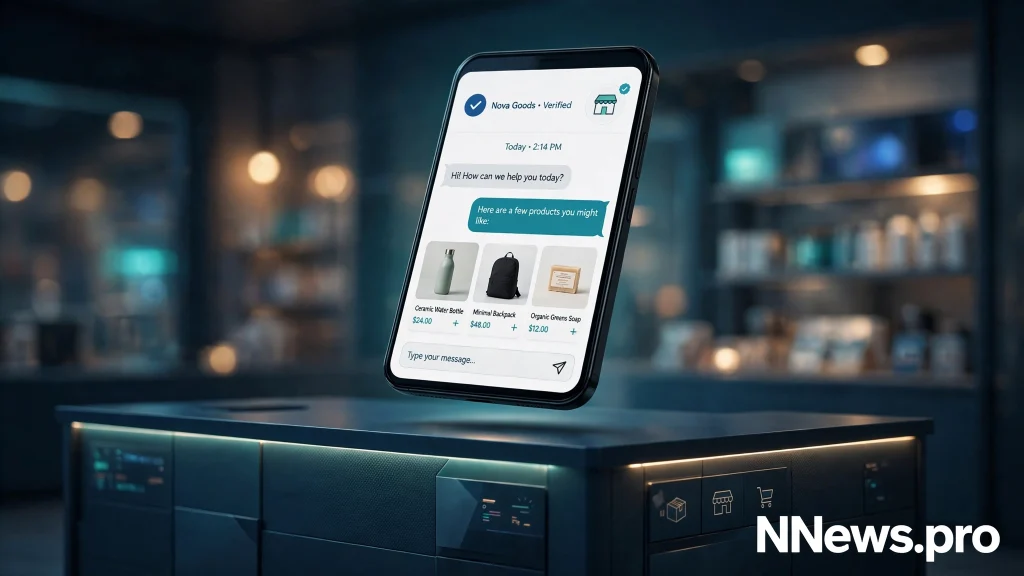
The second part is Business Agents: branded chat assistants that eligible ecommerce and online service businesses in the United States can build, test and launch inside ChatGPT. When a business appears in one of ChatGPT’s responses, a user can click through to its profile and, where an agent is available, start a separate conversation with the business to ask about products, compare options or get help choosing.
How Business Hub works
Business Hub also gives companies data on how they show up in ChatGPT. It provides aggregated insights into mentions — how often ChatGPT refers to a business — and website clicks, along with “discovery topics,” the common themes in conversations where a company’s website is cited. OpenAI says the insights are designed to protect user privacy: it does not share users’ conversations or Business Agent chats with businesses, and aggregated data is only shown once there are enough interactions to meet its thresholds.
Verification is a core part of the system. Businesses must prove they own the organization or are authorized to represent it before they can manage a profile, and OpenAI reviews each category and use case before an agent can be published. Claiming a profile does not guarantee a business will appear more often in answers or sell more — OpenAI says ChatGPT’s independent recommendations and comparisons remain separate from the profiles businesses manage.
What Business Agents can — and cannot — do
A Business Agent answers from the information the business itself supplies, explaining products, comparing options and pointing customers to the company’s website. The conversation is clearly labeled, separate from the customer’s original ChatGPT conversation and distinct from ChatGPT’s independent answers — a line OpenAI draws deliberately, since the agent speaks for the brand rather than as a neutral adviser.
There are limits. The agents cannot complete a purchase, take a booking or check an order, according to reporting on OpenAI’s launch materials, so a sale still ends on the business’s own website. Businesses can also pay to promote an agent: OpenAI says a company can sponsor its Business Agent and use it as the destination for ChatGPT Ads, with sponsored placements clearly labeled and kept separate from ChatGPT’s responses. The beta is free for now, according to B2B Daily’s report of the announcement, which quoted OpenAI’s vice president of monetization, Benji Shomair, as saying the program is designed to help businesses measure its impact.
Why this matters
The launch matters because of where shopping research is moving. People increasingly ask an AI assistant to compare products and recommend options instead of scrolling through lists of links, and the company that controls that conversation controls a growing share of the path to purchase. By giving businesses verified profiles and their own agents, OpenAI is positioning ChatGPT as the place where product discovery, comparison and customer service happen in one conversation — a role Google Search and Amazon have long competed over.
Related Articles



It also deepens OpenAI’s monetization of ChatGPT. The program builds on sponsored-agent tests OpenAI ran in September 2026, and it sits alongside the advertising OpenAI has been rolling out inside the chatbot. The stakes are high across the AI industry: Nvidia, the world’s most valuable AI chipmaker, is itself in turmoil this week as its board weighs the future of chief executive Jensen Huang. For brands, the trade-off is clear: more control over how they appear to more than a billion weekly users, in exchange for operating inside a platform whose rules OpenAI sets.
What happens next
OpenAI says the announcement is only an early step. Over time, it plans to expand Businesses in ChatGPT and Business Agents to more markets and business categories, and to build tools for organizations with more complex needs. The launch also comes as rival AI labs race to commercialize their own technology — Anthropic, for example, is preparing a public listing. For now, the agent side remains limited to eligible US ecommerce and online service businesses, and each agent must pass OpenAI’s review before it goes live.
For American shoppers, the change will be gradual but visible: more ChatGPT answers will carry a verified business profile, and more of them will offer a chance to keep talking — this time, with the brand itself.
Frequently Asked Questions
What is Businesses in ChatGPT?
Businesses in ChatGPT is OpenAI’s beta program, launched November 10, 2026, that lets companies claim a verified profile inside ChatGPT, manage their business information and product feeds, and see aggregated data on how people discover them in the chatbot.
What is a ChatGPT Business Agent?
A Business Agent is a branded AI assistant that an eligible US ecommerce or online service business can publish inside ChatGPT. When the business appears in a ChatGPT response, users can open its profile and start a separate, clearly labeled conversation with the agent to ask about products and services.
Can a Business Agent sell me something directly?
No. The agents answer questions and link back to the business’s website, but they cannot complete a purchase, take a booking or check an order. Purchases still happen on the brand’s own site.
Does claiming a business profile guarantee more visibility in ChatGPT?
No. OpenAI says claiming a profile does not guarantee higher placement or more sales, and ChatGPT’s independent recommendations remain separate from the profiles businesses manage.
Sources
- OpenAI, “Introducing Businesses in ChatGPT” — https://openai.com/index/introducing-businesses-chatgpt
- PPC Land, “Businesses gain ChatGPT click and mention counts in OpenAI’s Business Hub” — https://ppc.land/businesses-gain-chatgpt-click-and-mention-counts-in-openais-business-hub/
- ContentGrip, “ChatGPT Business Hub gives brands new visibility data” — https://www.contentgrip.com/openai-chatgpt-business-hub-agents/
- B2B Daily, “OpenAI Lets Businesses Launch Branded AI Agents in ChatGPT” — https://b2bdaily.com/it/openai-lets-businesses-launch-branded-ai-agents-in-chatgpt/
- Cogny, “ChatGPT Business Hub Is Live: Claim Your Business in ChatGPT (2026)” — https://cogny.com/blog/chatgpt-business-hub-claim-your-business