Nigeria Clears All 62 Ebola Contacts With No Secondary Transmission, Health Agency Says
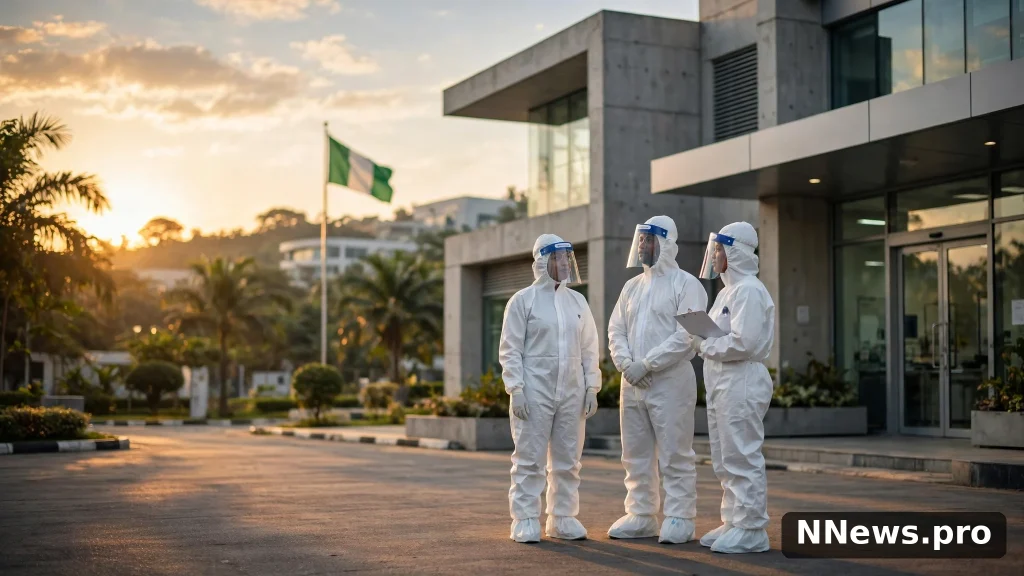
Nigeria has cleared all 62 people who came into contact with the country’s imported Ebola case, with none of them falling ill, the Nigeria Centre for Disease Control and Prevention (NCDC) said on Friday, November 13. The announcement marks a major milestone in the country’s response to its first Ebola case in more than a decade, although health officials stressed that Nigeria has not yet been formally declared free of the virus.
NCDC Director-General Dr. Jide Idris told reporters in Abuja that the last contact completed the required 21-day monitoring period and was discharged the same day. “The 21-day monitoring period for contacts linked to this index case has been completed with the last contact discharged today,” Idris said. “We are glad to announce that none of the contacts became ill with the disease, meaning no transmission from the index case.”
Thirteen contacts tested negative after developing symptoms
The monitoring period was not without scares. Thirteen of the 62 contacts developed fever or other non-specific symptoms during the three-week follow-up, but laboratory tests confirmed that none of them had contracted the virus.
The agency also investigated seven suspected Ebola cases reported in Adamawa, Rivers, Borno, Lagos and Ekiti states over the past three weeks. All seven tested negative.
The imported case was confirmed in the Federal Capital Territory on October 20, 2026, after health workers at a private hospital in Abuja flagged the patient’s travel history through the NCDC’s event-based surveillance system. The patient, a Swiss woman who had travelled to Uganda before returning to Nigeria, was later medically evacuated to Switzerland on October 26 for further treatment. She has since recovered, tested negative for the virus and been discharged from hospital, the NCDC confirmed.
The strain involved is Bundibugyo virus disease, a form of Ebola.
No formal all-clear yet
Idris was careful to draw a line between the end of contact monitoring and an official end to the outbreak. Under World Health Organization protocols, a country must complete a full 42-day countdown — two consecutive 21-day incubation cycles — from the departure or recovery of the last confirmed patient before an outbreak can formally be declared over.
Until that countdown is complete, Nigeria’s National Emergency Operations Centre remains activated, with its incident management system still operating at Level 3, the highest response level for Ebola. Surveillance is being heightened, Idris said, in view of the continued spread of Ebola in the Democratic Republic of Congo, where the outbreak has passed 11,000 cases and is the deadliest in the country’s history.
The Federal Capital Territory’s rapid response team, which collected samples from the patient and sent them to the National Reference Laboratory for testing, was praised at the briefing. Dr. Adedolapo Fasawe, mandate secretary of the FCT Health Services Secretariat, said members of the response team who had contact with the patient completed their three-week isolation and were present at the briefing in good health.
Why this matters
Nigeria’s handling of the imported case is being watched closely because of what happened the last time Ebola reached the country. In 2014, an imported case in Lagos set off an outbreak that killed eight people before it was contained. This time, rapid detection by a private hospital, fast laboratory confirmation and disciplined contact tracing appear to have stopped the virus from spreading at all.
Related Articles



The result also matters beyond Nigeria. The DRC outbreak continues to drive the regional threat, and health officials across West Africa have been on alert for imported cases. Kenya recently discharged its last Ebola patient and began its own 42-day countdown to Ebola-free status, another sign that the region’s surveillance systems are catching cases early. A clean outcome in Nigeria shows that early detection and a functioning surveillance system can keep a single imported case from becoming an outbreak — a lesson that applies well beyond one country.
With increased movement expected during the December festive season, Idris urged Nigerians and international travellers to seek medical attention promptly when unwell and to give accurate travel and exposure histories to health workers. He also advised the public against assuming that every fever is malaria, particularly among people with recent travel history or possible exposure to infectious diseases. Organisers of religious gatherings, political rallies, concerts, festivals and sporting events were asked to make adequate arrangements for sanitation, safe drinking water and medical assistance.
Latest developments
- All 62 contacts have completed 21-day monitoring; none developed Ebola.
- The index patient has recovered in Switzerland and been discharged.
- Seven suspected cases in five states were investigated; all tested negative.
- The 42-day WHO countdown for a formal end-of-outbreak declaration is still running.
- The NCDC’s Emergency Operations Centre remains activated at Level 3, with surveillance heightened amid the ongoing DRC outbreak.
Frequently asked questions
Does this mean Nigeria is Ebola-free?
No. The NCDC stressed that completing contact monitoring is not the same as a formal declaration. Under WHO rules, a 42-day countdown — two full incubation periods — must pass from the departure or recovery of the last confirmed patient, with no new cases, before an outbreak is officially declared over.
What is Bundibugyo virus disease?
Bundibugyo is one of the species of ebolavirus. It causes Ebola virus disease, with symptoms that can include fever, fatigue, muscle pain, headache, vomiting and diarrhoea. Twenty-one days is the maximum incubation period, so a contact who stays well for that long after their last exposure is considered out of danger.
How was the case detected?
Health workers at a private hospital in Abuja identified the patient’s travel history and raised an alert through the NCDC’s event-based surveillance system. The FCT rapid response team collected samples, which were tested at the National Reference Laboratory.
Is the wider regional outbreak over?
No. Ebola continues to spread in the Democratic Republic of Congo, which remains the centre of the regional outbreak. Nigeria’s health agency said surveillance and preparedness work will continue while that outbreak lasts.
Nigeria’s clean result is a genuine public health success, but officials are treating it as a milestone rather than a finish line. The countdown to a formal declaration is still running, the emergency response remains active, and the virus is still spreading elsewhere in the region. For now, the country’s message is one of cautious relief: the system worked this time, and it must stay ready.
Sources: Radio Nigeria (FRCN) ; Voice of Nigeria ; The Telegraph Nigeria ; Reuters