DRC Ebola Outbreak Passes 11,000 Cases, Deadliest in Congo’s History
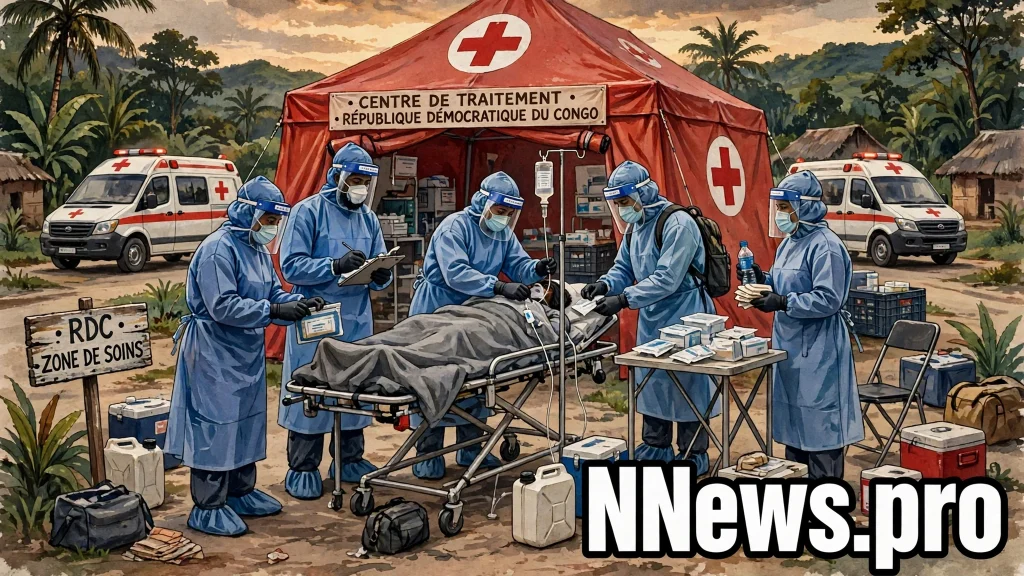
DRC Ebola Outbreak Passes 11,000 Cases, Deadliest in Congo’s History
The Ebola outbreak in the Democratic Republic of Congo has passed 11,000 confirmed cases, making it the deadliest ever recorded in the country. Government data released on Tuesday put the total at 11,042 confirmed cases and 5,387 deaths, according to the Associated Press. It is the second-largest Ebola outbreak ever recorded, behind only the 2014–2016 epidemic in West Africa.
Main Report
The figures were released on Tuesday, November 10, 2026, in the outbreak’s sixth month. The WHO bulletin, published November 6 with data as of November 3, reported 10,668 confirmed cases, 5,198 deaths, a fatality ratio of 48.7 percent, and 2,881 recoveries. The gap reflects the different reporting dates.
The outbreak has reached 67 health zones across eight provinces, with transmission still active in 51. In the three weeks to November 3, the WHO recorded 1,463 new cases. Ituri and Nord Kivu remain the epicentre: Ituri has 7,485 cases and 3,532 deaths; Nord Kivu, 2,593 cases and 1,422 deaths, a provincial fatality ratio of 54.8 percent.
Background
Declared on May 15, 2026, the outbreak is caused by the Bundibugyo virus, an Ebola virus species. Cases have been reported in Congo, France, Kenya, Nigeria, and Uganda, though none new in Kenya or Nigeria since October 23.
Of the 512 deaths reported since October 21, 335 occurred in communities and 177 in treatment centres. There is no approved vaccine and no specific treatment for Bundibugyo virus disease. On November 5, the UK medically evacuated one confirmed case, a health worker, from Congo to London.
Why This Matters
The outbreak has claimed more lives than any previous Ebola outbreak in Congo, and its spread across eight provinces shows how hard it has been to contain. A fatality ratio near 50 percent means roughly one in two confirmed patients has died.
Infectious diseases do not respect borders: the United States faces its own health pressures, including a sharp rise in measles cases, and regulators recently issued the FDA’s vision-loss warning for GLP-1 medicines.
Related Articles



Latest Developments
The WHO rates the risk very high inside Congo, high for neighbouring countries, and low globally, and advises against travel or trade restrictions. Kenya discharged its final Ebola patient on November 11, Kenyan health authorities said, with all seven recorded cases in the country recovered — starting a 42-day countdown toward Kenya being declared Ebola-free. Two vaccine candidates are in clinical evaluation: ChAdOx1 BDBV and Moderna’s mRNA-1469. Trial results are expected in early 2027, but neither is approved for the current response.
Frequently Asked Questions
How many cases and deaths has the outbreak caused?
Government data released November 10 put the total at 11,042 cases, 5,387 deaths. The WHO bulletin, with data to November 3, reported 10,668 cases and 5,198 deaths — different dates explain the gap.
Which areas are worst affected?
Ituri and Nord Kivu in eastern Congo: Ituri has 7,485 cases and 3,532 deaths; Nord Kivu has 2,593 cases and 1,422 deaths. Transmission remains active in 51 health zones.
Is there a vaccine or treatment?
No — there is no approved vaccine or specific treatment for Bundibugyo virus disease. Two vaccine candidates are in clinical evaluation, with results expected in early 2027.
Has it spread beyond Congo?
Cases have been reported in Congo, France, Kenya, Nigeria, and Uganda, and the UK evacuated one confirmed case, a health worker, to London on November 5.
Final Paragraph
Six months after it was declared, the Ebola outbreak in Congo is the deadliest in the country’s history, with more than 11,000 cases and nearly 5,400 deaths. Health workers in Ituri and Nord Kivu keep fighting with available tools, while the world waits for vaccine trials that may offer protection in future.
Sources:
- Associated Press — https://apnews.com
- World Health Organization — https://www.who.int/emergencies/disease-outbreak-news/item/2026-DON625