Lutnick Agrees to Testify Before Senate on Nvidia Chip Exports to China as Huang Faces December Hearings
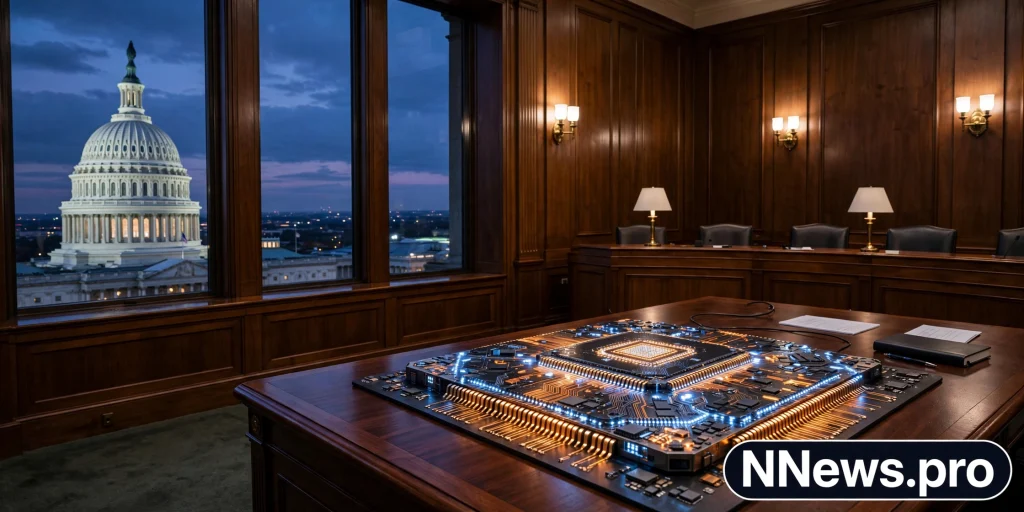
Commerce Secretary Howard Lutnick has agreed to appear voluntarily before the Senate Banking Committee on December 10 to answer questions about Nvidia chip exports to China, as congressional scrutiny of the Commerce Department’s oversight of advanced semiconductors widens on both sides of the aisle.
The agreement came after committee chairman Tim Scott, a South Carolina Republican, sent letters on Thursday evening asking Lutnick and former Nvidia chief executive Jensen Huang to testify at separate public hearings. Huang has been asked to appear on December 3. Lutnick’s spokesperson, Kristen Eichamer, said the secretary had “proactively agreed to appear voluntarily before the Banking Committee to address their questions,” according to CNN and NBC News.
Scott’s Letters and the Subpoena Warning
Scott’s letter to Lutnick cited the Commerce Department’s central role in administering and enforcing export controls. “Given the Department of Commerce’s central role in issuing and enforcing export control regulations, your testimony before the Committee will be essential to our oversight of these efforts,” Scott wrote.
In a post on X, Scott said: “Recent reports raise serious concerns about our national security and the protection of sensitive U.S. technology. I am requesting that NVIDIA CEO Jensen Huang and Commerce Secretary Howard Lutnick testify before the Senate Banking Committee. The American people deserve answers.”
Scott also warned Huang that the committee would consider compulsory measures if he declined to appear voluntarily. “Should you fail to appear before the Committee on a voluntary basis, the Committee is prepared to use all tools at our disposal, including subpoenas, to conduct this legitimate and necessary oversight,” he wrote.
The Megaspeed Investigation at the Center of the Inquiry
The hearings will focus on Megaspeed International, a Singapore-based Nvidia customer at the center of the controversy. U.S. officials suspect the company of diverting advanced Nvidia artificial intelligence chips to China in violation of American export restrictions, and of links to Chinese intelligence. Those links are allegations reported by U.S. officials, not established findings, and the underlying investigation remains unresolved.
The Commerce Department’s Bureau of Industry and Security opened an investigation in 2024 into whether Nvidia chips supplied to Megaspeed were being diverted to China. The investigation was later transferred to the Department of Justice, according to reporting by The New York Times. Megaspeed purchased more than $4 billion in advanced Nvidia AI chips over the past two years, according to multiple reports.
Attention has also fallen on the department’s decision not to place Megaspeed on its Entity List, which restricts listed companies’ access to American technology. According to CBS News, the Commerce Department has not added any company to the Entity List since October 2025. Senators are expected to ask why the company was never listed despite the open investigation.
A Scandal That Has Spread Across Washington
The inquiry grew out of the scandal that ended Huang’s 33-year run as Nvidia’s chief executive. Jensen Huang resigned as Nvidia’s chief executive on Thursday after reports of multiple extramarital affairs, including one with Alice Huang, an executive at Megaspeed whom U.S. security agencies suspect may have been recruited by Chinese intelligence. President Donald Trump called Huang before the resignation and urged him to fight for his job, according to two people briefed on the conversation.
Tensions inside the administration had already surfaced before the resignation. Treasury Secretary Scott Bessent publicly blamed Lutnick’s Commerce Department over Nvidia chip exports to China, after confronting Lutnick over the failure to add Megaspeed to the Entity List, CNN reported. Senator Jim Banks was among the most pointed critics in Congress, saying on Fox News that Lutnick “appears to have used loopholes to allow some of these chip sales to occur.”
The pressure is bipartisan. Senator Elizabeth Warren, who is set to chair the Senate Banking Committee in January, called on Lutnick and Under Secretary Jeffrey Kessler to explain why they have not closed export control loopholes. Warren and incoming Senate Foreign Relations Chair Chris Coons also demanded in a joint letter that all documents relating to Nvidia chip exports to China be preserved. Separately, Senator Ron Wyden and Representative Richard Neal wrote to Lutnick opening an investigation into the approval and tax treatment of exports of advanced Nvidia chips to Chinese companies.
Related Articles



House Interviews and the Scale of the Chip Question
The Senate hearings are only one part of the congressional response. The chairs of three House committees want Huang and Nvidia general counsel Tim Teter to sit for closed-door transcribed interviews on December 1 and 2, and House Foreign Affairs Chair Brian Mast said Huang had agreed to brief lawmakers before Thanksgiving, with the timing still being negotiated.
Meanwhile, the scale of the diversion question grew this week. A Reuters forensic analysis found that six Chinese frontier AI models, including systems from DeepSeek, Moonshot AI and MiniMax, were initialized on Nvidia Blackwell systems that U.S. export controls bar from China. A Reuters tally of Chinese documents put more than $3 billion in Chinese AI data center projects behind restricted Nvidia chips.
Why This Matters
The December hearings will test whether the export control system built to slow China’s progress in artificial intelligence kept pace with the rapid expansion of Nvidia’s chip sales abroad. Lawmakers from both parties are asking the same basic question: how did advanced American chips end up in Chinese AI projects, and who in government knew what, and when?
For the Trump administration, the hearings put a cabinet secretary in the witness chair over a scandal that has already cost one of America’s most prominent chief executives his job. For Nvidia, they extend a crisis that has already sent the company’s stock to a sixth straight weekly loss. And for the chip industry more broadly, the outcome could shape how tightly Washington polices the flow of advanced semiconductors to China in the years ahead.
Latest Developments
Lutnick’s agreement to testify was confirmed on Thursday, and arrangements for the December 10 hearing were still being worked out, according to a source familiar with the matter. Huang’s December 3 appearance has not been formally confirmed, though House Foreign Affairs Chair Brian Mast said Huang had agreed to brief lawmakers before Thanksgiving. The Justice Department investigation into Megaspeed remains open, and neither the Commerce Department nor Nvidia has said whether Megaspeed will be added to the Entity List.
Frequently Asked Questions
When will Howard Lutnick testify before the Senate?
Lutnick has agreed to appear voluntarily before the Senate Banking Committee on December 10, 2026, to answer questions about the Commerce Department’s oversight of Nvidia chip exports to China. His spokesperson said he “proactively agreed” to appear.
When is Jensen Huang scheduled to testify?
Senate Banking Chair Tim Scott asked Huang to appear at a public hearing on December 3, 2026, and warned the committee could use subpoenas if he does not appear voluntarily. Separately, Huang is expected to brief House lawmakers before Thanksgiving and sit for closed-door interviews on December 1 and 2.
What is Megaspeed and why is it under investigation?
Megaspeed International is a Singapore-based Nvidia customer that bought more than $4 billion in advanced Nvidia AI chips over the past two years. U.S. officials suspect it of diverting chips to China and of links to Chinese intelligence. The Commerce Department opened an investigation in 2024, which was later transferred to the Justice Department. The allegations have not been established as findings.
Why has Megaspeed not been placed on the Entity List?
That is one of the central questions senators are expected to ask. The Entity List restricts a company’s access to American technology, but the Commerce Department has not added any company to the list since October 2025, according to CBS News. Treasury Secretary Scott Bessent confronted Lutnick over the failure to list Megaspeed.
The December hearings will be among the most closely watched of the year in Washington, with lawmakers pressing Lutnick and Huang on whether export control enforcement kept pace with the rapid expansion of Nvidia’s chip sales abroad — and what happens next.
Sources: The Hindu Business Line (CNN) | TechEchelon (NBC News) | Stocktwits (CNBC) | Kilambi News (Reuters)