WHO Launches ‘Together for Science and Health’ to Rebuild Trust in Science
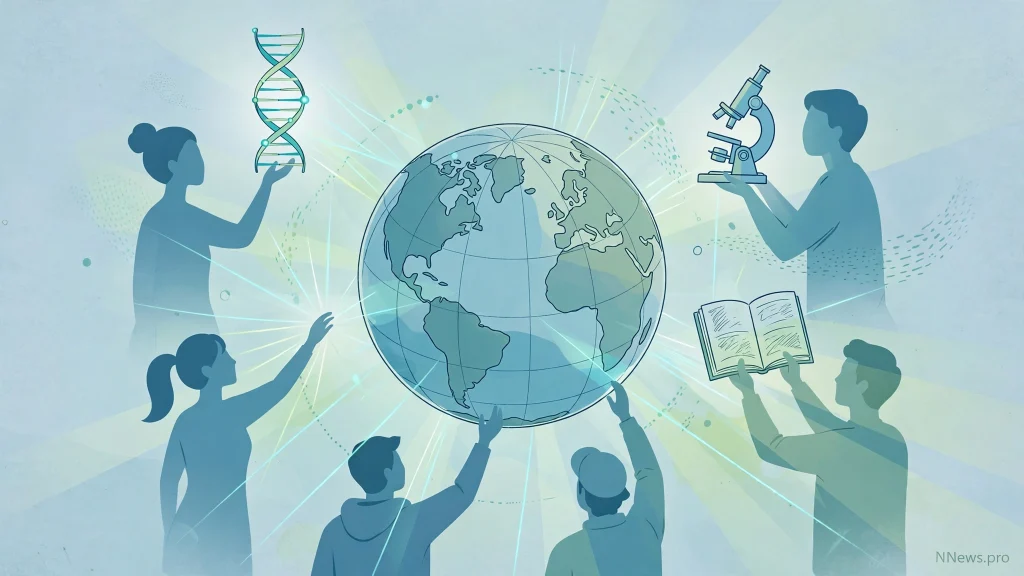
The World Health Organization launches a new global movement on Tuesday, November 10, aimed at rebuilding public trust in science and giving communities a direct voice in the research that shapes their health. Called Together for Science and Health, the initiative will be unveiled through in-person events in Geneva and Paris and online sessions around the world, on World Science Day for Peace and Development.
The launch is the centrepiece of a year-long WHO campaign built on the 2026 World Health Day theme, “Together for health. Stand with science.” It comes at a moment when misleading health information is spreading fast online and confidence in scientific advice is under strain in many countries, making it harder for people to tell reliable evidence from rumor — and for sound research to reach the communities it is meant to serve.
A movement built on three pillars
Together for Science and Health brings together scientists, policy-makers, health professionals, communicators, civil society, young people and communities around a shared commitment to science as the foundation for better health. It is organised around three interconnected pillars: science and society, science and policy, and science communication.
The first pillar aims to bring scientists and communities closer together, so research reflects people’s needs and experiences. The second helps decision-makers use reliable evidence to shape practical, fair and effective health policies. The third focuses on making science easier to understand and discuss, listening to people’s questions and concerns, and responding constructively to misinformation and disinformation.
The movement is underpinned by the RISES values: Respect, Integrity, Scientific Rigor, Ethical Responsibility and Social Inclusion.
“Science is not just about making discoveries. It is about making a difference in people’s lives and ensuring that everyone has the opportunity to benefit,” said Dr Sylvie Briand, WHO Chief Scientist and Assistant Director-General for Better Health Systems, Access and Data.
How the launch day unfolds
The main global launch event runs from 1:30 p.m. to 5:30 p.m. UTC on Tuesday, with most events livestreamed. Regional sessions span the day, including webinars for Asia and for Africa and the Middle East hosted by the Consortium of Universities for Global Health, and a South-East Asia regional science dialogue from 1:30 p.m. to 2:50 p.m. IST featuring speakers on turning research into policy and reimagining the future of science.
Related Articles


The launch follows an information and engagement session held on October 7, when the WHO Civil Society Commission and the WHO Chief Scientist’s Office brought together around 100 representatives of civil society and other non-State organisations to discuss how communities can strengthen trust in science and help shape the questions research seeks to answer.
An open invitation to join
WHO announced the movement on October 13 with a global call inviting organisations and institutions to affiliate. Groups wishing to join are asked to endorse a Declaration of Commitment, complete an affiliation form, and set out how they can contribute to the movement’s three pillars. By affiliating, organisations can contribute expertise, networks and practical solutions to strengthen trust in science and improve health outcomes through collaboration across sectors.
The movement is deliberately open-ended. WHO says it will not end on November 10: affiliated organisations are expected to keep working together, sharing approaches that work and encouraging practical collaboration around common priorities, from community engagement in research to clearer public communication of evidence.
The stakes, WHO argues, are high. Antibiotics, vaccines, better nutrition and sanitation, antiretroviral treatment and cancer screening have transformed human health — but none of that progress can be taken for granted if people cannot trust the evidence behind it, understand what it means for their lives, or help shape the science that affects them.