Supreme Court to Weigh Legality of Trump’s Asylum Ban at the Southern Border
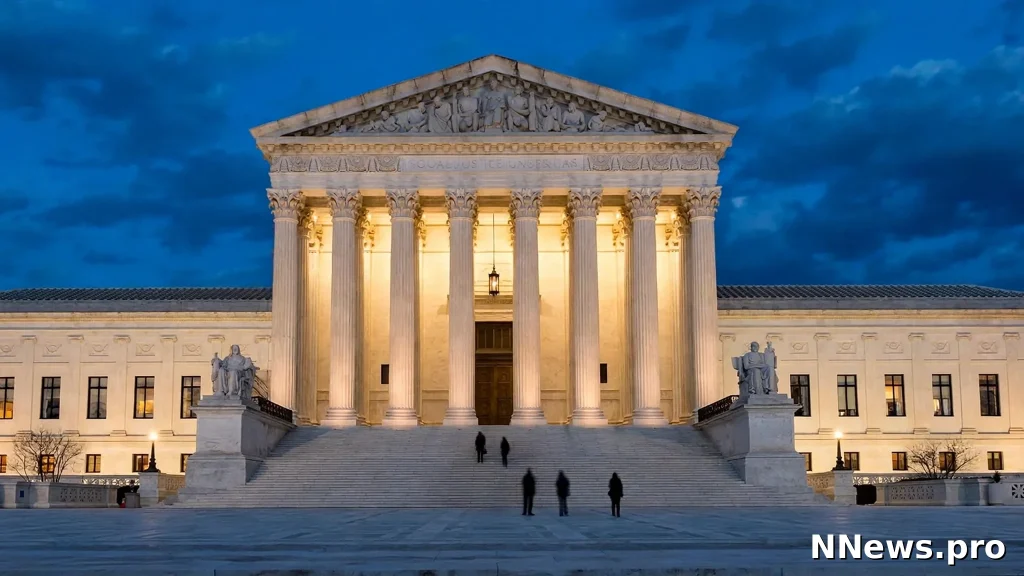
The U.S. Supreme Court agreed on Friday to decide whether President Donald Trump had the legal authority to shut down asylum access at the southern border, setting up a landmark ruling on the limits of presidential power over immigration.
The justices took up the Trump administration’s appeal of a lower court ruling that found the president exceeded his authority when he barred migrants caught entering the country illegally from applying for asylum. The case, Mullin v. Refugee and Immigrant Center for Education and Legal Services (RAICES), is expected to be argued in spring 2027, with a decision due by the end of June.
The ruling will determine the fate of one of the signature policies of Trump’s second term — a Day One proclamation that has effectively suspended asylum processing along the U.S.-Mexico border for nearly two years.
What the policy does
Trump announced the asylum restrictions just hours into his second term on January 20, 2025, in Proclamation 10888, titled “Guaranteeing the States Protection Against Invasion.” The order declared an “invasion” at the southern border and suspended entry for people crossing illegally, largely barring them from pursuing asylum claims.
The policy goes further than similar restrictions imposed by former President Joe Biden, who had limited asylum eligibility at the southern border in an effort to reduce illegal crossings. Under Trump’s order, migrants caught crossing illegally are barred from seeking asylum, and the ban also applies to migrants who arrive at official border crossings but lack certain medical or criminal history information — a requirement advocates say is often impossible for people fleeing violence to meet.
The proclamation also set up fast-track deportation procedures, and it remains in effect until the president determines that the “invasion at the southern border” has ended. The administration has credited the policy with helping reduce border crossings sharply.
Immigrant rights groups challenged the policy in a class-action lawsuit, arguing that would-be asylum seekers were denied a “credible fear” interview by U.S. immigration officials before facing deportation. Those interviews are meant to determine whether migrants seeking asylum would face persecution in their home country based on race, religion, nationality, membership in a particular social group, or political opinion.
How the case reached the Supreme Court
A federal judge in Washington, D.C., ruled in favor of the immigrant rights groups in July 2025. The U.S. Court of Appeals for the District of Columbia Circuit upheld that ruling in April 2026, with a divided three-judge panel finding that the proclamation and related guidance exceeded the president’s authority — but the appeals court largely blocked its own decision from taking effect so the administration could appeal to the Supreme Court. The asylum ban has therefore remained in place throughout the litigation.
The Justice Department filed its petition for certiorari in late August 2026, with Solicitor General D. John Sauer arguing that the president has broad authority to bar entry under federal immigration law. The Supreme Court granted the petition on Friday, limiting its review to two questions: whether the proclamation is lawful, and whether federal law bars classwide relief for the challengers.
The case was brought by the American Civil Liberties Union, the National Immigrant Justice Center, the Center for Gender and Refugee Studies, the Texas Civil Rights Project, and the ACLU’s affiliates in the District of Columbia and Texas, on behalf of a nationwide class of people barred from seeking protection, as well as three immigrant legal service providers: RAICES, Las Americas Immigrant Advocacy Center, and the Florence Immigrant and Refugee Rights Project.
The legal clash at the heart of the case
The dispute turns on a conflict between two parts of federal immigration law. The administration invokes Section 212(f) of the Immigration and Nationality Act, which gives the president authority to suspend the entry of any class of noncitizens when he finds their entry would be detrimental to the interests of the United States.
The challengers point to a different provision, Section 1158, which states that any person physically present in the United States may apply for asylum. They argue that Congress guaranteed that opportunity by law, and that a president cannot unilaterally override those protections by declaring an emergency. The lower courts agreed, ruling that the administration’s action was contrary to laws Congress enacted to ensure people receive an opportunity to have their asylum claims heard.
Related Articles

The administration counters that the asylum statute does not require the government to accept applications it considers futile. In its filing, the Justice Department argued that the decision below “invalidated the President’s main tool for stemming an unprecedented crisis of uncontrolled illegal entry.”
Why this matters
The ruling will shape the future of asylum in the United States, a system built after World War Two around the principle that people fleeing persecution should have their claims heard. The Trump administration has also sought to persuade other nations to join a global campaign to roll back asylum protections, in an effort to reshape that framework.
For migrants, the stakes are immediate: while the case is pending, asylum applications remain suspended at the southern border, although the government must still consider claims for withholding of removal and protection under the Convention Against Torture, according to reporting on the case.
For the presidency, the case tests how far executive power extends over immigration. The Supreme Court, which has a 6-3 conservative majority, has been largely deferential to Trump in his second term in challenges to his immigration policies. In June, the court backed the federal government’s authority to turn away asylum seekers when officials deem border crossings too overburdened to handle additional claims. In September, it let the administration resume deporting migrants to countries other than their own without offering them the chance to show the harms they may face — a policy whose legality the justices are due to hear arguments over on December 9.
Frequently Asked Questions
What is Mullin v. RAICES?
It is the Supreme Court case over President Trump’s January 2025 proclamation suspending asylum access at the southern border. Markwayne Mullin, the Secretary of Homeland Security, is the lead petitioner; RAICES, the Refugee and Immigrant Center for Education and Legal Services, is the lead respondent.
What did the lower courts decide?
A federal judge in Washington, D.C., ruled in July 2025 that the proclamation was unlawful, and the D.C. Circuit upheld that ruling in April 2026, finding the proclamation exceeded the president’s authority. The ban stayed in effect while the administration appealed.
When will the Supreme Court decide the case?
Arguments are expected in spring 2027, with a ruling due by the end of June 2027. Until then, the asylum ban remains in place.
Can migrants still seek any protection at the border?
Yes, in limited form. Even while asylum applications are suspended, the government must still consider claims for withholding of removal and protection under the Convention Against Torture, according to reporting on the case.
The Supreme Court’s decision in Mullin v. RAICES will settle whether a president can suspend asylum at the southern border by proclamation — a question that reaches beyond this administration to the balance of power between the White House and Congress over immigration. For now, the border remains closed to asylum seekers, and the justices will have the final word.
Sources
- Reuters (via 985 The River), “Supreme Court will weigh Trump’s asylum restrictions at US-Mexico border,” November 13, 2026. https://985theriver.com/2026/11/13/supreme-court-will-weigh-trumps-asylum-restrictions-at-us-mexico-border/
- American Civil Liberties Union, “Supreme Court to Hear Challenge to Trump Proclamation Eliminating Asylum,” November 13, 2026. https://www.aclu.org/press-releases/supreme-court-to-hear-challenge-to-trump-proclamation-eliminating-asylum
- U.S. Department of Justice, Reply Brief for the Petitioners, Mullin v. RAICES, No. 26-239. https://www.justice.gov/sites/default/files/2026-10/26-239_mullin_v_raices_cert_reply_final.pdf
- Political.org, “Supreme Court Agrees to Review Trump’s Border Asylum Ban, a Centerpiece of His Immigration Agenda,” November 13, 2026. https://political.org/2026/11/13/supreme-court-agrees-to-review-trumps-border-asylum-ban-a-centerpiece-of-his-immigration-agenda/