Houthi Missile Debris Falls Near Mecca After Saudi Air Defenses Intercept Two Ballistic Missiles
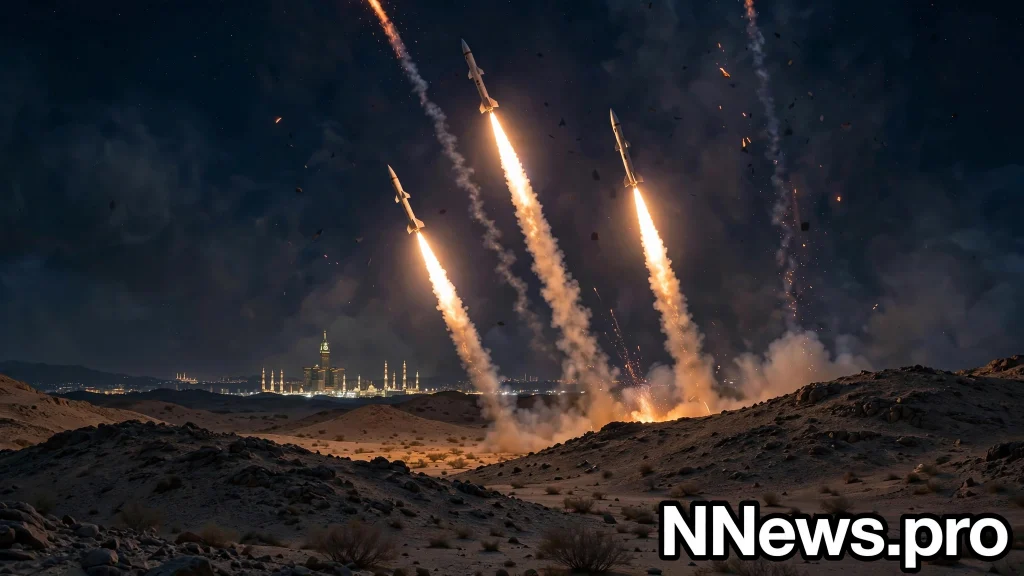
Debris from two ballistic missiles fired by Yemen’s Houthi movement fell in Saudi Arabia’s Mecca region on Wednesday after Saudi air defenses intercepted and destroyed them, Saudi authorities said on Thursday, bringing the escalating Saudi-Houthi conflict to within about 21 kilometers (13 miles) of the Grand Mosque.
Saudi Arabia’s civil defense said the missiles were launched toward the region and were intercepted and destroyed in midair, with fragments falling in several locations, including Sabuhah village. No casualties were reported.
Debris Fell Within 21 Kilometers of the Grand Mosque
Saudi state television identified the debris sites as Sabuhah village, about 35 kilometers (22 miles) northeast of the Grand Mosque in Mecca, and Wadi al-Maghmas, about 21 kilometers east of the mosque. The civil defense statement, issued early on Thursday, accused the Houthis of deliberately endangering civilians.
“This hostile targeting of civilian objects constitutes a flagrant violation of international humanitarian law and reflects the dangerous hostile approach pursued by the Houthi militia,” Saudi Arabia’s civil defense said.
Reports described the incident as the second time in under three weeks that ballistic missile debris has fallen within a short drive of Islam’s holiest site, underscoring how close the fighting has come to Mecca.
A Wider Barrage on Wednesday
The two missiles were part of a broader exchange on Wednesday. Saudi-led coalition spokesperson Turki al-Maliki said air defenses also intercepted and destroyed a drone over the kingdom’s Eastern Province. The coalition said it intercepted five missiles and two drones during the day.
The Mecca incident came just two days after missiles fired toward Riyadh earlier this week were intercepted by Saudi air defenses, in a confrontation that triggered shelter alerts in the Saudi capital. The Houthis have stepped up missile and drone attacks on Saudi territory this year, while Riyadh has carried out airstrikes against Houthi positions in Yemen.
Houthis Deny Targeting the Holy Cities
The Houthis have repeatedly denied Saudi accusations that they target Mecca and Medina, Islam’s two holiest cities, saying their military operations are directed at military and strategic targets elsewhere in Saudi Arabia. They had not commented on the latest incident as of Thursday.
The dispute over intent matters because the Houthis are an Iran-aligned movement, and Saudi Arabia has presented the Mecca debris as evidence that the group is willing to put civilians and holy sites at risk. The Houthis, for their part, have framed their campaign as aimed at Saudi military and economic targets.
Background: A War That Resumed This Year
The Houthis seized Yemen’s capital, Sanaa, in 2014, prompting Saudi Arabia to intervene militarily the following year in support of the internationally recognized government. A United Nations-brokered truce in 2022 largely froze the conflict, but hostilities resumed earlier this year, with the Houthis launching missile and drone attacks on Saudi territory and Riyadh carrying out airstrikes in Yemen.
The fighting has spread well beyond Yemen’s borders. The East-West oil pipeline was hit again near Medina earlier this week, and the latest escalation has threatened the Bab el-Mandeb Strait, a key shipping route linking the Red Sea and the Gulf of Aden.
Related Articles


The attacks have continued even after President Donald Trump declared this week that the war with Iran is effectively over. The Houthis, who are backed by Tehran, have shown no sign of halting their campaign against Saudi Arabia.
Why This Matters
Mecca is the holiest city in Islam, and debris falling within 21 kilometers of the Grand Mosque raises the stakes of a conflict that has already disrupted shipping and rattled oil markets. Millions of Muslims travel to Mecca each year, and any threat to the city carries religious and political weight far beyond the battlefield.
For the United States, the escalation complicates an already fragile picture. Washington has been pressing for an end to the wider Iran conflict while Saudi Arabia, a key American ally, faces near-daily missile and drone threats. The fighting around the Bab el-Mandeb Strait also puts one of the world’s most important shipping lanes at risk.
Latest Developments
Saudi authorities have not said whether they expect further attacks, and the Houthis have not yet responded to the Saudi account of Wednesday’s launches. What happens next is likely to depend on whether the coalition answers with a new round of airstrikes in Yemen and whether the Houthis press ahead with attacks on Saudi cities and infrastructure.
Frequently Asked Questions
Were there any casualties from the falling debris?
No. Saudi authorities reported no casualties or damage from the debris, which fell in Sabuhah village and Wadi al-Maghmas, both outside the city of Mecca itself.
How close did the debris fall to the Grand Mosque?
Saudi state television put the debris sites at about 35 kilometers northeast of the Grand Mosque and about 21 kilometers east of it — roughly 22 miles and 13 miles, respectively.
Did the Houthis claim responsibility for the attack?
The Houthis had not commented on the latest incident as of Thursday. They have previously denied Saudi accusations that they target Mecca and Medina, saying their operations are aimed at military and strategic targets elsewhere in Saudi Arabia.
Is this the first time missile debris has fallen near Mecca?
No. Reports described it as the second such incident in under three weeks. Earlier this week, Saudi air defenses also intercepted missiles fired toward Riyadh.
What to Watch Next
The key questions now are whether the Houthis will acknowledge the launches, whether the Saudi-led coalition will retaliate with strikes in Yemen, and whether the attacks on Saudi territory continue in the coming days. Any further debris near Mecca would add pressure on both sides — and on the United States — to find a way to stop a conflict that keeps edging closer to Islam’s holiest city.