Zelenskyy Says Starshield Speed Cap Is Back, Hampering Ukraine’s Drone Defenses
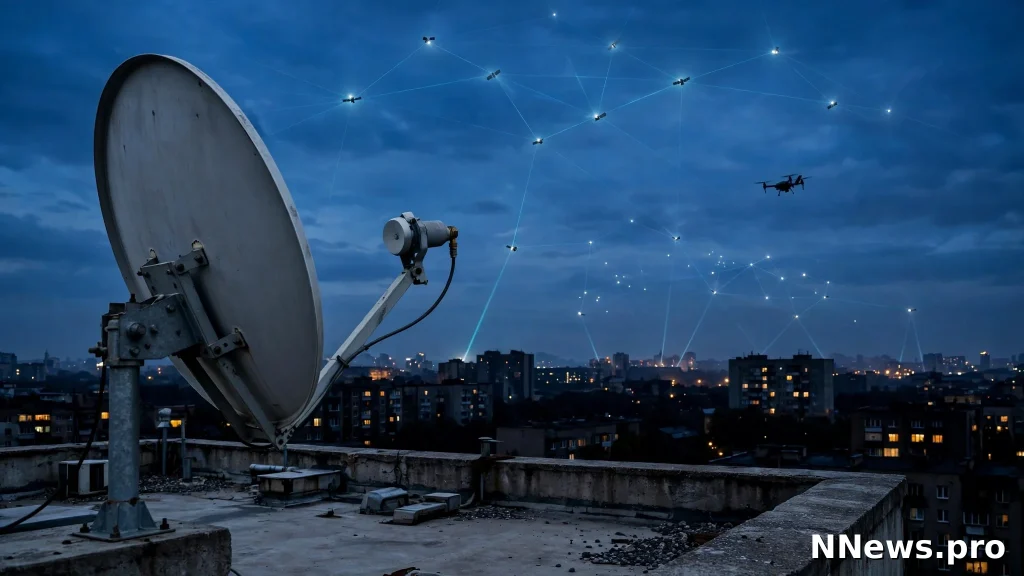
Ukrainian President Volodymyr Zelenskyy said on Thursday that SpaceX’s Starshield satellite service is again operating under a systematic speed cap across Ukraine, leaving the military’s interceptor drones unable to catch Russian jet-powered drones.
Zelenskyy said Ukrainian units have recorded “significant disruptions” to Starshield for several days, along the entire front line and in Russian-occupied territory. The restriction caps satellite terminals at 161 kilometers per hour (100 miles per hour), disconnecting any equipment moving faster than that speed.
“Unfortunately, there have already been strikes that got through because our interception systems cannot reach sufficient speeds and are unable to intercept in time,” Zelenskyy wrote.
A Deliberate Restriction, Kyiv Says
Zelenskyy announced the problem in a post on Telegram and X on Thursday morning, after briefings from Defense Minister Yevhenii Khmara and Armed Forces Commander-in-Chief Mykhailo Drapatyi. He said the military had investigated the disruptions and concluded they were “not random errors but a systematic speed restriction.”
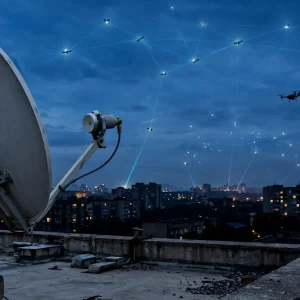
Starshield is SpaceX’s military and government version of the Starlink satellite network, built for national-security use. Ukraine relies on it for battlefield communications and for guiding the interceptor drones it uses to shoot down Russian attack drones.
The speed limit matters because the drones Ukraine uses as interceptors must travel faster than the Russian aircraft they are chasing. Russia has increasingly deployed jet-powered drones, which fly far faster than the propeller-driven Shahed drones used earlier in the war. When an interceptor drone accelerates past 161 km/h, its Starshield terminal drops its connection, cutting off the link the operator needs to steer it to its target.
NBC News has reported that Starshield normally operates at stable speeds exceeding about 250 miles per hour, so the cap cuts the usable speed by more than half.
Zelenskyy did not say who imposed the new restriction. He said Kyiv is seeking clarification from Washington about what is behind it. Neither the White House nor SpaceX has explained the new cap.
Why This Matters
The disclosure lands on a delicate day for diplomacy. US envoys landed in Moscow for talks with Vladimir Putin on Thursday morning, carrying the results of the Abu Dhabi talks, the first direct US-mediated negotiations between Russia and Ukraine in nine months. The envoys are due to fly to Dublin later on Thursday to brief Zelenskyy, who is meeting European leaders there.
A working Starshield network is one of Ukraine’s most important military assets. Its armed forces depend on satellite links for command and control, artillery coordination, and drone operations across a front line that stretches for hundreds of miles. Any degradation of that service directly affects Ukraine’s ability to defend its cities against nightly Russian drone and missile attacks.
The cap also revives an unresolved dispute over who controls the service Ukraine depends on. Zelenskyy has separately asked the United States to allow Starlink-guided drones to strike ballistic missile launchers inside Russia, a request SpaceX chief executive Elon Musk has called an escalation.
The October Cap and Its Aftermath
This is the second time in less than a month that Starshield has been capped at the same speed. The restriction first took effect overnight on October 13-14, when presidential adviser Serhii Beskrestnov said SpaceX had imposed a 160 km/h limit without warning, disrupting several military missions. On October 19, Zelenskyy said equipment was losing its connection at speeds of 130 to 161 km/h, depending on the sector of the front.
Service was restored on October 24, when Zelenskyy said speeds were “now where they need to be” and Ukraine’s Defense Ministry reported stable connections above 400 km/h. The new cap has now returned less than three weeks later.
Related Articles



Who ordered the October slowdown remains disputed. Musk wrote on X on October 14 that Starshield systems are owned and controlled by the US government and that “any limits on speed or usage are decided by the US military and ultimately POTUS.” The Wall Street Journal reported that Musk himself ordered the slowdown, while Reuters quoted two US officials and a Western official as saying the decision came from inside the White House. Secretary of State Marco Rubio said on Wednesday that decisions about Ukraine’s access rest with SpaceX and Musk under a commercial contract, and President Donald Trump said the same day that he was not involved and did not know who ordered it. Defense Secretary Pete Hegseth has said the Pentagon did not pull anything back.
On October 24, Musk said SpaceX had closed a “loophole” after Ukraine’s military violated Starlink’s terms of service, a claim Zelenskyy rejected on October 27, saying Ukraine had used Starshield only on its own territory and only defensively.
The dispute has drawn scrutiny in Washington. Senator Richard Blumenthal opened an inquiry by the Senate Permanent Subcommittee on Investigations on October 22, and Democrats on the Senate Foreign Relations Committee sent Musk a letter on November 5 demanding that he preserve records relating to the October disruption.
There is also a commercial dispute in the background. The Atlantic reported that when US military officials asked SpaceX about the October outage, the company advised switching to an upgraded contract to restore Ukraine’s access. Beskrestnov told the Associated Press that Starshield’s aviation package carries no speed limit and costs much more, and Reuters reported in May that SpaceX had argued the Pentagon’s drones belonged on an aviation tier priced at about $25,000 per terminal per month, against roughly $5,000 the military had been paying.
Latest Developments
The service is run by SpaceX, which is also behind the $24 billion gas plant and super-computer hub planned for Starbase, Texas. SpaceX has never issued a statement of its own about either the October or the November restrictions.
What happens next depends on Washington. Kyiv is pressing US officials for an explanation and for the cap to be lifted, while the envoys’ meetings in Moscow and Dublin will show whether the peace process can produce any movement on the broader questions of security guarantees and a ceasefire. Until the restriction is removed, Ukrainian interceptor crews will keep flying against jet-powered Russian drones with a satellite link that cuts out when they need it most.
Frequently Asked Questions
What is Starshield?
Starshield is SpaceX’s military and government version of its Starlink satellite internet network, built for US government and national-security use. Ukraine’s armed forces rely on it for battlefield communications and for operating drones.
How does the 161 km/h cap affect Ukraine’s defenses?
Satellite terminals mounted on equipment moving faster than 161 km/h (100 mph) lose their connection. Interceptor drones chasing faster Russian jet-powered drones therefore drop off the network at the moment they need guidance most, and some Russian strikes have already got through, according to Zelenskyy.
Has this happened before?
Yes. Starshield was capped at the same speed from October 14 to October 24, when service was restored. Who ordered that slowdown remains disputed between Musk, who pointed to the US government, and US officials, who pointed in different directions.
Who imposed the new cap?
That is not known. Zelenskyy did not say who was responsible, and neither the White House nor SpaceX has explained the restriction. Kyiv says it is seeking clarification from Washington.
Sources: Reuters; Clash Report; VanguardEast; Demokratis (citing NBC News); TSN Media.