Kennedy Family Sues to Block Trump’s 250-Foot Triumphal Arch Near Arlington Cemetery
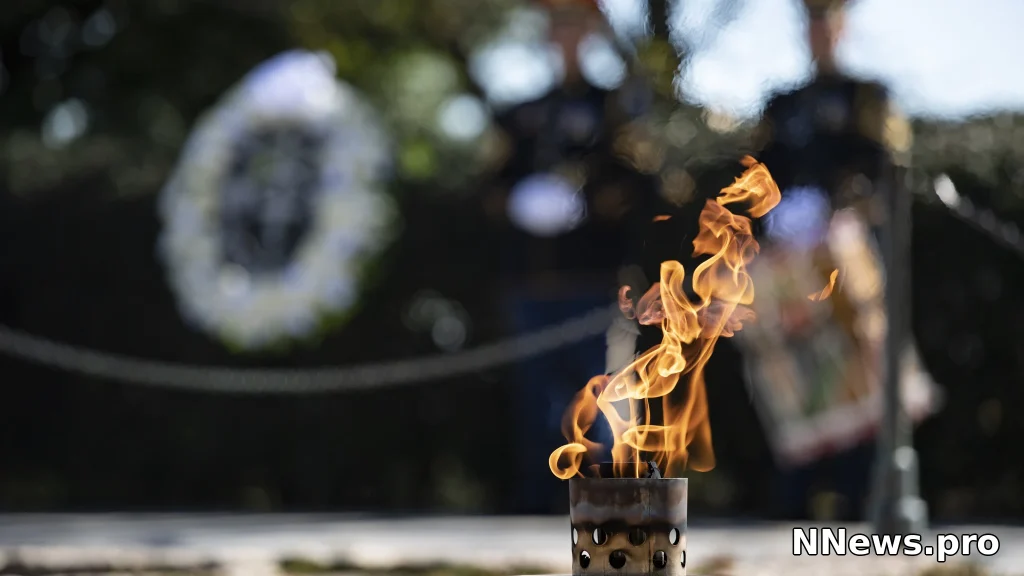
Nine members of the Kennedy family filed a lawsuit on Tuesday to stop President Donald Trump from building a proposed 250-foot triumphal arch near Arlington National Cemetery, arguing that the towering monument would cast shadows over the gravesites of President John F. Kennedy, Senator Robert F. Kennedy and Senator Edward M. Kennedy, and damage the historic sightlines of one of America’s most sacred places.
The family filed a motion to intervene in an existing federal lawsuit challenging the project, joining a growing list of plaintiffs that already includes Vietnam War veterans, a historian, and the governments of the District of Columbia, Virginia and Arlington County. The Kennedys are represented by the Democracy Defenders Fund, a legal advocacy group led by veteran Washington lawyer Norman Eisen.
The filing landed on the same day that a federal judge was already weighing whether to extend a temporary order blocking construction of the arch. District Judge Tanya Chutkan has barred the administration from breaking ground through November 19 while she considers whether to issue a preliminary injunction.
A family fight over sacred ground
The nine plaintiffs are Rory Kennedy, Maxwell Kennedy, Christopher G. Kennedy, Kerry Kennedy, Courtney Kennedy, Kathleen Kennedy Townsend and Joseph P. Kennedy II — the children of Senator Robert F. Kennedy and Ethel Kennedy — along with Joseph P. Kennedy III, a grandchild of Robert and Ethel Kennedy, and Edward M. Kennedy Jr., the son of Senator Edward M. Kennedy.
Their complaint names President Trump, White House Domestic Policy Council Director Vince Haley, the Executive Office of the President, Interior Secretary Doug Burgum, the Interior Department and the National Park Service as defendants.
In a statement released with the filing, Rory Kennedy and Maxwell Kennedy, speaking on behalf of the family, said the case was about protecting sacred spaces that belong to the American people.
“Our parents, Robert and Ethel Kennedy, and our uncles, President John F. Kennedy and Senator Edward M. Kennedy, are laid to rest at Arlington National Cemetery,” they said. “Our uncle Joseph P. Kennedy Jr., who lost his life serving our country in World War II, is also memorialized there. They are among the more than 400,000 veterans and family members buried or honored on this hallowed ground. We believe Donald Trump has violated the laws and procedures established by Congress to protect this most sacred national memorial.”
The family added that a towering arch casting shadows across the graves “would also cast a shadow over our democratic principles, undermining the safeguards established by our elected representatives to protect this hallowed ground for generations to come.”
The filing carries an added layer of political irony: Robert F. Kennedy Jr., the nephew of the assassinated former president and the son of Robert F. Kennedy, serves as health secretary in the Trump administration. He is not among the plaintiffs.
What the arch would look like
The proposed arch would stand 250 feet (76 meters) tall — more than twice the height of the Lincoln Memorial — on a highway roundabout near the entrance to Arlington National Cemetery, across the Potomac River from the Lincoln Memorial.
A rendering of the project shows a flame held by a 60-foot gold winged female figure, flanked by gold flying eagles. The Trump administration has said the arch would honor veterans.
The Kennedys’ complaint argues that the structure would intrude between the Lincoln Memorial and Arlington House, the two landmarks that were deliberately designed to face each other across the river as a symbol of national reunification after the Civil War. It would block views of the Kennedy gravesites and the Eternal Flame from Arlington Memorial Bridge — a sightline the family says was specially chosen by the Kennedys — and would cast a shadow over the graves, especially in the early morning, when the family traditionally visits.
“The arch will permanently cast shadows over and damage historically significant sight lines to the existing grave sites and memorials established in the Kennedy family’s honor at Arlington National Cemetery, as well as to the memorials of hundreds of thousands of fallen American heroes,” the filing said.
The legal argument: Congress never approved it
At the heart of the case is a dispute over whether the administration had the legal authority to approve the project at all.
The complaint states that the National Park Service and the Interior Department authorized construction on November 5, 2026, without the necessary congressional approval. It says the defendants exceeded their legal authority and that the approval was contrary to law and arbitrary and capricious, citing the agencies’ own findings of adverse effects, a large number of public comments opposing the project, and a finding by the National Capital Planning Commission that the arch would fully “obstruct reciprocal views of the Lincoln Memorial and Arlington.”
Related Articles
“The gigantic proposed arch is an illegal interference with Arlington National Cemetery and the heroes remembered there, including at the gravesites and memorials of the Kennedy brothers and Ethel Kennedy,” Norman Eisen and Steve Jonas of Democracy Defenders Fund said in a statement. “Only Congress has the constitutional power to authorize an intrusion of this magnitude.”
The family is asking the court to set aside the authorization and block construction.
The Trump administration contends that Congress approved the arch more than 100 years ago, when it also authorized construction of a bridge across the Potomac River. The White House did not immediately respond to a request for comment from Reuters.
Democrats vow to block the project in January
The legal fight is unfolding against a fast-moving political backdrop. Democrats won both chambers in the November 3 midterm elections, and numerous Democrats in Congress have vowed to block construction once they take control in January.
The arch has become one of several flashpoints between the administration and its critics since the midterms. The case will also be watched closely after the Supreme Court cleared the way for border-wall construction in Texas’ Big Bend earlier this week, another ruling in which the administration’s use of executive authority to build on federal land was at issue.
The Kennedy intervention adds one of America’s most famous political families to an already sprawling roster of opponents. The existing lawsuits were brought by veterans’ groups, a historian and three local governments, and last week Judge Chutkan prohibited the administration from breaking ground for another 14 days while the string of lawsuits proceeds.
Why this matters
Arlington National Cemetery is the resting place of more than 400,000 service members, veterans and their families, and it draws millions of visitors each year. The Kennedy gravesites and the Eternal Flame are among its most visited memorials, and the view from Arlington Memorial Bridge toward the Lincoln Memorial is one of the most deliberately designed vistas in Washington.
The dispute is also a test of how far a president can go in reshaping the capital’s monumental landscape without Congress. The administration’s argument — that a century-old authorization for a bridge also covers a 250-foot arch — is one the courts have not yet tested, and the planning commission’s finding that the arch would fully obstruct the reciprocal views between the Lincoln Memorial and Arlington House gives the challengers a powerful piece of evidence.
If the Kennedys and the other plaintiffs prevail, the project would be halted before construction begins. If the administration wins, a structure more than twice as tall as the Lincoln Memorial would rise on the Virginia side of the Potomac, permanently changing a view that has been protected for generations.
What happens next
Judge Chutkan’s temporary order runs through November 19, and she is considering whether to issue a preliminary injunction that would block construction for the duration of the case. A ruling on that question is expected in the coming days.
Congress is also a factor. With Democrats set to take control of both chambers in January, legislation to block the arch is expected to be among the early items on the new majority’s agenda. The White House has not said whether it would attempt to begin construction before the new Congress is seated.
The Kennedy family said it brought the lawsuit to stand for those who cannot stand for themselves — the veterans and families buried at Arlington, and the millions of Americans who visit the cemetery each year to honor them.
Frequently Asked Questions
How tall would Trump’s triumphal arch be?
The proposed arch would stand 250 feet (76 meters) tall, more than twice the height of the Lincoln Memorial. A rendering shows a flame held by a 60-foot gold winged female figure, flanked by gold flying eagles.
Where would the arch be built?
The arch would sit on a highway roundabout near the entrance to Arlington National Cemetery in Virginia, across the Potomac River from the Lincoln Memorial in Washington, D.C.
Why is the Kennedy family suing?
Nine members of the Kennedy family say the arch would obstruct views and cast shadows over the gravesites of President John F. Kennedy, Senator Robert F. Kennedy and Senator Edward M. Kennedy, as well as the JFK Eternal Flame. They also argue the National Park Service and Interior Department authorized construction on November 5, 2026, without the congressional approval the law requires.
Is construction of the arch currently blocked?
Yes, for now. District Judge Tanya Chutkan has issued a temporary order blocking construction through November 19, 2026, while she considers whether to grant a preliminary injunction.
The Kennedy family’s lawsuit adds a powerful new voice to the fight over the arch — and it puts the fate of one of Washington’s most protected views in the hands of a federal judge.
Sources: Reuters; Democracy Defenders Fund; The Guardian.