Newborn Bleeding Cases Nearly Doubled in 2025 as More Parents Skip the Vitamin K Shot, Studies Show
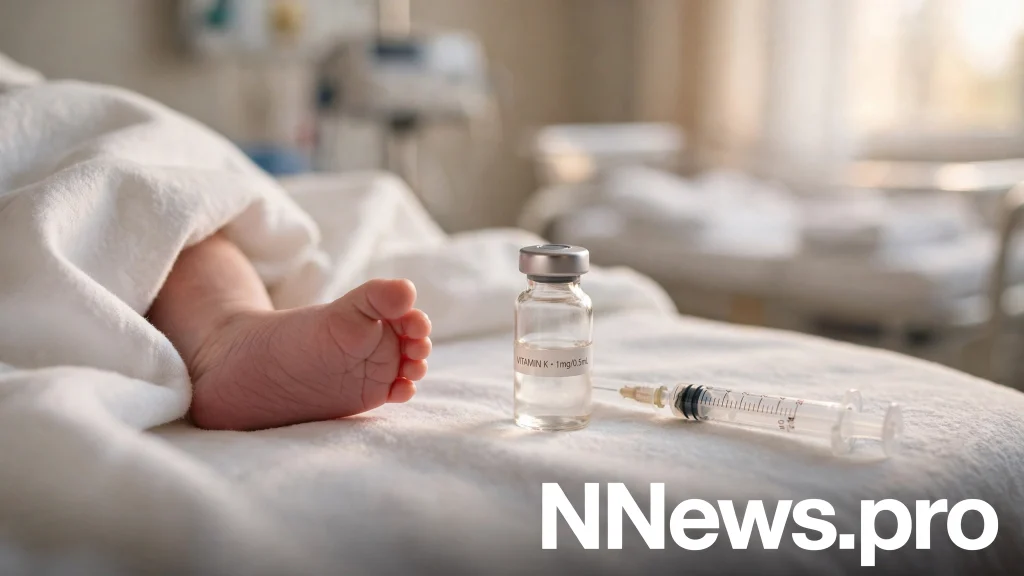
Cases of a dangerous bleeding disorder in American newborns nearly doubled last year, rising from 903 in 2024 to 1,764 in 2025, as more parents declined the vitamin K shot routinely given at birth, according to two studies published November 5 in JAMA and JAMA Pediatrics. The research, covering health records for more than 11 million U.S. infants, is the first to document bleeding rates climbing alongside rising refusal of the shot — a simple injection pediatricians have recommended since 1961.
The findings arrive as the issue gains national attention. A ProPublica investigation published November 8 told the story of an 11-day-old Texas baby who died from the bleeding disorder after her parents chose oral vitamin K drops instead of the injection — and after an emergency room spent nearly three hours trying to stop the bleeding without a vitamin K injection on hand.
What the Two Studies Found
The larger of the two studies, published in JAMA Pediatrics, examined electronic health records for more than 11 million U.S. infants aged six months and younger between 2017 and 2025. Researchers at Virginia Commonwealth University found that the share of newborns receiving injectable vitamin K fell from 97.7 percent in 2017 to 95 percent in 2025. Over the same period, diagnoses of vitamin K deficiency rose 215.7 percent, and the rate of vitamin K deficiency bleeding increased 347.1 percent, from 24 to 107.4 cases per 100,000 infants.
The case count tells the story more plainly. Researchers recorded 189 cases of the bleeding disorder in 2017. That number rose to 903 in 2024 — and then nearly doubled again in a single year, reaching 1,764 in 2025. Most of the babies affected had not received the shot, the researchers found. Across the full study period, they counted 5,217 bleeding events.
The second study, published in JAMA and led by researchers at Children’s Hospital of Philadelphia, analyzed records for more than 5.2 million infants. It found that the share of newborns without a recorded vitamin K injection more than doubled, from 3.1 percent in 2017 to 6.8 percent in 2025. After adjusting for measured risk factors, infants without a recorded injection had a 47 percent higher relative risk of bleeding within their first six months. The authors calculated that for every 114 newborns who do not receive the shot at birth, one additional bleeding event would occur.
Both studies are observational, based on health records rather than randomized experiments. They show a strong association between rising refusals and rising bleeding — not proof that declining the shot caused every individual case. But the pattern is hard to dismiss. “While these studies do not prove causation, the fact that the rates of bleeding have increased so dramatically at the same time vitamin K refusals and deficiencies have risen is significant,” said Dr. Steven Woolf, an epidemiologist at Virginia Commonwealth University and an author of the JAMA Pediatrics study.
The stakes are high. About one in five babies who suffer a stroke from this kind of bleeding die, lead author Dr. Elizabeth Wolf, an associate professor of pediatrics at Virginia Commonwealth University, told The Washington Post. The Centers for Disease Control and Prevention says babies who do not receive the injection are 81 times more likely to develop the bleeding disorder than babies who do.
A Death That Shows What Is at Stake
The ProPublica investigation put a human face on the statistics. Gwen Biesenbach was 11 days old when her parents, Stephanie and Eric Biesenbach of New Braunfels, Texas, took her to a freestanding emergency room a mile from their home in August 2023. Her umbilical cord stump would not stop bleeding.
The couple had declined the vitamin K shot when Gwen was born, believing oral vitamin K drops would protect her. Medical experts cited in the investigation said oral regimens are less reliable, partly because doses can be missed or poorly absorbed.
At the Lonestar 24HR ER, emergency physician Nicole Malouf tried seven methods to control the bleeding over nearly three hours, according to medical records reviewed by ProPublica. The emergency department did not have a vitamin K injection available. Gwen finally received the injection from an ambulance team at 3:45 a.m., before being transferred to a larger hospital in San Antonio. An autopsy listed vitamin K deficiency bleeding as the cause of death.
The Texas Medical Board later investigated the emergency care. It found that Malouf had failed to recognize that the infant had a life-threatening vitamin K-dependent bleeding disorder, that the emergency department did not have vitamin K injections available, and that she had failed to transfer Gwen immediately to a regional pediatric hospital and to quantify how much blood the baby had lost. The board ordered Malouf to complete 24 hours of continuing medical education. Malouf told ProPublica she believed she had done everything possible with the resources available.
ProPublica had already reported last May that babies were bleeding — and in some cases dying — after parents refused the shot. That investigation prompted lawmakers, including Representative Kim Schrier of Washington and Senator Angela Alsobrooks of Maryland, to call on the CDC to start tracking vitamin K compliance and deaths from the disorder. The CDC does not currently track refusal rates or bleeding cases.
What Vitamin K Deficiency Bleeding Is
Vitamin K helps blood clot. Babies are born with very little of it, and breast milk supplies only small amounts, the CDC explains. Without enough vitamin K, a baby can bleed heavily — sometimes into the brain — with little warning.
The American Academy of Pediatrics recommends a single 1-milligram intramuscular vitamin K dose within six hours of birth for newborns weighing more than 1,500 grams. The injection is not a vaccine. It is an inexpensive preventive treatment that has been standard care for newborns since the 1960s. The CDC says the injection reduces late-onset vitamin K deficiency bleeding to fewer than one case per 100,000 infants.
The disorder takes three forms. Early bleeding appears within the first 24 hours of life. Classical bleeding appears between two days and one week. Late bleeding, the most dangerous form, appears between one week and six months — most often between two and eight weeks — and 30 to 60 percent of affected infants develop bleeding inside the brain. In many cases there are no warning signs before a major bleed.
Related Articles



Oral vitamin K is less reliable than the injection, the academy says, because doses can be missed or poorly absorbed. That distinction mattered in the Texas case, where oral drops did not protect the infant.
Why Refusals Are Rising
The refusal trend has accelerated sharply. An analysis of more than one million births by the health data company Truveta, cited by Reuters and ProPublica, found the rate of babies not receiving the vitamin K shot jumped by more than 57 percent in the first half of 2026 alone, from 5.2 percent in January to 8.1 percent in June.
The rise coincides with conflicting messages from federal health agencies. In December, the CDC stopped recommending that all newborns receive the hepatitis B vaccine. In January, the agency revised its childhood vaccination schedule, reducing the number of routinely recommended shots by six. At a congressional hearing, Health Secretary Robert F. Kennedy Jr. was asked multiple times to assure parents that the vitamin K shot is safe and declined to do so publicly, according to ProPublica. A spokesperson for the Department of Health and Human Services did not answer ProPublica’s questions but said the CDC recommends that parents give newborns the vitamin K shot within six hours of birth to prevent the bleeding disorder.
The erosion of trust in routine newborn care is part of a wider pattern that has also shown up in the measles surge that pushed U.S. cases past 5,000 this year, and in growing skepticism toward vaccines and other newborn interventions. Researchers say the vitamin K studies are the first to show bleeding rates rising in step with rising refusals.
Latest Developments
The two studies were published November 5, and the ProPublica investigation followed on November 8. Search interest in vitamin K deficiency bleeding has surged in the days since, with the topic trending in the United States at more than 50,000 searches.
The findings land in a year when U.S. health regulators have been unusually active, from new drug safety warnings for popular weight-loss medicines to a new sleep apnea pill that cut breathing interruptions by up to 44 percent in a late-stage trial. What happens next for vitamin K will depend on whether the CDC begins tracking refusal and bleeding rates, as lawmakers have urged, and on whether hospitals and emergency departments make sure the injection is always on hand — a gap the Texas case exposed.
For now, the medical guidance has not changed. The American Academy of Pediatrics and the CDC continue to recommend the newborn injection, and pediatric experts say parents who are unsure should discuss the shot with their baby’s doctor before delivery, not in the delivery room.
Frequently Asked Questions
What is the vitamin K shot for newborns?
It is a single 1-milligram injection, usually given in the thigh within six hours of birth, that supplies the vitamin K babies need to form blood clots. It prevents vitamin K deficiency bleeding, a rare but potentially fatal condition. The shot is not a vaccine.
How dangerous is it to skip the shot?
According to the CDC, babies who do not receive the injection are 81 times more likely to develop vitamin K deficiency bleeding. About one in five babies who suffer a stroke from this bleeding die, and 30 to 60 percent of late-onset cases involve bleeding in the brain. The two new studies found that babies without the shot had a 47 percent higher risk of bleeding in their first six months.
Are oral vitamin K drops a safe alternative?
The American Academy of Pediatrics says oral vitamin K is less reliable than the injection, because doses can be missed or poorly absorbed. In the Texas case investigated by ProPublica, parents who chose oral drops lost their 11-day-old daughter to the bleeding disorder. Parents considering oral vitamin K should discuss it with a pediatrician.
What do the new studies actually prove?
The studies are observational: they show that as refusals of the vitamin K shot rose between 2017 and 2025, bleeding rates rose sharply at the same time. They do not prove that declining the shot caused every case. But across more than 11 million infant records, the association is strong, and the researchers say the pattern is significant.
The numbers behind the trend are stark: a shot that costs little and has been given safely to nearly every American newborn for more than 60 years is now being declined by nearly 7 percent of parents — and the babies paying the price are the ones who bleed. The studies give parents, pediatricians, and hospitals the clearest picture yet of what that choice costs, and the Texas case shows how quickly a missed shot can become a tragedy.
Sources:
- JAMA, “Nonreceipt of Newborn Vitamin K and Risk of Bleeding” (Scott et al., Children’s Hospital of Philadelphia)
- Washington Post, Nov. 5, 2026, as reported by HealthDay/Drugs.com, “Dangerous Newborn Bleeding Nearly Double as More Parents Skip Vitamin K Shot“
- ProPublica, Nov. 8, 2026, “An 11-Day-Old Baby Couldn’t Stop Bleeding. For Hours, the ER Didn’t Provide a Critical Vitamin Shot“
- U.S. Centers for Disease Control and Prevention, vitamin K deficiency bleeding fact sheet
- Children’s Hospital of Philadelphia / Hackensack Meridian Health, Nov. 5, 2026 announcements on the JAMA studies