House Oversight Report Says Federal Government Failed Epstein Survivors for Decades
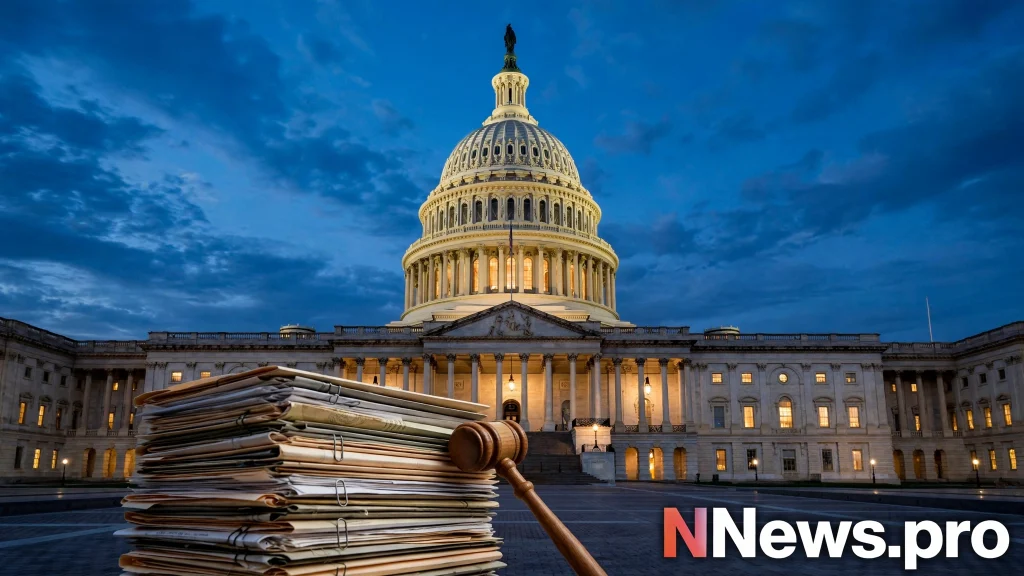
The House Oversight Committee on Tuesday released the findings of its 15-month investigation into the federal government’s handling of the Jeffrey Epstein and Ghislaine Maxwell cases, concluding that prosecutors could have stopped Epstein’s crimes years before his 2019 death — and calling on the Justice Department to take new action against people his former assistant accused of sexual assault.
The majority staff report, titled “A Review of the Federal Government’s Mishandling of the Jeffrey Epstein and Ghislaine Maxwell Criminal Investigations,” says federal investigators and prosecutors in South Florida and Washington failed survivors for decades, shielded Epstein through a controversial 2007 plea deal, and then failed to protect survivors again when documents were released under the Epstein Files Transparency Act.
It is the most detailed account yet from Congress of how Epstein, a wealthy financier who cultivated relationships with presidents, royalty and business leaders, avoided a federal indictment and continued to abuse young women even while serving a jail sentence.
A plea deal that let Epstein avoid federal charges
At the center of the report is the non-prosecution agreement struck in 2007 by the U.S. Attorney’s Office for the Southern District of Florida. Rather than pursue a federal indictment, prosecutors agreed not to charge Epstein federally in exchange for his guilty plea to lesser state charges.
Epstein was sentenced to 18 months in county jail, received extensive work-release privileges, and was released early. The committee says survivors alleged that abuse continued during the hours he was allowed out of jail, and that prosecutors never told victims about the agreement — a failure that left them unable to pursue civil claims or publicly expose his crimes in time.
The Justice Department’s own Office of Professional Responsibility previously reviewed the 2006–2008 federal investigation and concluded that former U.S. Attorney Alexander Acosta exercised poor judgment in resolving the case and in failing to ensure victims were notified of the state plea hearing. The committee’s report goes further, finding that some of the failures reflected poor judgment while others “appeared to stem from Epstein’s pervasive influence and far-reaching connections, potentially including two attorneys employed by the office.”
The committee concluded that the crimes Epstein committed after 2005 could have been prevented if federal investigators and prosecutors had acted differently.
What the investigation covered
The committee says its review drew on 19 transcribed interviews and depositions, documents obtained from the Department of Justice and the Epstein estate, and an extensive review of financial records. The committee says it has publicly released tens of thousands of pages of records so far.
The witnesses who sat for interviews or depositions included former Attorney General William Barr, former U.S. Attorney Alexander Acosta, Maxwell herself, former Victoria’s Secret owner Leslie Wexner, former President Bill Clinton and former Secretary of State Hillary Clinton, Microsoft co-founder Bill Gates, Commerce Secretary Howard Lutnick, Attorney General Pamela Bondi, and Epstein’s longtime assistant Lesley Groff.
Maxwell was convicted in 2021 of sex trafficking and related charges and is serving a 20-year federal prison sentence. Epstein died in custody at a federal jail in New York in August 2019 while awaiting trial on sex trafficking charges.
The report also revisits the night of Epstein’s death. It says understaffing and systemic dysfunction at the Metropolitan Correctional Center contributed to officers on both shifts missing at least 12 rounds and three inmate counts, leaving Epstein and other inmates without adequate supervision for nearly eight hours.
New calls for action on two men
The report urges the Justice Department to interview or re-interview key witnesses and to investigate sexual assault allegations that Sarah Kellen, a longtime Epstein assistant and survivor, made during her transcribed interview with the committee.
Kellen accused two men of sexual assault: Philip Levine, the former mayor of Miami Beach from 2013 to 2017, and Frédéric Fekkai, a French celebrity hairstylist. Both men have denied wrongdoing, according to ABC News reporting cited in coverage of the report. The committee is not a law enforcement body and does not determine guilt or innocence; it has referred the allegations to the Justice Department for investigation.
The report also recommends that the department further question Groff about what she knew and whether she helped facilitate Epstein’s criminal activity. Survivors have previously told CNN that Groff met them in person, discussed how old they were, and paid them on Epstein’s behalf — accounts that conflict with what Groff told lawmakers, according to that reporting.
Banks and airlines in the spotlight
The report also faults financial institutions, saying they failed to act on clear indicators of human trafficking and immigration fraud even though they held substantial information about Epstein’s criminal history and repeatedly flagged transactions presenting heightened compliance risks.
It singles out American Express, saying company agents allowed Epstein to use fraudulent decoy flights and refundable or dummy itineraries to transport foreign women across borders directly to his residences. The report recommends that the Treasury Department and the Financial Crimes Enforcement Network review whether financial institutions are meeting their reporting obligations for suspicious activity, including money laundering and human trafficking.
The committee also faulted the Justice Department’s handling of document releases after Congress passed the Epstein Files Transparency Act in 2025, saying officials failed to communicate adequately about the releases and failed to protect survivors. Deficient redactions, the report says, exposed survivors’ sensitive personal information.
Related Articles

A bill to stop NDAs from silencing survivors
Among its recommendations, the report calls on Congress to pass the Survivor’s Voice Protection Act, a bill introduced by Chairman James Comer that would ensure survivors and witnesses can speak freely about sexual abuse even if they previously signed confidentiality agreements. The bill would also define grooming behavior for the first time in federal law and require trusted individuals to report suspected grooming to law enforcement.
“The federal government has failed the survivors of Jeffrey Epstein and Ghislaine Maxwell’s horrific crimes for decades,” Comer said in a statement accompanying the report. “Epstein operated with impunity, shielded and enabled by powerful connections and a justice system that repeatedly failed his victims.”
What the report says about Trump
The report states that the consensus of every witness examined by the committee was that President Donald Trump — to their knowledge — was not involved in any crimes committed by Epstein and Maxwell. It says the committee’s review of documents from the Epstein estate, the U.S. Virgin Islands, JPMorgan, Deutsche Bank and the Justice Department did not identify any documents that would implicate Trump in criminal activity related to Epstein and Maxwell.
That finding stands in tension with a separate report released in late October by Democrats on the House Judiciary Committee, which compiled FBI records, interviews and previously released documents and accused Trump of participating in Epstein’s abuse in the 1990s, based on accounts from 11 women. That report was a Democratic staff product, not a bipartisan finding, and it accused the Trump Justice Department of withholding evidence and shutting down investigations that could implicate Epstein’s associates.
Democrats call the report incomplete
The Oversight Committee’s ranking Democrat, Representative Robert Garcia of California, called the majority’s report “incomplete” and noted that the Justice Department continues to withhold more than 2.5 million pages of records. Democrats did not endorse the majority’s conclusions, and no public hearings were held during the investigation.
Garcia is set to take over as chairman of the committee when Democrats assume control of the House in the 120th Congress, and he has said he intends to examine Trump and his family as well as the Epstein files. Comer, who is leaving the chairmanship, used the report’s release to urge both the Justice Department and his Democratic successors to keep investigating.
The report landed on the same day the House blocked an effort to impeach Defense Secretary Pete Hegseth, voting 211–204 to send the resolution to committee. It also came in a week in which Trump questioned whether the 2026 midterms were honest, and October inflation came in hotter than expected — a crowded news cycle for a report that both parties are likely to keep citing.
Why this matters
The report is unlikely to settle the political fight over the Epstein files. It does, however, put the committee’s institutional weight behind two concrete criticisms that have long been made by survivors and their advocates: that the 2007 plea deal was a historic failure of federal prosecution, and that the government’s handling of the files since then has repeatedly failed the people Epstein harmed.
Whether the Justice Department acts on the report’s recommendations — re-interviewing Groff, investigating the allegations against Levine and Fekkai, and giving survivors unredacted access to their own records — will be the first test of whether the report produces anything beyond a partisan document. And with control of the committee changing hands in January, the investigation itself is far from over.
Frequently Asked Questions
What did the House Oversight Committee’s Epstein report find?
The majority staff report concluded that federal prosecutors could have stopped Jeffrey Epstein’s crimes after 2005 but instead gave him a 2007 non-prosecution agreement that let him avoid federal charges. It also found failures in Epstein’s jail supervision before his 2019 death and in the Justice Department’s handling of document releases under the Epstein Files Transparency Act.
Who did the report say the Justice Department should investigate?
The report urged the Justice Department to further investigate sexual assault allegations made by former Epstein assistant Sarah Kellen against former Miami Beach Mayor Philip Levine and celebrity hairstylist Frédéric Fekkai. Both men have denied wrongdoing. It also recommended re-interviewing Epstein’s longtime assistant Lesley Groff.
Did the report find evidence implicating President Trump?
No. The report says the consensus of every witness examined was that Trump, to their knowledge, was not involved in any of Epstein’s crimes, and that the committee found no documents implicating him in criminal activity. Democrats dispute that conclusion and point to more than 2.5 million pages the Justice Department has not released.
What happens next with the Epstein investigation?
The report recommends that Congress pass the Survivor’s Voice Protection Act and that the Justice Department interview or re-interview key witnesses and give survivors unredacted access to their records. Control of the Oversight Committee passes to Democrats in the 120th Congress, and incoming chairman Robert Garcia has vowed to continue examining the Epstein files.
The House Oversight Committee’s report closes one chapter of Congress’s Epstein investigation — the 15-month Republican-led review — while opening another. What the Justice Department does with its recommendations, and what a Democratic-led committee does with the files next year, will determine whether survivors get the accountability the report says they were denied for decades.
Sources: House Committee on Oversight and Government Reform (official release); Globe TV; Film Daily; Opera News (CNN-based reporting).