Fed Officials Open Door to Half-Point December Hike After Hot October Inflation
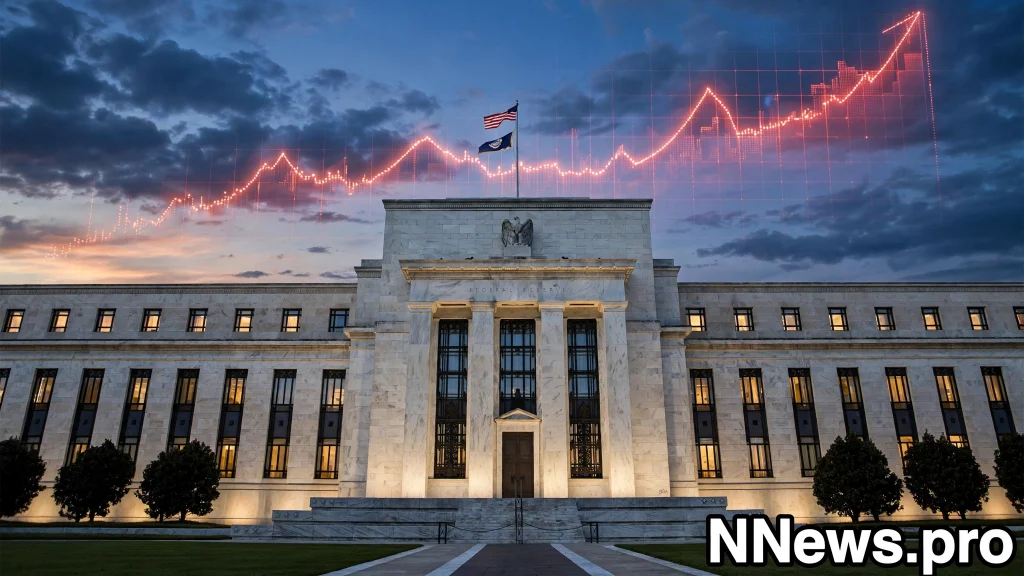
Two senior Federal Reserve officials said on Tuesday that the central bank could raise interest rates by half a percentage point at its December meeting, after October inflation came in hotter than expected and cleared a bar set by one of its own policymakers. The comments marked a sharp shift in tone from a Fed that raised rates only a quarter point in September and then held steady in October, and they sent traders scrambling to reprice the odds of a bigger move.
October CPI rose 0.4% from September, the Labor Department reported on Tuesday, a step down from September’s 0.6% gain as energy inflation eased. But the core index, which strips out volatile food and energy prices, rose 0.3% for the third month in a row. Economists had expected core inflation to slow to 0.2%. That single tenth of a percentage point was enough to change the conversation at the Fed.
Waller’s trigger — and the data met it
Fed Governor Christopher Waller set the terms of the debate himself, in remarks delivered overnight in London at a conference hosted by King’s Business School and the Money Macro & Finance Society. If October’s core reading came in at 0.3% or higher, Waller said, “a stronger policy move may be needed.”
“In that case, I believe a 50 basis point hike in the policy rate should be considered at the December meeting,” he said.
Waller went further, arguing that sticking with a smaller quarter-point increase in those circumstances would risk damaging the Fed’s inflation-fighting credibility, given inflation that is too high and appears to be broadening out through the economy. By Tuesday morning, the data had done exactly what Waller described: core prices rose 0.3%, matching the trigger he had laid out hours earlier.
The October report also showed unexpected jumps in auto insurance, public transportation and medical services — costs that land particularly hard on middle- and lower-income households, the group policymakers see as the weak link in an otherwise solid consumer spending picture. “There was not much in today’s report to assuage concerns about ongoing inflation risks or the fact that the Fed will need to hike rates further to tamp down price pressures,” Omair Sharif, president of Inflation Insights, wrote after the release.
Sharif estimated the consumer price data put the core Personal Consumption Expenditures price index — the Fed’s preferred inflation gauge — on track to rise 0.34% in October, a pace of more than 4% annualized. The Fed targets 2% inflation as measured by the PCE index, and considers the core figure a better guide to underlying trends.
Logan: at least two more hikes, possibly faster
Hours after the inflation data landed, Dallas Fed President Lorie Logan added her voice to the case for moving more aggressively. Speaking at an energy conference sponsored by the Dallas and Kansas City Fed banks, Logan said the central bank needs to deliver at least two more quarter-point increases — and may need to do so promptly.
“It remains clear to me, given the current outlook, that the FOMC needs to implement at least two more 25-basis-point rate increases,” Logan said in prepared remarks. “Excess inflation is unacceptable.”
Logan said the current federal funds rate, set in a 3.75% to 4% range, was too low and “adding to inflationary pressures.” Her goal, she said, should be to make policy “modestly restrictive so we can sustainably deliver both maximum employment and stable prices” — and she feels the Fed needs to raise rates at least half a percentage point before pausing to take stock.
“The exact pace of increases could depend on the near-term economic and financial environment,” Logan said. “It may be possible to move more rapidly this winter than the FOMC has moved so far this fall.”
She added that inflation is rising not only because of wartime energy disruptions or tariffs, but because of broader trends that could persist even after recent shocks fade. “Tighter policy will be necessary to appropriately balance the outlook and risks for inflation and employment,” she said. “And it is important to achieve that balance promptly. The longer above-target inflation persists, the greater the risk that it becomes baked into behavior.”
Logan is a voting member of the rate-setting Federal Open Market Committee in 2026. She supported the Fed’s decision to skip a hike in October, saying households, businesses and markets could adapt more easily to a gradual path — a position that makes her call for faster action now all the more notable.
Markets react: odds jump, bond yields climb
Traders moved fast. With a quarter-point rate hike in December all but assured, market bets on a larger half-point increase were rapidly building amid a broad bond market selloff, and by midmorning were close to 15%, according to Reuters. The probability had been near zero the day before. The yield on the two-year Treasury note — a proxy for expectations about Fed policy — rose by the most since early April 2025.
The market reaction stood in sharp contrast to Monday’s mood on Wall Street, when the Dow Jones Industrial Average jumped 1,104 points in its best day since April as oil prices plunged. Tuesday’s repricing was a reminder that the same inflation pressures lifting energy costs are now pushing the Fed toward tighter policy, and that the rally’s backdrop can change in a single morning’s data.
Related Articles


Why this matters
The Fed’s rate decisions reach into almost every corner of American household finances. A higher federal funds rate tends to keep borrowing costs elevated for mortgages, auto loans and credit cards, while also lifting the returns savers earn on deposits. For a central bank that spent the fall moving gradually — a quarter-point hike in September, a pause in October — the idea of a half-point step in December would signal that policymakers believe gradualism is no longer enough.
The political backdrop adds to the stakes. The October inflation data followed midterm elections that revolved around cost-of-living issues and ended in a dramatic rebuke of President Donald Trump and the Republican Party. Inflation was the issue voters said mattered most, and the new data shows the price pressures that defined the campaign have not gone away.
At the same time, the Fed is balancing two risks. Moving too slowly could let inflation become entrenched in wages and prices, forcing even sharper action later. Moving too quickly could slow an economy that, by most measures, is still growing. Logan’s remarks show that at least some policymakers now believe the first risk is the greater one.
What happens next
The Fed’s next policy meeting is December 8-9, and the debate over the size of the move will play out in public over the coming weeks. Fed Vice Chair for Supervision Michelle Bowman was due to speak later on Tuesday, and her remarks will be watched for any sign of whether she shares Waller and Logan’s urgency.
The data calendar will also shape the decision. The October Personal Consumption Expenditures report, due later this month, will show whether the core PCE measure really did rise by the roughly 0.34% that analysts now expect. And the November consumer price report, due December 10, lands just after the December meeting — meaning policymakers will have to decide on the size of the hike without seeing the freshest inflation reading.
For now, the message from two of the Fed’s most closely watched officials is clear: a half-point hike in December is no longer a fringe idea. It is on the table, the data has met the test one governor set for it, and the central bank is openly debating whether to move faster than it has all fall.
Frequently Asked Questions
What is a half-point rate hike?
A half-point hike is an increase of 0.50 percentage points in the federal funds rate, the benchmark rate the Federal Reserve sets. It is double the quarter-point (0.25 percentage point) move the Fed typically makes. The Fed raised rates by a quarter point in September and held steady in October.
Why are Fed officials talking about a bigger hike now?
October’s core consumer price index rose 0.3% for the third straight month, above the 0.2% economists expected. Fed Governor Christopher Waller had said in advance that a 0.3% core reading would prompt him to consider a half-point move in December. Dallas Fed President Lorie Logan then said the Fed needs at least two more quarter-point hikes and may need to move more rapidly this winter.
What are the odds of a half-point hike in December?
Market-implied odds of a 50-basis-point increase jumped from near zero on Monday to close to 15% by midmorning on Tuesday, according to Reuters and CME FedWatch data. A quarter-point hike remains the base case, but traders are now pricing a real chance of the larger move.
How would a bigger hike affect borrowers?
A higher federal funds rate tends to keep borrowing costs elevated for mortgages, auto loans and credit cards. It can also lift the interest savers earn on deposits. The exact effect on any individual loan depends on how banks and bond markets respond to the Fed’s decision.
Sources
- Reuters via Devdiscourse, “WRAPUP 3-Fed officials open door to a half-point hike after inflation beats expectations” — https://www.devdiscourse.com/article/international/4004687-wrapup-3-fed-officials-open-door-to-a-half-point-hike-after-inflation-beats-expectations
- Reuters via Kitco, “Fed’s Logan calls for two more rate hikes, possibly rapidly” — https://www.kitco.com/news/off-the-wire/2026-11-10/feds-logan-calls-two-more-rate-hikes-possibly-rapidly
- Reuters via BusinessDay, “Fed may consider half-point hike after core CPI rises” — https://www.businessday.co.za/world/americas/2026-11-10-fed-may-consider-half-point-hike-after-core-cpi-rises/
- Reuters via SRN News, “Investors boost odds of half-point Fed hike as core CPI rise meets Waller’s bar” — https://srnnews.com/investors-boost-odds-of-half-point-fed-hike-as-core-cpi-rise-meets-wallers-bar/