Ukrainian Drones Strike Major Russian Petrochemical Plant in Tatarstan as Fire Engulfs Nizhnekamsk Complex
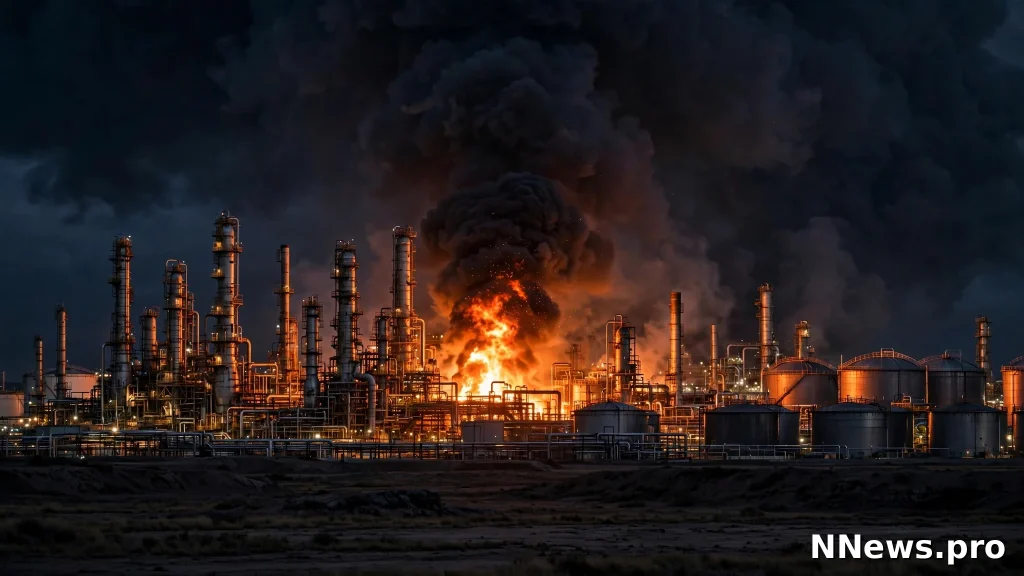
Ukrainian long-range drones struck one of Russia’s largest petrochemical complexes overnight into Sunday, November 15, setting off a large fire at the Nizhnekamskneftekhim plant in Nizhnekamsk, in the Russian republic of Tatarstan, more than 1,000 kilometers from the Ukrainian border. Local officials confirmed damage to the city’s industrial zone, and regional authorities said three people were injured.
Ukraine’s General Staff said its forces hit two plants in Nizhnekamsk — the Nizhnekamskneftekhim petrochemical complex and the TAIF-NK oil refinery — along with a defense-related site in Bryansk Oblast. At TAIF-NK, the strike hit the ELOU-AVT-7 unit, the refinery’s only primary crude processing unit for desalting and atmospheric-vacuum distillation, and a fire was recorded there. The General Staff said the extent of the damage at both plants was still being clarified.
Fire and injuries in Nizhnekamsk
Residents of Nizhnekamsk reported hearing low-flying drone engines before explosions, and video circulating online showed a blaze inside the perimeter of the petrochemical complex, with thick black smoke rising over the industrial zone. The Kyiv Independent reported that it could not independently verify from the footage which exact facility had been affected, and the full scale of the damage remained unclear in the first hours after the attack.
Nizhnekamsk Mayor Radmir Belyaev confirmed that a drone attack had hit the city and damaged facilities in the industrial zone. “Early this morning, Nizhnekamsk was the target of a massive and prolonged attack by enemy drones. As a result of this attack, facilities in the industrial zone were damaged,” he wrote. He said an apartment building was also damaged and all of its residents were evacuated, and that injured people were receiving medical care. The regional health ministry said three people were injured, without giving details on which facility had been hit.
Nizhnekamsk, a city of about 240,000 people often called the petrochemical capital of Tatarstan, is home to the Nizhnekamskneftekhim complex and several large refineries, including TANECO and TAIF-NK. Nizhnekamskneftekhim, part of the SIBUR holding, is one of the largest petrochemical producers in Russia and Europe, manufacturing synthetic rubbers, plastics, and ethylene — materials used in civilian manufacturing and in Russia’s defense-industrial supply chains. TAIF-NK processes heavy and high-sulfur crude oil and gas condensate, supplying fuel, petrochemical feedstock, and military needs.
Taganrog substation and bridge also hit
In a separate overnight strike in southern Russia, drones hit energy infrastructure in the port city of Taganrog in the Rostov region. According to analysis by the independent Russian outlet Astra, one of the main targets was the 220-kilovolt T-10 (Taganrog-10) electrical substation, a power hub supplying the city and its industrial belt, including the Taganrog Metallurgical Works.
Taganrog Mayor Svetlana Kambulova said a fire at a substation had been put out and a local state of emergency had been declared. Taganrog’s municipal authorities said air defense units had engaged drones over the city but did not specify how many incoming drones there were or confirm damage on the ground.
Monitoring channels also published imagery showing damage to the Melentyevsky bridge in the Rostov region. The bridge connects the settlements of Nikolayevka and Andreyevo-Melentyevo and carries a bypass route feeding onto the R-280 highway toward occupied Mariupol, a road Russian logistics operators have relied on since an earlier strike damaged another bridge over the Mius River.
Russia’s defense ministry said its air defenses shot down 533 Ukrainian drones between Saturday night and Sunday morning across more than a dozen regions and annexed Crimea.
A two-way night of drone warfare
The strikes on Tatarstan and Rostov came on a night of heavy drone activity on both sides. Ukraine’s Air Force said Russia launched 132 attack drones at Ukraine overnight, including 78 jet-powered Shaheds, and that air defenses shot down or jammed 106 of them by 8 a.m., with hits recorded at 20 locations. In the Kirovohrad region, a strike on an industrial facility started fires at two sites; emergency services said the fires were extinguished and nobody was hurt.
Related Articles


The overnight operations follow an escalating series of Ukrainian long-range strikes on Russian military-industrial, energy, and logistics targets. On Friday, November 13, Ukrainian forces struck the Samara linear production and dispatch station near Prosvet, where trunk pipelines blend crude grades to form Russia’s flagship Urals export blend, igniting multiple oil storage tanks. The same day, they hit the Lipetsk-2 military airbase, damaging an aircraft maintenance hangar, an aviation fuel tank, and the central command post, after Neptune cruise missile strikes on drone manufacturing and repair sites in Rostov-on-Don. Ukraine had previously struck the TANECO refinery in Nizhnekamsk on September 13 and August 20, according to the General Staff. Ukraine has previously used long-range drones against targets deep inside Russia, including a mass drone attack on Moscow and a Volgograd refinery fire and a drone strike on a Russian warship in the Gulf of Finland.
Why this matters
The Nizhnekamsk strike shows Ukraine’s deep-strike campaign reaching more than 1,000 kilometers into Russian territory to hit the industrial base that supplies both fuel and the chemical materials used in weapons production. Reuters has cited industry sources estimating that the campaign of strikes on refineries has disabled about 30 percent of Russia’s oil-refining capacity, although Russian authorities have not confirmed that assessment. For American and European readers, the attacks matter because they shape global energy markets, the cost of fuel, and the course of a war that continues to drive U.S. and allied policy — including the debate in Washington over trading Ukrainian territory for NATO membership and the coming congressional hearings on chip exports to China.
Latest developments
As of Sunday morning, emergency services were still working at the Nizhnekamsk site, and officials had not released a final assessment of the damage to either the petrochemical complex or the TAIF-NK refinery. The Taganrog substation fire was extinguished, and the local state of emergency remained in place. Ukraine has not issued a detailed public claim of responsibility beyond the General Staff’s statement, and independent verification of the exact damage is still pending.
Frequently asked questions
What is Nizhnekamskneftekhim?
Nizhnekamskneftekhim is one of Russia’s and Europe’s largest petrochemical complexes, owned by the SIBUR holding. It produces synthetic rubbers, plastics, and ethylene, and sits in Nizhnekamsk, Tatarstan, more than 1,000 kilometers from Ukraine’s border.
How far did the drones travel?
Nizhnekamsk lies more than 1,000 kilometers from the Ukrainian border, making the strike one of the deepest Ukrainian drone attacks inside Russia.
Were there casualties?
The regional health ministry said three people were injured. Nizhnekamsk’s mayor said an apartment building was damaged and its residents were evacuated. No deaths were reported.
What else was hit overnight?
Ukraine’s General Staff said the TAIF-NK refinery in Nizhnekamsk and the Monolit defense-related site in Bryansk Oblast were also struck, while a substation and a bridge were hit in the Taganrog area of the Rostov region.
The damage assessment from Nizhnekamsk is still being compiled, and further details are expected as officials and Ukraine’s military release updates. The strike is the latest sign that Ukraine’s long-range drone campaign against Russia’s energy and industrial infrastructure is intensifying as winter approaches.
Sources: Kyiv Post, Kyiv Independent, Ukraine’s General Staff.