Giant Waves Pound California Coast in Biggest Swell in a Decade as 50-Foot Sets Hit Mavericks
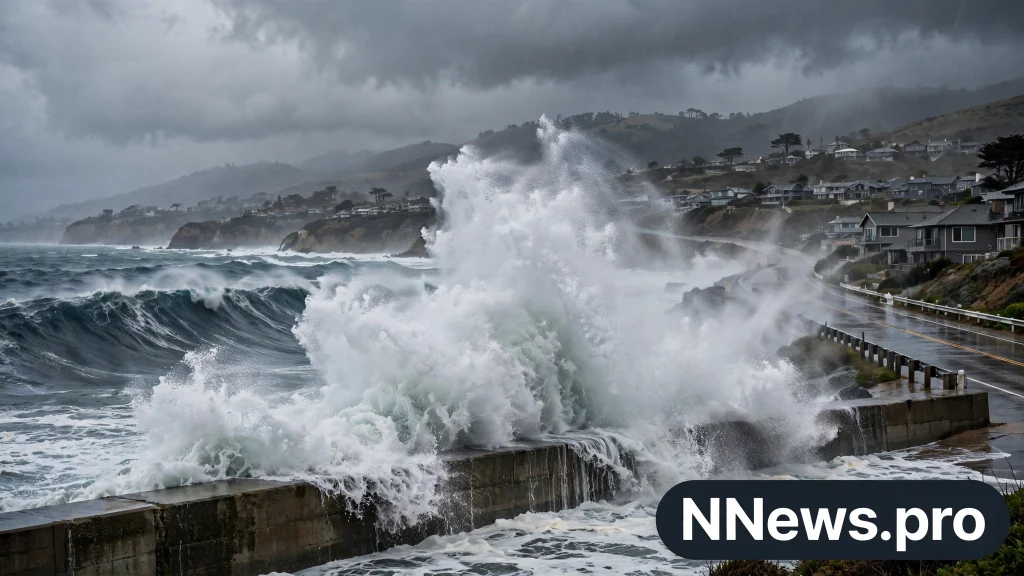
The biggest waves in about a decade battered California’s coast on Saturday, November 14, sending 50- to 60-foot sets into the famous big-wave break at Mavericks, flooding streets in Pacifica, and forcing evacuation warnings for about 270 homes in Santa Cruz County. Forecasters warned the danger was not over, with another large swell expected late Sunday into Monday and more powerful surf possible through the week.
The swell, driven by a storm with hurricane-force winds in the northeast Pacific, closed beaches and piers from the Oregon border to Los Angeles County and drew big-wave surfers from around the world to Half Moon Bay. Officials urged residents and visitors to stay off beaches, rocks, jetties, and seawalls as the ocean surged far beyond its normal reach.
50 to 60 feet at Mavericks
The swell peaked on Saturday morning. Rachel Kennedy, a meteorologist with the National Weather Service’s Bay Area office, told the Los Angeles Times that waves topped 25 feet along much of the coast, with more localized sets of 50 to 60 feet at Mavericks, the surf spot off Pillar Point near Half Moon Bay, about 20 miles south of San Francisco.
Big-wave surfers from around the world had raced to Mavericks for the swell. Mark Sponsler, who runs the forecasting site Stormsurf, estimated that the biggest waves there were above 50 feet and possibly close to 60.
A buoy off Point Reyes, north of San Francisco, measured a significant wave height of 31.2 feet on Saturday morning. Significant wave height is the average of the highest third of waves, so individual waves can be much bigger. Kennedy said it was the buoy’s highest reading since 2015, and the San Francisco Chronicle reported that only a December 2015 swell, by less than a foot, had been larger in three decades of records at the station.
The Scripps Institution of Oceanography said forecast wave heights of this magnitude in November are virtually unprecedented in the 27-year history of the Point Reyes buoy, a measure of just how unusual the timing of the swell was.
Pacifica streets flooded
Pacifica, just south of San Francisco, was among the hardest-hit towns. Waves repeatedly broke over the seawall, and roughly every half-hour an especially large set pushed water hundreds of feet inland, according to the Chronicle. Floodwater nearly a foot deep covered part of Highway 1, and residents filled sandbags to protect their homes.
Crowds of onlookers gathered despite the warnings. Several spectators were knocked off their feet by a sneaker wave in a parking lot outside the City Council Chambers, including a mother carrying a toddler, who were helped up by bystanders.
“The beach is not your friend this weekend,” Kennedy said. “You’re putting both yourself and any rescuers in danger if you go on the beach at all.”
Debris including rocks and kelp surrounded a Taco Bell Cantina in Pacifica, while floodwater blocked cars from entering its parking lot along Highway 1.
Evacuation warnings in Santa Cruz County
In Santa Cruz County, about 270 homes were placed under evacuation warnings, The New York Times reported. The warnings covered low-lying areas including Capitola Village, the Las Olas and Beach Drive neighborhoods of Rio Del Mar, Platform Beach, Potbelly Beach, and New Brighton State Beach.
County spokesman Jason Hoppin said no evacuation orders had been issued as of midday Saturday. “We’re seeing some minor flooding, but our infrastructure is holding up so far,” he said.
The City of Santa Cruz closed all city beaches and the Santa Cruz Wharf from Friday night. The wharf was badly damaged by a similar swell in December 2024, and crews built sand berms in Capitola Village to hold back the water.
Closures from the Oregon border to Los Angeles County
The swell reached the length of the state. Manhattan Beach closed its pier, a rare step for one of Los Angeles County’s best-known attractions. The Pismo Beach Pier in San Luis Obispo County was also shut.
Forecasters expected surf of 6 to 9 feet in Los Angeles County, building to 8 to 12 feet, with a high surf advisory in effect through Tuesday afternoon. San Luis Obispo County was forecast to see waves of 10 to 15 feet, building to 18 to 25 feet.
Related Articles



“No selfie of the crashing waves is worth losing your life,” Roger Gass, a meteorologist at the Weather Service office in Monterey, told The New York Times.
Why the waves are so big
The swell was generated by a storm with hurricane-force winds in the northeast Pacific, near the Gulf of Alaska. Its long wave period, around 19 seconds between crests, meant the waves carried exceptional energy and could surge much farther up beaches than people expect.
The timing is unusual. California’s biggest swells typically arrive between December and January, and November swells of this size are rare. Forecasters have linked the active pattern to this year’s El Niño, which often sends storms tracking farther south, forming closer to the coast and intensifying wave action.
It was a stormy week on both sides of the Atlantic: Storm Charles shut down Portugal this week, closing 8,000 schools and cancelling hundreds of flights. California has faced repeated climate-driven disasters in recent years, and bigger wildfires are threatening America’s drinking water for years after the flames go out. Scientists also warn the world could cross the 1.5°C warming limit as soon as 2029, a backdrop that makes extreme weather events harder to dismiss as one-offs.
More waves coming
The first swell was easing by Saturday afternoon, but Kennedy warned it would not be the last. “We are expecting to get a couple more northwesterly swells this week because the Pacific is so active right now,” she said, adding that there “might be subsequent rounds of damaging waves.”
Forecasters expect the next large swell to arrive late Sunday into Monday. Officials are urging residents and visitors to stay off beaches, rocks, jetties, and seawalls, never turn their backs on the ocean, and call 911 rather than enter the water if someone is swept away.
Frequently asked questions
How big were the waves in California on Saturday?
Waves topped 25 feet along much of the coast, with sets of 50 to 60 feet at Mavericks off Half Moon Bay. A buoy off Point Reyes measured a significant wave height of 31.2 feet, its highest reading since 2015.
Which areas were hit hardest?
Pacifica saw waves break over its seawall and flood streets and part of Highway 1. Santa Cruz County placed about 270 homes under evacuation warnings, including Capitola Village and Rio Del Mar. Beaches and piers closed from the Oregon border to Los Angeles County.
Is more dangerous surf coming?
Yes. Forecasters expect the next large swell late Sunday into Monday, with more northwesterly swells through the week. A high surf advisory for Los Angeles County runs through Tuesday afternoon.
Why is a November swell this big so unusual?
California’s biggest swells usually arrive between December and January. Forecasters linked this event to a storm with hurricane-force winds near the Gulf of Alaska and to this year’s El Niño pattern, which can push storms closer to the coast.
The ocean gave California a warning on Saturday: the biggest swell in a decade arrived weeks earlier than usual, flooded streets, closed piers, and forced hundreds of families to prepare to leave their homes. With another swell due within a day and more behind it, the coast is not out of the water yet.
Sources: San Francisco Chronicle; Los Angeles Times; The New York Times; National Weather Service Bay Area and Monterey offices; NOAA National Data Buoy Center; Scripps Institution of Oceanography. Full-text reports: https://smartaiintel.com/articles/huge-waves-hit-california-coast-mavericks-50-feet-pacifica-flooding-santa-cruz-2026/ and https://world-today-journal.com/massive-waves-slam-california-coast-and-flood-pacifica-streets/