Senate Advances Sweeping Energy Permitting Bill in First Major Vote Since Midterm Elections
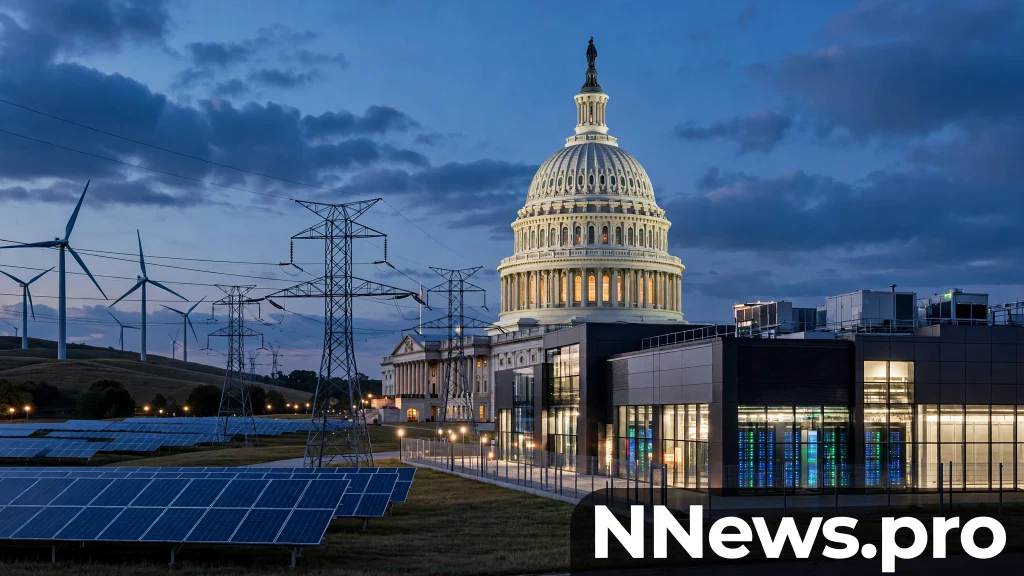
Senate Advances Sweeping Energy Permitting Bill in First Major Vote Since Midterm Elections
The United States Senate voted 73-25 on Monday to take up a sweeping energy permitting bill, the first major legislative action since last week’s midterm elections handed Democrats control of Congress. The bipartisan measure would shorten years-long approval timelines for power plants, transmission lines, pipelines and mines — and require the artificial intelligence data centers driving America’s electricity demand to pay for the grid upgrades they need.
The vote, a procedural step known as cloture on a motion to proceed, cleared the 60-vote threshold with room to spare and opened floor debate on the Bipartisan American Affordability and Jobs Act, known by its initials as BAAJA. The 417-page bill, designated S. 5653, was introduced on September 30 by four senators who lead the chamber’s energy and environment panels: Republicans Shelley Moore Capito of West Virginia and Mike Lee of Utah, and Democrats Martin Heinrich of New Mexico and Sheldon Whitehouse of Rhode Island.
What the bill would do
At its core, BAAJA is an attempt to fix a permitting system that supporters in both parties say has become a bottleneck for the country’s energy future. Major energy and infrastructure projects can spend years working through federal environmental reviews before construction begins, and supporters say those delays are now colliding with surging electricity demand from AI data centers.
The legislation would rewrite major parts of the National Environmental Policy Act, the Clean Water Act and the Endangered Species Act, setting firm deadlines for each step of the environmental review process and limiting opportunities for lawsuits to challenge permits after they are granted. It would also expand the authority of the Federal Energy Regulatory Commission over transmission planning and give the regulator a backstop role in approving power lines when states decline to act.
For data centers, the bill carries a direct financial consequence. Developers of large AI facilities would have to pay for the transmission lines and grid upgrades needed to serve them, rather than passing those costs on to households through higher electricity bills. A new Department of Energy program would also help communities deal with the local effects of data center construction.
“Americans can’t afford to wait for lower electricity prices. We need to pass this bill now,” Heinrich said.
Capito called the measure “a win for America,” adding: “We cannot let this moment pass by. The reality is this, over the next several years, we will have no choice but to increase our national energy production.”
A rare bipartisan push — with a wind energy fault line
President Donald Trump urged senators to back the bill in a social media post on Sunday, calling it a “BIG WIN for U.S. ENERGY INDEPENDENCE and DOMINANCE” and saying it would let the country build “Pipelines, Mines, and Power Plants faster than ever before, lowering Energy Costs for American Families.”
But the president also created a complication for the bill’s sponsors on Monday. Asked by reporters about wind energy, which is included in the legislation, Trump replied: “Well, the bill hasn’t been fully negotiated. I will not approve wind turbines because wind turbines are a major loser.”
Trump has long opposed offshore wind, and his administration has spent nearly $4 billion paying energy companies to abandon offshore wind projects already under development. Whitehouse said a provision in the permitting bill would end those buyouts, so the administration could no longer use public money to pay clean energy developers to give up wind leases and invest in fossil fuels instead.
The tension was enough to cost the bill at least one Democratic vote. Senator Chris Van Hollen of Maryland voted against advancing the measure, saying it does not fully address the administration’s efforts to block a pending offshore wind project off Maryland’s coast that he said would lower household energy costs and create thousands of jobs.
The midterm shadow over the vote
The vote was the Senate’s first major action since an election that, according to the Associated Press, soundly repudiated Trump and congressional Republicans. Anger over AI data centers and rising electricity prices was a major theme of the campaign, helping to elect a wave of Democrats who promised to clamp down on the massive, energy-hungry facilities.
That result now complicates the bill’s path. Some Democrats argue the party should use its stronger position in the next Congress to negotiate a better deal — one that delivers clean energy and lower bills while limiting oil, natural gas and mining expansion. The Wall Street Journal reported that the odds of the bill ultimately becoming law are fading as those calls grow louder.
House Minority Leader Hakeem Jeffries, a New York Democrat expected to become speaker in January, has been cool toward the measure. His office said last week that the bill “falls short” in a number of areas, and Jeffries told reporters it was “still under review.”
Whitehouse pushed back on suggestions that Democrats should shelve the legislation until 2027, arguing it would deliver near-term savings on electricity costs and provide a foundation for further environmental legislation under a Democratic-controlled Congress. “This bill is the floor, not the ceiling, of our climate and environmental aspirations,” he said at a news conference with Heinrich on Monday. “And we look forward to working to accomplish big things with our big Democratic majorities” over the next two years.
Opposition from environmental groups and tribes
Major environmental organizations have strongly opposed the bill, arguing it would lock in fossil fuel development, weaken environmental safeguards and make it harder for communities to challenge energy project approvals. The Sierra Club and the National Wildlife Federation have been among the most vocal critics, citing the bill’s limits on judicial review and its changes to the National Environmental Policy Act and the Endangered Species Act.
Related Articles



The League of Conservation Voters and the Center for American Progress said changes unveiled over the weekend were improvements, but warned the bill still carries significant risks for public lands and environmental protections.
Tribal concerns have also loomed large. The National Congress of American Indians, the largest advocacy group for tribes, urged Congress on Monday to halt consideration of the bill, saying it would weaken tribal sovereignty and protections for sacred sites. Heinrich said the amended version requires federal agencies to consult with tribes on projects affecting important cultural sites, gives tribes an equal role with states in transmission planning, and expands opportunities to object to projects affecting cultural resources.
Senator Catherine Cortez Masto, a Nevada Democrat, supported opening debate but said she would oppose final passage unless provisions affecting the National Historic Preservation Act are removed. Senator Edward Markey of Massachusetts, a leading environmental voice in the Senate, voted against advancing the bill and said he looked forward to debating the issue in the next Congress.
Industry groups on both sides of the energy divide back the measure, including the American Clean Power Association, which represents clean energy developers, and the American Petroleum Institute, the oil and gas industry’s top lobbying group.
What happens next
Monday’s vote was only the first of two 60-vote procedural hurdles the bill must clear. Floor debate and amendments come next, followed by a second cloture vote and then a vote on final passage. If the Senate approves the bill, it must still pass the House of Representatives, where no companion version has been introduced. The House passed its own narrower permitting bill, the SPEED Act, in December 2025 by a bipartisan 221-196 vote, but the two measures have not been reconciled.
Time is short. The current Congress ends on January 3, 2027, and any bill that has not passed by then must start over. The bill’s four sponsors released a detailed set of amendments on Saturday designed to bolster support, including stronger tribal consultation requirements, an expanded role for states in transmission planning, and longer windows for objections to agency reports.
For now, the 73-25 vote shows that a broad permitting overhaul can still command a large bipartisan majority in the Senate — even as the politics around it shift under the new Congress. Whether that majority survives the debate ahead will determine whether the bill becomes law or becomes one of the last casualties of a lame-duck session.
Frequently Asked Questions
What is the Bipartisan American Affordability and Jobs Act?
It is a 417-page Senate bill, designated S. 5653, that would overhaul how the federal government approves energy and infrastructure projects. Introduced on September 30, 2026, it would set deadlines for environmental reviews, limit lawsuits challenging permits, expand transmission planning, and require data centers to pay for the grid upgrades they need.
Would the bill make data centers pay for the electricity they use?
Yes. One of its central provisions requires large data centers to cover the costs of the transmission lines and grid upgrades needed to serve them, instead of spreading those costs across other electricity customers. Supporters say that will protect households from rising power bills driven by AI facilities.
Why are some Democrats and environmental groups opposed?
Critics say the bill would weaken bedrock environmental laws, including the National Environmental Policy Act and the Endangered Species Act, limit judicial review of permits, and lock in fossil fuel development. Tribal groups warn it could weaken protections for sacred sites. Some Democrats also want to renegotiate the bill from a stronger position after their midterm victories.
What happens next for the bill?
The Senate will debate the bill and consider amendments, then hold a second procedural vote before any final passage vote. If it passes the Senate, it must also pass the House before the current Congress ends on January 3, 2027. Its sponsors say the bill can still pass, but analysts note the odds have faded since the midterms.
The Senate’s vote on Monday showed that energy permitting reform still commands broad support in the chamber. The harder question — whether a bill written before the midterms can survive the politics that followed them — will be answered in the weeks ahead.
Sources
- Associated Press, “Senate advances sweeping energy legislation in first major action since midterm elections,” via Bastille Post: https://www.bastillepost.com/global/article/6341585-senate-weighs-sweeping-energy-legislation-in-first-major-action-since-midterm-elections
- Reuters, “US Senate advances energy permitting Bill opposed by some Democrats, tribes,” via The Straits Times: https://www.straitstimes.com/world/united-states/us-senate-advances-energy-permitting-bill-opposed-by-some-democrats-tribes?ref=latest-headlines
- The Wall Street Journal, “Senate Advances Sweeping Energy Bill, but Odds of Passage Fade”: https://www.wsj.com/livecoverage/stock-market-today-dow-sp-500-nasdaq-11-09-2026/card/senate-advances-sweeping-energy-bill-but-odds-of-passage-fade-f4YywarUp0zEcumiY9dw
- U.S. Government Publishing Office, official text of S. 5653, Bipartisan American Affordability and Jobs Act of 2026: https://www.govinfo.gov/content/pkg/BILLS-119s5653is/xhtml/BILLS-119s5653is.html








[…] statutes to move major projects forward quickly, as the Senate did this week when it advanced a sweeping energy permitting bill that would fast-track power plants, pipelines and […]