At Least 38 Killed in Ambush on Market Convoy in Western Niger
At least 38 people were killed on Thursday when unidentified gunmen ambushed a convoy of villagers travelling to a weekly market in western Niger, in one of the deadliest attacks in the Sahel region this year.
The villagers, residents of Tillim, were travelling under the escort of a local self-defence group toward the town of Tera in the Tillaberi region, near Niger’s borders with Burkina Faso and Mali, when the gunmen struck on Thursday morning, according to local sources cited by Agence France-Presse.
A former elected official told AFP that 37 people were killed at the scene and that another injured person died of wounds on Friday, bringing the toll to at least 38. The dead included 11 members of the self-defence escort, 20 men and seven women, according to the local accounts, and residents said children were also among the casualties. Several wounded survivors were taken to a nearby hospital for treatment.
The gunmen had not been identified, and no group had claimed the attack in the reporting available on Friday. There was also no immediate official statement from Niger’s government, according to RFI, Radio France Internationale.
A Known and Predictable Route
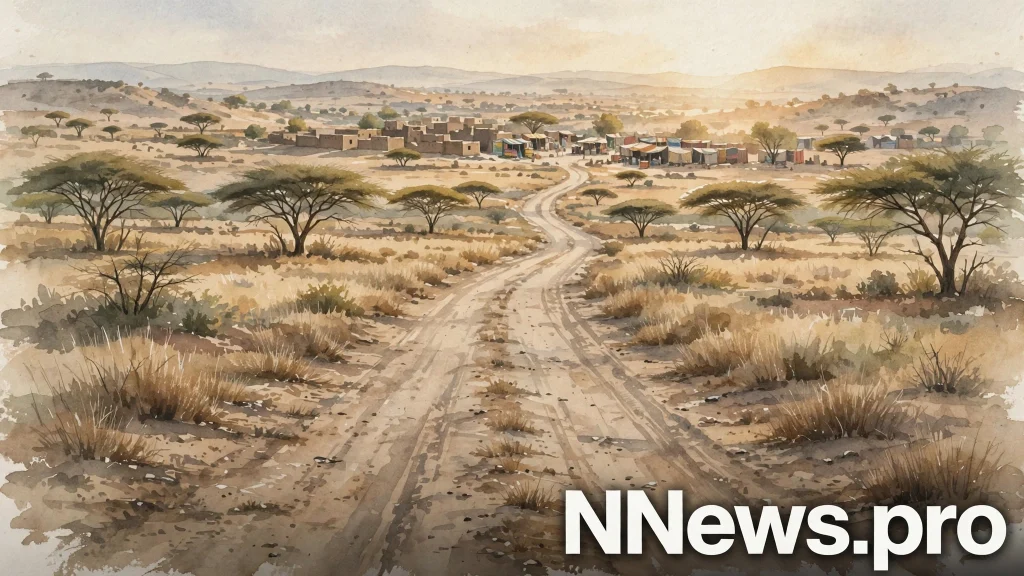
The ambush took place on a road between Tera and Tillim, in a part of the Tillaberi region where market days concentrate civilians on predictable routes at predictable times. The convoy was moving under armed escort precisely because the route is known to be dangerous, but the escort was outgunned when a large attacking force chose the ground, according to regional reporting.
Thursday’s ambush was the latest in a spate of attacks around Tera over the past ten days, the same reporting said. Armed groups linked to al-Qaeda and the Islamic State operate across the porous borderlands where Niger, Burkina Faso and Mali meet, and they have repeatedly attacked villages, markets and travellers on rural roads, even when those travellers move under armed escort.
Because the toll rests on local sources speaking to AFP and has not been confirmed by officials, the figures may change as more information reaches Tera. What is not in dispute is the shape of the event: an escorted market convoy, an ambush on a known route, and dozens of civilians dead on a road they had no choice but to travel.
The Deadliest Region for Civilians in the Central Sahel
Tillaberi sits in the tri-border zone where the frontiers of Niger, Burkina Faso and Mali converge, an area that has become the centre of insurgent violence in the central Sahel. The conflict monitor ACLED ranked Tillaberi as the deadliest region for civilians in the central Sahel in 2025.
The human cost of that violence is visible in the displacement figures. The region holds just under half of the roughly 450,000 people registered as displaced inside Niger, according to United Nations figures cited in regional reporting, as families flee villages that can no longer protect themselves.
Niger’s military-led government has promised to restore security in the west since taking power in 2023, and it has deepened security ties with partners outside its old Western alliances. Niger, Burkina Faso and Mali have also formed a confederation and a unified force of 5,000 troops to combat militant groups across their shared borders. Attacks like Thursday’s are the measure villagers use to judge those promises, and by that measure the tri-border zone remains beyond the state’s control.
The wider region’s crises continue to compound. The Ebola outbreak in the Democratic Republic of Congo has passed 11,000 cases, making it the deadliest in that country’s history, while African leaders gathered this week for the Francophonie summit in Phnom Penh, where a dispute between Congo and Rwanda over rebel backing cast a shadow over the proceedings.
Why This Matters
The Tera ambush underlines a grim pattern across the Sahel: insurgents are increasingly targeting the ordinary routines of civilian life — market days, harvests and travel between villages — rather than only military positions. When a convoy cannot move safely even under armed escort, the economic and social life of an entire region begins to shut down. Farmers cannot sell produce, traders cannot reach markets, and families are cut off from food, medicine and each other.
Related Articles



For the United States and its allies, the attack is a reminder that the Sahel’s security crisis has not eased despite the reshuffling of partnerships in the region. Niger was once a hub for Western counterterrorism operations in West Africa; since the military government expelled Western forces, the burden of fighting the insurgency has fallen on the country’s own army, the new confederation force and village self-defence groups that are often outmatched. The United Nations and humanitarian agencies have warned repeatedly that the violence is driving displacement and food insecurity across the region, with consequences that reach far beyond Niger’s borders.
Latest Developments
As of Friday, no group had claimed responsibility for the attack, and Niger’s government had issued no official communication or casualty count, according to RFI. One South Korean outlet reported that the Islamic State Sahel Province was behind the attack, but that attribution has not been confirmed by AFP or RFI, and it should be treated as unverified until a credible source corroborates it.
Local sources told AFP that the death toll could rise further, as some of the wounded were in serious condition. Authorities in Tera had not released a final list of victims. Any claim of responsibility, official toll or government response will be added to this story as it is confirmed.
Frequently Asked Questions
What happened in the Niger ambush?
On Thursday morning, November 12, unidentified gunmen ambushed villagers from Tillim who were travelling under the escort of a local self-defence group to the weekly market in Tera, in Niger’s Tillaberi region. At least 38 people were killed, including 11 members of the escort, and several others were wounded.
Who carried out the attack?
No group has claimed responsibility, and the gunmen have not been identified in the reporting available so far. Armed groups linked to al-Qaeda and the Islamic State operate in the tri-border area, and one outlet attributed the attack to the Islamic State Sahel Province, but that claim has not been confirmed by AFP or RFI.
Why is the Tillaberi region so dangerous?
Tillaberi sits where Niger, Burkina Faso and Mali meet, and it was ranked by the conflict monitor ACLED as the deadliest region for civilians in the central Sahel in 2025. Insurgent groups have repeatedly attacked villages, markets and travellers on rural roads, and the area holds nearly half of Niger’s roughly 450,000 internally displaced people.
Has Niger’s government responded?
As of Friday, Niger’s government had issued no official statement or casualty count, according to RFI. The country’s military-led government has promised to restore security in the west and has formed a joint force with Burkina Faso and Mali, but attacks in the tri-border zone continue.
Dozens of families in Tillaberi are now mourning relatives who set out for an ordinary market day and never came home. Until the attackers are identified and the government responds, the convoy’s route — and every market road like it in the Sahel — remains a journey villagers make knowing the risk, because staying home is not an option either.
Sources: AFP reporting carried by Zark News · African Perceptions (AFP) · QNC News · crisis.zone (AFP) · RFI via crisis.zone