Congo Drops Its Candidate in Francophonie Leadership Race as Summit Opens in Cambodia
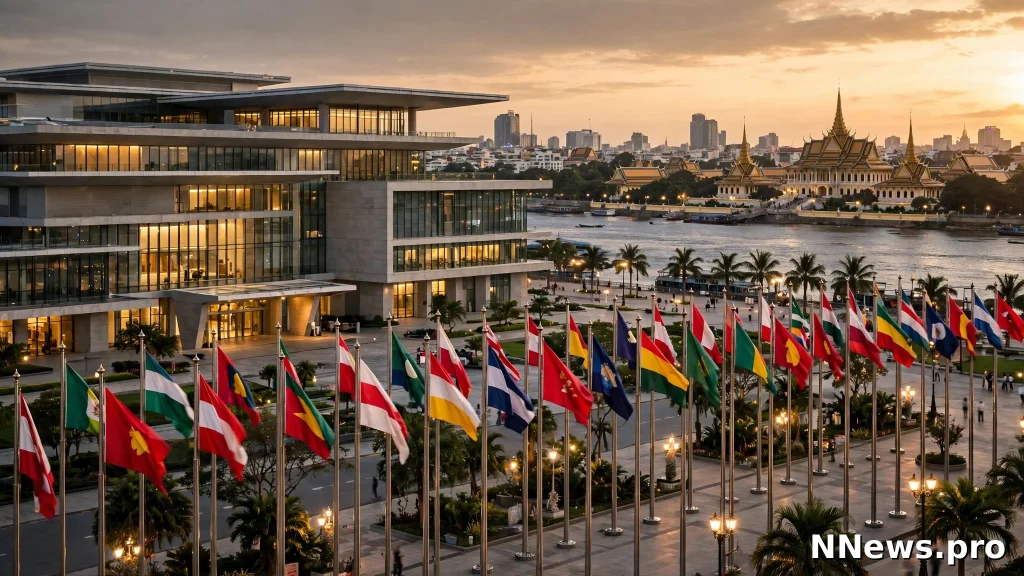
The Democratic Republic of Congo has withdrawn its candidate for the leadership of the French-speaking world and thrown its support behind a Romanian former prime minister, defusing — at least for now — a standoff with Rwanda that threatened to split the organisation as its summit opened in Cambodia on Saturday.
Congo announced on Saturday that it was pulling the candidacy of Juliana Lumumba, the daughter of independence hero Patrice Lumumba, and backing Dacian Ciolos instead, in what it described as a move to build “consensus around a unifying candidacy.” The decision came as leaders of the Organisation internationale de la Francophonie, or OIF, gathered in Phnom Penh for a three-day summit that runs through Monday.
A leadership contest shaped by war in eastern Congo
The race to lead the OIF for the next four years was supposed to be a routine piece of institutional business. Instead, it became a proxy for one of Africa’s bitterest rivalries.
Louise Mushikiwabo of Rwanda, the organisation’s secretary-general since 2019, is seeking a third four-year term. Congo, backed by the United States and United Nations experts, accuses Rwanda of supporting the M23 armed group fighting in mineral-rich eastern Congo, along the border between the two countries. Rwanda’s government consistently denies backing armed groups in Congo.
Kinshasa had threatened to leave the OIF altogether if Mushikiwabo is re-elected. That threat carries real weight: with a population above 110 million — more than 40 million more than France — Congo is the most populous nation in the world where French is the official language. Its departure would be a major blow to an organisation already shaken by the withdrawals of Mali, Niger and Burkina Faso in March 2025, after those countries were suspended following military coups.
By withdrawing Lumumba and endorsing Ciolos, a former Romanian prime minister, Congo has given the summit a path to a compromise candidate. There was no immediate response from Mushikiwabo’s team to the announcement.
Macron arrives with troubles at home and abroad
French President Emmanuel Macron arrived in Phnom Penh on Saturday, greeted on the tarmac by traditional Apsara dancers, and later met Cambodian Prime Minister Hun Manet. Before leaving for Malaysia on Monday, he is due to visit the Angkor World Heritage Site with King Norodom Sihamoni to mark the completion of a French-supported restoration of the West Mebon temple.
Macron’s office said on Saturday evening that most members agreed on the need for consensus on the leadership question and that the French president would take up the matter with his African counterparts. France matters in this decision: it is the largest contributor to the OIF’s 2026 budget of 71.7 million euros (about $79 million).
The French leader arrives with his own domestic pressures. More than 600,000 people took to the streets in France earlier this month demanding higher wages and supporting the country’s student protest movement, and a fifth consecutive Saturday of demonstrations was under way at home as the summit opened.
About 20 government leaders are expected in Phnom Penh, including Canada’s Mark Carney, Vietnam’s To Lam, Rwanda’s Paul Kagame and Congo’s Félix Tshisekedi. Cambodia takes over the summit’s rotating chairmanship from Macron, who held it after France hosted the gathering in 2024.
Why this matters
The Francophonie is often dismissed as a cultural club, but the leadership fight shows how much it has become a stage for geopolitical rivalry. The organisation brings together 90 states and governments — 53 full members, five associate members and 32 observers — and its secretary-general sets the tone for how French-speaking countries cooperate on education, development and diplomacy.
A walkout by Congo, the largest French-speaking country by population, would have deepened the sense of an organisation in retreat. The Sahel withdrawals last year already cost the OIF three members, and they were framed by those governments as a rejection of French political, military and cultural influence they regarded as overbearing. A consensus candidate could steady the organisation, but it would also leave the underlying dispute over eastern Congo unresolved. The summit’s emphasis on negotiated settlements comes as diplomacy continues on other fronts, including US-brokered peace talks in Abu Dhabi between Russian and Ukrainian negotiators and the Board of Peace‘s warning over flooding in Gaza.
Related Articles


For Cambodia, the summit is a showcase. It is the first time the country has hosted the gathering and only the second time it has been held in Asia, after Hanoi in 1997. The summit’s slogan, “Reinvest in Peace for Shared Prosperity and Lasting Stability,” reflects Cambodia’s recovery from decades of war and unrest, and the host is using side events to promote tourism, trade and investment.
Latest developments
The diplomatic programme began on Saturday with the 48th session of the Ministerial Conference of La Francophonie, chaired by Cambodian Foreign Minister Prak Sokhonn. The leaders’ summit itself takes place on Sunday and Monday, when the secretary-general decision is expected.
Most of the summit’s agenda is not disputed. Leaders are expected to adopt documents on peaceful coexistence, social, cultural and economic cooperation, crisis resolution and peace-building, and the protection of cultural heritage and diversity. Cambodia has also organised a Francophonie Village and a FrancoTech innovation and business exhibition, expected to draw around 1,200 entrepreneurs from 72 countries.
Not every issue is settled. Thailand, an OIF observer since 2008, said on November 11 that it had raised concerns with the secretariat about draft summit language on its border dispute with Cambodia. And U.N. Special Rapporteur Tom Andrews issued a statement urging summit delegates to uphold the organisation’s values and press the Cambodian government for the release of detained rights activists. “No one should be detained for defending human rights, reporting on matters of public concern, or voicing critical opinions,” he said.
Cambodia has a claim to helping found the movement: its late king, Norodom Sihanouk, was one of four founders in 1970 of the Agency for Cultural and Technical Cooperation, the OIF’s predecessor. Cambodia joined as an observer in 1991 and became a full member in 1993, after the civil war and the brutal Khmer Rouge rule of 1975 to 1979.
Frequently Asked Questions
Who leads the Francophonie, and how is the leader chosen?
The organisation is led by a secretary-general, its chief executive, chosen by member states and governments at the summit. Louise Mushikiwabo of Rwanda has held the post since 2019 and is seeking a third four-year term. Leaders are due to decide on Monday, November 16.
Why did Congo withdraw its candidate?
Congo pulled Juliana Lumumba’s candidacy on Saturday and backed Romanian former Prime Minister Dacian Ciolos, saying it wanted to allow “consensus around a unifying candidacy.” The move eases a confrontation with Rwanda, whose candidate Mushikiwabo Kinshasa had opposed over the conflict in eastern Congo.
What happens if Congo leaves the Francophonie?
Congo has threatened to quit if Mushikiwabo is re-elected. As the most populous French-speaking country, its departure would be a significant blow to the organisation, which already lost Mali, Niger and Burkina Faso in March 2025.
What else is on the summit agenda?
Beyond the leadership vote, leaders are expected to adopt a Phnom Penh Declaration and documents on peace, cooperation and cultural heritage. Side events include a business forum and a FrancoTech exhibition on innovation, artificial intelligence and green technology.
The leadership vote on Monday will show whether Saturday’s compromise holds. If it does, the Francophonie will have avoided its worst outcome in Phnom Penh — but the dispute over eastern Congo that brought the organisation to the brink will still be waiting when the leaders go home.
Sources:
Associated Press (via The Reflector) | KT Press | Jeune Afrique / RFI via Amani Chronicles | Seasia.co | TodaysW.com