Terrorism Charge Added Against Man Accused of Shooting at White House Correspondents’ Dinner
Federal prosecutors have added a terrorism charge against the California man accused of trying to assassinate President Donald Trump at the White House Correspondents’ Association dinner in April, the Justice Department announced on Friday.
Cole Tomas Allen, 31, of Torrance, California, now faces a five-count superseding indictment in connection with the April 25 shooting at the Washington Hilton, where the annual dinner was being held with President Trump in attendance. The new charge, an act of terrorism while armed under the District of Columbia criminal code, carries a maximum penalty of life imprisonment.
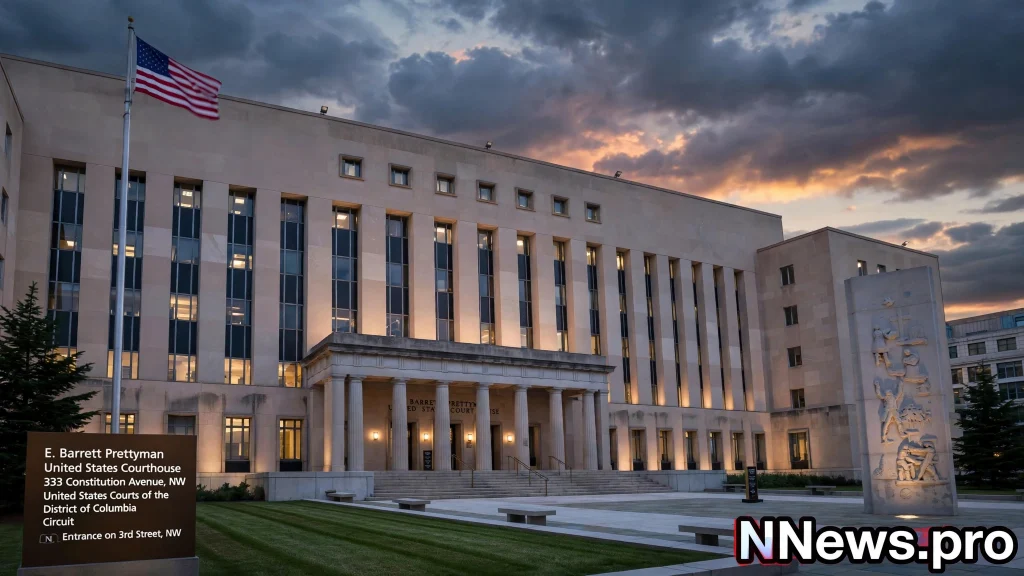
The superseding indictment was unsealed Friday in U.S. District Court in Washington, D.C., and announced by U.S. Attorney Jeanine Ferris Pirro. A federal grand jury returned the indictment on Thursday.
New terrorism count in superseding indictment
The added count accuses Allen of committing an act of terrorism while armed for the attempted first-degree murder of the President of the United States. According to prosecutors, the charge reflects the allegation that Allen tried to kill President Trump with the intent to influence the policy and conduct of a unit of government through intimidation and coercion, and to intimidate and coerce a significant portion of the civilian population.
Allen was already facing four federal counts: attempting to assassinate the President of the United States, assaulting an officer or employee of the United States with a deadly weapon, transporting a firearm and ammunition in interstate commerce with the intent to commit a felony, and discharging a firearm during a crime of violence.
An indictment is a formal accusation, and Allen is presumed innocent unless and until proven guilty in court. He previously pleaded not guilty to the earlier charges.
What happened on April 25
The shooting took place shortly after 8:30 p.m. on April 25, 2026, at the Washington Hilton, the longtime venue of the White House Correspondents’ Association dinner. President Trump — who signed a funding bill in November ending the record 43-day government shutdown — was present in the ballroom.
According to the Justice Department, Allen approached a U.S. Secret Service security screening checkpoint on the hotel’s Terrace Level, sprinted through one of the magnetometers, and ran toward the stairs leading to the ballroom where the president was located.
As he did so, prosecutors said, Allen fired a Mossberg Maverick 88 12-gauge pump-action shotgun, striking a Secret Service officer once in the chest. The officer drew his service weapon and fired five times at Allen. Allen fell to the ground, was restrained by law enforcement, and was placed under arrest. He suffered a minor injury to his knee but was not shot.
President Trump and Vice President JD Vance were hurried off the stage as the confrontation unfolded outside the ballroom, according to contemporaneous reporting.
The weapons recovered at the scene
At the time of his arrest, Allen was in possession of the shotgun, with one spent cartridge in the barrel, and a Rock Island Armory 1911 .38-caliber pistol, the Justice Department said. He also carried dozens of rounds of unspent 12-gauge shotgun ammunition and .38-caliber ammunition, two knives, four daggers, multiple sheaths, multiple holsters, needle-nose pliers, and wire cutters.
Prosecutors have said Allen traveled across the country by train from California to Washington ahead of the dinner. The investigation is being conducted by the FBI Washington Field Office, and the case is being prosecuted by Assistant U.S. Attorneys Jocelyn Ballantine, Charles R. Jones, and Adam P. Barry of the National Security Section of the U.S. Attorney’s Office for the District of Columbia. The office has pursued other major federal cases this year, including the seizure of $1.2 billion in cryptocurrency stolen from Binance in a crackdown on North Korean hackers.
Related Articles



Why the terrorism charge matters
The new count significantly raises the stakes of a case that was already among the most serious prosecutions involving an attack on a sitting president in decades. The attempted-assassination count alone carries a maximum sentence of life in prison, and the terrorism count adds further exposure if Allen is convicted.
The charge also frames the April attack in legal terms as an act intended to coerce the government and intimidate the public, rather than only as an assault on an individual. That distinction is central to how the District’s terrorism statute applies, and it is likely to shape both the prosecution’s case and the defense’s response as the trial approaches.
The case has drawn close attention because the shooting unfolded at one of Washington’s most prominent annual gatherings, in a room filled with journalists, cabinet officials, and lawmakers, and because the security breach occurred at a Secret Service checkpoint inside the venue itself. Political violence has also surfaced abroad this year, including a Moscow car bombing that wounded a former aide to a pro-Russian former Ukrainian prime minister.
What happens next
Jury selection in the case is scheduled to begin on September 7, 2027, before U.S. District Judge Trevor N. McFadden, with the trial expected to last roughly three to four weeks. Allen remains in custody.
Further court proceedings will determine how the new terrorism count is litigated alongside the original charges, including whether Allen enters a separate plea on the added count. Prosecutors have not announced any additional charges.
Frequently Asked Questions
Who is Cole Tomas Allen?
Cole Tomas Allen, 31, is a former engineering tutor from Torrance, California. Federal prosecutors accuse him of attempting to assassinate President Donald Trump at the White House Correspondents’ Association dinner on April 25, 2026. He has pleaded not guilty to the earlier charges and is presumed innocent unless proven guilty.
What is the new terrorism charge?
The superseding indictment adds one count of committing an act of terrorism while armed, for the attempted first-degree murder of the President of the United States, under the District of Columbia criminal code. The maximum penalty is life imprisonment.
What happened at the White House Correspondents’ Dinner?
Shortly after 8:30 p.m. on April 25, 2026, Allen ran through a Secret Service checkpoint at the Washington Hilton and fired a shotgun, striking a Secret Service officer in the chest. The officer returned fire, and Allen was arrested at the scene. President Trump was in the ballroom at the time.
When will the trial take place?
Jury selection is scheduled to begin on September 7, 2027, before U.S. District Judge Trevor N. McFadden. The trial is expected to last about three to four weeks.
The added terrorism charge marks a major escalation in the prosecution of the White House Correspondents’ Dinner shooting, and the case will now move toward a 2027 trial with the most serious charges available to federal prosecutors on the table.
Sources: U.S. Department of Justice; UPI; Internewscast; ENM News