Trump Signs Funding Bill, Ending Record 43-Day Government Shutdown as House Passes Deal 222-209
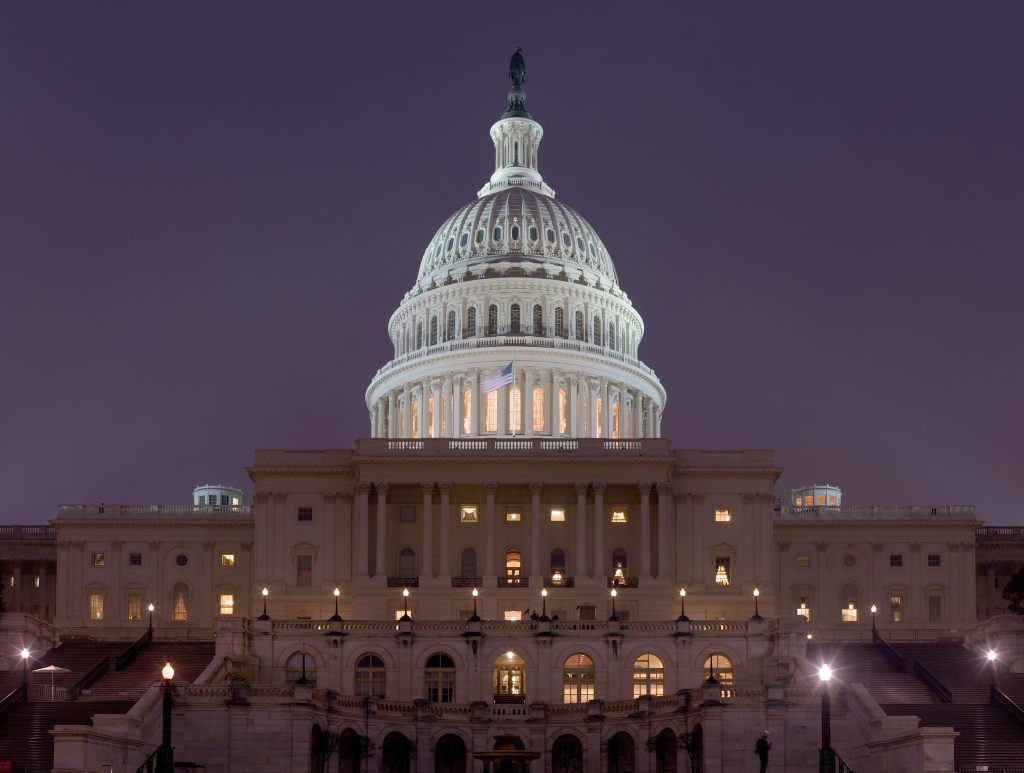
President Donald Trump signed a government funding bill into law in the Oval Office on Wednesday night, ending the longest government shutdown in American history after 43 days. The signing, at about 9:45 p.m. Eastern time, came less than two hours after the House of Representatives approved the measure by 222 votes to 209, according to the Associated Press. Federal agencies were expected to begin reopening within hours, with furloughed workers returning to their jobs on Thursday and back pay to follow.
The House vote
The House approved the spending package on Wednesday evening in a vote that was mostly along party lines. It was the first time the chamber had taken up legislation since mid-September, when Republican leaders sent members home after passing a stopgap measure they knew could not advance in the Senate. The recess, which lasted nearly two months, was itself part of the pressure strategy in the standoff.
Two Republicans voted against the bill: Thomas Massie of Kentucky and Greg Steube of Florida. Six Democrats voted for it: Henry Cuellar of Texas, Don Davis of North Carolina, Jared Golden of Maine, Adam Gray of California, Marie Gluesenkamp Perez of Washington state and Tom Suozzi of New York, according to States Newsroom. The result was announced on the House floor just before 7:30 p.m. Central time.
Flanked by Republican lawmakers around the Resolute Desk, Mr. Trump used the signing ceremony to blame Democrats for the standoff and to warn voters to remember it. “So I just want to tell the American people, you should not forget this,” he said, according to the Associated Press. “When we come up to midterms and other things, don’t forget what they’ve done to our country.” He also told those present that “the country has never been in better shape” and described the shutdown as a “short-term disaster” caused by Democrats who, in his words, thought it would help them politically.
How the deadlock broke
The shutdown ended the way it had been heading since Sunday night, when the Senate first cracked the deadlock. After nearly six weeks of failed procedural votes, seven centrist Senate Democrats and one independent broke with their party’s leaders on Sunday to advance a reworked spending package, and the Senate passed the funding package late Monday night by 60 votes to 40. The eight were Dick Durbin of Illinois, John Fetterman of Pennsylvania, Maggie Hassan and Jeanne Shaheen of New Hampshire, Tim Kaine of Virginia, Catherine Cortez Masto and Jacky Rosen of Nevada, and Angus King of Maine, an independent who caucuses with the Democrats. Most other Democrats voted no, including Senate Democratic Leader Chuck Schumer, who argued the deal gave up too much. Fourteen earlier procedural votes on the House-passed funding bill had gone nowhere.
What is in the bill
The legislation is a 394-page package that the Senate substantially reworked from the stopgap bill the House originally passed in mid-September, according to States Newsroom. Its core is a continuing resolution that funds most of the federal government at existing levels through Jan. 30, 2027, giving Congress about eleven more weeks to complete the full-year spending bills for the fiscal year that began on Oct. 1.
Attached to the stopgap are three full-year spending bills that fund their areas through Sept. 30, 2027: the Agriculture Department, including the Food and Drug Administration; the Department of Veterans Affairs and military construction; and the legislative branch, which is Congress itself.
The package also reverses the Trump administration’s firing of furloughed federal workers during the shutdown and bars further layoffs through January. It requires back pay for all federal workers, including those furloughed during the shutdown. The Supplemental Nutrition Assistance Program, the food assistance program used by about 42 million lower-income Americans, is fully funded through the end of the fiscal year under the Agriculture bill.
Security funding is also included. The package provides $203.5 million to boost security for lawmakers and an additional $28 million for the safety of Supreme Court justices, according to the Associated Press.
The shutdown began on Oct. 1, the first day of the federal fiscal year, when all twelve annual appropriations bills had lapsed and no continuing resolution was in force. Over 43 days, the effects spread from airport security lines to food assistance offices, with thousands of flights cancelled or delayed, federal workers missing paychecks, and long lines at food banks. The funding lapse also disrupted federal operations and delayed some economic data releases; the October CPI report was published during the shutdown.
The health-care fight is postponed, not settled
The one thing the deal does not do is the thing Democrats spent six weeks demanding. It does not extend the enhanced tax credits that lower the cost of health insurance bought through the Affordable Care Act marketplaces, and those credits expire at the end of December. Without an extension, premiums for many plans are expected to jump sharply in the new year.
In exchange for dropping that demand for now, Senate Majority Leader John Thune of South Dakota promised that the Senate will vote on extending the subsidies no later than the second week of December. It is a promise of a vote, not a promise of a result: the extension would still need 60 votes in the Senate and a path through the House, where Speaker Mike Johnson of Louisiana has made no commitment to hold a similar vote.
House Minority Leader Hakeem Jeffries of New York told reporters Democrats will try to gather the signatures needed for a discharge petition to force a floor vote on legislation extending the tax credits for three years. Democrats will need the support of at least a handful of Republicans to reach the 218 signatures needed.
Rosa DeLauro of Connecticut, the senior Democrat on the spending panel, rejected the bill and said it did nothing to address the rising cost of health care. “More than 20 million Americans will have to pay double, even triple, their monthly insurance premium in just a matter of weeks,” she said, according to States Newsroom.
A provision that angered both parties
Not every Republican on Capitol Hill is happy with how the full-year bills turned out. Tucked into the Legislative Branch spending bill is a provision that would allow senators to file suit against the federal government if their data is subpoenaed, retroactive to Jan. 1, 2022, according to States Newsroom. The measure retroactively makes it illegal, in most cases, to obtain a senator’s phone records without disclosure, and it allows lawmakers whose data was seized to sue the Justice Department for $500,000 in damages, plus legal fees and related costs, according to the Associated Press.
Related Articles



The provision applies to the eight senators whose mobile phone records were subpoenaed during a 2023 investigation into Mr. Trump’s efforts to overturn the 2020 election results: Josh Hawley of Missouri, Lindsey Graham of South Carolina, Bill Hagerty of Tennessee, Dan Sullivan of Alaska, Tommy Tuberville of Alabama, Ron Johnson of Wisconsin, Cynthia Lummis of Wyoming and Marsha Blackburn of Tennessee, as well as Representative Mike Kelly of Pennsylvania.
Mr. Graham told reporters earlier on Wednesday that he will “definitely” be filing a lawsuit once the provision becomes law. Jamie Raskin of Maryland, a Democratic member of the House, said during the floor debate that the bill “contains the single most corrupt provision for legislative self-dealing that anyone in this chamber today has ever voted on.”
Mr. Johnson announced in mid-afternoon that the House would take a separate vote later this month to remove the language from the package. But Mr. Steube, one of the two Republicans who voted against the whole package, responded that the “Senate will never take up your ‘standalone’ bill.”
Also on Wednesday
Wednesday was a crowded day in the House beyond the funding vote. Mr. Johnson swore in Democrat Adelita Grijalva, who won a special election in September to fill the Arizona seat once held by her late father, Representative Raul Grijalva. Her arrival provided the final signature needed to force a House vote on releasing all unclassified records related to the late financier and convicted sex offender Jeffrey Epstein, just hours after Democrats made public a new batch of documents from the case.
The politics of the shutdown were already being measured. A Reuters/Ipsos poll released on Wednesday found that 50 percent of Americans blamed Republicans for the record-long shutdown, while 47 percent blamed Democrats, according to the Associated Press.
The week also brought a change at the top of the White House staff. Stephen Miller took over as Mr. Trump’s chief of staff in the same week the funding deal was struck, according to Vellum Daily.
Why this matters
The most striking fact about this shutdown is how little the final deal differs from what was available on the first day. The funding package that passed on Wednesday is, in substance, the stopgap the House passed in mid-September with three full-year bills attached and a promise of a future vote on health care. Tom Cole of Oklahoma, the Republican chairman of the Appropriations Committee, said it plainly on the floor: “Over the last 43 days the facts did not shift, the votes required did not shift, the path forward did not change. The only thing that did move was the level of pain Democrats inflicted on the nation.”
The shutdown did not end because the two parties reached agreement. It ended because eight members of the Democratic caucus decided their own leaders’ strategy had run its course. That split matters more than the funding bill itself, because it reveals a party still arguing with itself about how to oppose Mr. Trump — just eight days after Democrats scored several major election victories that many in the party thought strengthened their hand on health care.
For millions of Americans, the consequences are immediate and practical: paychecks resume, food assistance is secure through the fiscal year, and flights should return to normal. But the central dispute is only deferred. The enhanced tax credits expire on Dec. 31, and the promised Senate vote comes no later than the second week of December, leaving almost no time to pass an extension, reconcile it with the House, and get it signed before premiums rise. The next funding deadline, Jan. 30, is eleven weeks away.
What to watch next
- Federal workers return to their jobs on Thursday and agencies begin reopening; the timing of back pay will be the first test of the recovery.
- Air travel: the Federal Aviation Administration’s flight reductions and the backlog of cancelled flights should ease over the coming days, but full schedules may take longer to restore.
- Food assistance: with the Agriculture bill funding the Supplemental Nutrition Assistance Program through the end of the fiscal year, attention shifts to the Agriculture Department’s separate proposed rule that would tighten eligibility and remove about 6.3 million people from the program if finalized.
- The Senate vote on extending the Affordable Care Act subsidies, promised no later than the second week of December, and whether it can reach 60 votes.
- Mr. Jeffries’s discharge petition for a three-year subsidy extension, and whether any Republicans sign it to reach the 218 signatures needed.
- The Jan. 30 funding deadline: Congress must still pass the nine remaining annual appropriations bills, and failure would mean another shutdown fight within eleven weeks.
- Mr. Johnson’s promised vote to strip the phone-records provision, and whether Mr. Graham follows through on his pledge to sue the Justice Department.
- The Epstein records vote: with Ms. Grijalva sworn in, the discharge petition now has the signatures to force a House vote on releasing the files.
Frequently asked questions
How long did the government shutdown last?
The shutdown lasted 43 days by the count used by several news wires; by the calendar, the funding lapse ran from Oct. 1 to Nov. 11. It is the longest shutdown in American history. The previous record was 35 days, set during the funding lapse of December 2018 to January 2019.
What did the House vote on Wednesday?
The House approved a 394-page funding package by 222 votes to 209. The package funds most of the federal government through Jan. 30, 2027, and includes three full-year spending bills. Two Republicans voted against it and six Democrats voted for it.
When will federal workers get their back pay?
The legislation requires back pay for all federal workers, including those furloughed during the shutdown, and bars further layoffs through January. Workers return to their jobs on Thursday, and agencies have been directed to resume normal operations immediately.
What happens to health-care subsidies now?
The enhanced Affordable Care Act tax credits expire at the end of December. The Senate has promised a vote on extending them no later than the second week of December, but the extension would still need 60 votes in the Senate and a path through the House, where Speaker Mike Johnson has not committed to a vote.
The government is open again, but the shutdown’s central question is unresolved. Congress bought itself eleven weeks to finish the remaining spending bills and a December vote on the subsidies that millions of Americans depend on — and if either fails, the country could be back where it started by the end of January.
Sources: Associated Press (via TaxTMI); States Newsroom (via North Platte Post); NEXA News HD; Associated Press (via Manila Metro); The Hourly News.