Indonesia’s Vice President Gibran Resigns Amid Academic Credentials Crisis
Indonesia’s Vice President Gibran Resigns Amid Academic Credentials Crisis
Indonesia’s Vice President Gibran Rakabuming Raka has resigned after two Indonesian courts ruled that the education documents he used to qualify for office did not meet the country’s election requirements, throwing Southeast Asia’s largest economy into its deepest political crisis in years.
Gibran, 39, the eldest son of former President Joko Widodo, tendered his resignation to President Prabowo Subianto on Wednesday, his aide Budi Arie Setiadi told Reuters. The move threatens to split the political alliance between Prabowo and Widodo, two men who were once rivals and then became the most powerful partnership in Indonesian politics.
Prabowo has not publicly confirmed whether he has accepted the resignation, and Gibran remained vice president as the formal process to end his tenure got under way.
A resignation offered, then delivered
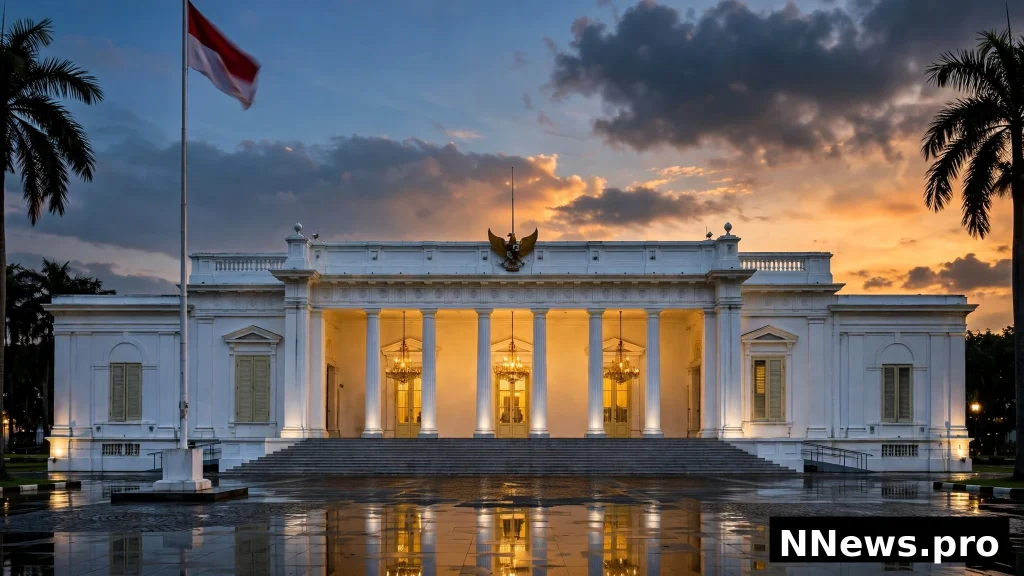
Gibran first told Prabowo he intended to resign during a meeting at the presidential palace on Tuesday that lasted more than two hours, State Secretary Prasetyo Hadi told reporters. Prabowo advised him to keep defending his academic records in court, Hadi said, but did not say publicly whether the president wanted him to stay or go.
On Wednesday, Budi Arie told Reuters that Gibran had tendered his resignation to Prabowo earlier in the day. Two sources at the parliamentary upper house, which oversees the process of approving a resignation and choosing a replacement, said Gibran would submit his resignation letter to the upper house on Thursday morning.
Neither Gibran’s office nor Prabowo’s office immediately responded to a request for comment from Reuters. Late on Wednesday, Prabowo delivered a long speech at a political party event. He did not mention Gibran’s resignation.
The uncertainty over the letter’s status has added to the confusion. Earlier reporting on Wednesday, citing the palace, said no resignation letter had yet been submitted and that Gibran was still carrying out his duties. The aide’s statement to Reuters and to the BBC, however, confirmed that the resignation had been delivered to the president. What remains unresolved is whether Prabowo will accept it — and when.
The credentials dispute behind the crisis
The crisis stems from Gibran’s schooling. Indonesian election law requires presidential and vice-presidential candidates to have completed senior high school or an equivalent qualification. Gibran, who studied in Singapore and Australia before earning a bachelor’s degree through the Management Development Institute of Singapore, relied on a 2019 Education Ministry certificate that treated his overseas schooling as equivalent to an Indonesian senior high school diploma.
That certificate has now been struck down by two courts. On October 6, the Constitutional Court said it had seen no convincing evidence of a foreign diploma or certificate establishing an equivalent secondary education. It dismissed the challenge on procedural grounds, saying the petitioners lacked legal standing and that it could not remove someone already sworn into office.
Then, on October 30, the Supreme Court annulled the equivalency certificate in an administrative case. On Tuesday, the court instructed the Education Ministry to withdraw the certificate. In its ruling, the court said there was no evidence that Gibran held a foreign diploma or certificate that could serve as the basis for equivalency with a senior high school qualification.
Gibran had argued that his university education showed he had completed the required secondary schooling. The courts disagreed.
Impeachment pressure from parliament
The court rulings set off a political scramble. Earlier on Wednesday, about 120 Indonesian lawmakers from across the political spectrum submitted a petition demanding Gibran’s impeachment, according to Reuters. The Associated Press reported that 120 lawmakers from eight political parties had launched a parliamentary initiative that could lead to his impeachment.
“Gibran no longer meets the requirements as vice president as stipulated in Indonesia’s constitution,” said Mardani Ali Sera, one of the lawmakers who signed the petition.
On Wednesday, parliament’s leadership formally received a proposal from nearly 50 lawmakers to use their constitutional right to issue an opinion on the vice president, a procedure that can open the way to impeachment. Protesters gathered outside the parliament building in Jakarta on Monday, November 10, calling for Gibran’s removal.
Gibran has said he wants to step aside rather than let the dispute drag on, and that he does not want a prolonged political fight. His resignation offer, if accepted, would make the impeachment question moot — but the parliamentary process could continue in the meantime.
What happens next
If Gibran’s resignation takes effect, Indonesia’s constitution sets out a clear but untested path. Senior law minister Yusril Ihza Mahendra said the parliamentary upper house would have to convene a session to declare a vacancy once the resignation letter is submitted. It would then write to the president asking him to submit two names for a replacement, and the upper house would hold an election within 60 days.
Until that process runs its course, Gibran remains vice president. The upper house, known as the People’s Consultative Assembly, has never before had to replace a vice president mid-term under these circumstances.
Related Articles

A partnership under strain
The resignation comes amid growing signs of strain in the alliance between Prabowo, a powerful former general, and Widodo, widely known as Jokowi, a highly popular leader who twice defeated Prabowo for the presidency before backing him after reaching his own term limits. Their partnership carried Prabowo to a first-round victory in the 2024 election, with Gibran — Jokowi’s eldest son — as his running mate.
That partnership has frayed in recent weeks. Last week, Prabowo fired his chief of staff, widely seen as a Jokowi loyalist, after the aide was arrested on accusations of bugging the president, among other figures. The administration has also been hit by scandals over signature programs, including its free school meals policy, and by doubts over its handling of the economy.
Investor sentiment toward Indonesia has weakened this year amid heightened scrutiny of the government’s fiscal plans, and the Reuters report noted lingering downgrade risks for Indonesia’s stock market from global index provider MSCI. An open split between Prabowo and Jokowi could deepen that unease.
Sana Jaffrey, a researcher at the Australian National University, said the crisis showed how the political fortunes of a small number of elites had taken precedence over the country’s need for effective and stable governance. “Prolonged uncertainty at the highest levels of power will only deepen anxieties at home and abroad about where the country is headed,” she said.
Why this matters
Indonesia is the world’s fourth-most-populous country, the largest economy in Southeast Asia, and the world’s largest Muslim-majority democracy. It is also a key American partner in the Indo-Pacific, a major supplier of nickel and other critical minerals, and a country whose stability matters to supply chains across Asia.
A vice-presidential resignation less than two years into a five-year term is without modern precedent in Indonesia. If Prabowo accepts it, he will need to find a replacement who can hold together a sprawling coalition — and do so while the parliament, the courts, and the public are all asking how a candidate whose qualifications were in doubt was allowed to take office in the first place.
The crisis also lands in a crowded week for American diplomacy, which has also included US-brokered peace talks in Abu Dhabi and the aftermath of the war with Iran. For Washington, a distracted or divided Jakarta complicates a relationship the United States has spent years building as a counterweight to China in the region.
Latest developments
- Gibran’s aide told Reuters on Wednesday that the vice president had tendered his resignation to Prabowo earlier in the day.
- Two sources at the parliamentary upper house said Gibran would submit his resignation letter to the upper house on Thursday morning.
- About 120 lawmakers submitted a petition demanding Gibran’s impeachment earlier on Wednesday, while parliament’s leadership formally received a proposal from nearly 50 lawmakers to open an inquiry.
- Prabowo gave a long speech at a party event late Wednesday and did not mention the resignation. Neither his office nor Gibran’s office has commented publicly on whether the resignation has been accepted.
- The Supreme Court instructed the Education Ministry on Tuesday to withdraw Gibran’s annulled education equivalence certificate.
Frequently asked questions
Why did Indonesia’s vice president resign?
Gibran Rakabuming Raka offered to resign after Indonesia’s Constitutional Court and Supreme Court ruled that his education documents did not meet the legal requirements for the vice presidency. The Supreme Court annulled the 2019 Education Ministry certificate that had treated his overseas schooling as equivalent to an Indonesian high school diploma. About 120 lawmakers also submitted a petition demanding his impeachment.
Has President Prabowo accepted Gibran’s resignation?
Not publicly. Gibran’s aide told Reuters that the resignation was tendered to Prabowo on Wednesday, and sources said the formal letter would go to the parliamentary upper house on Thursday morning. But neither Prabowo’s office nor Gibran’s office has confirmed acceptance, and Gibran remained vice president as the process began.
What happens next in Indonesia?
The parliamentary upper house must convene a session to declare a vacancy once the resignation letter is submitted. It will then ask the president to submit two names for a replacement, and the upper house will elect a new vice president within 60 days. The impeachment inquiry in parliament could also continue while that process unfolds.
Who is Gibran Rakabuming Raka?
Gibran, 39, is the eldest son of former Indonesian President Joko Widodo. He was elected vice president in 2024 as the running mate of Prabowo Subianto and took office in October of that year. His candidacy was controversial from the start: the Constitutional Court, then headed by his uncle, removed an age limit that would otherwise have barred him from running.
The resignation of a vice president less than two years into his term leaves Indonesia facing weeks of constitutional procedure and political bargaining. Whether Prabowo accepts the resignation, and whom he names as a replacement, will shape the rest of his presidency — and the future of the alliance that brought him to power.
Sources: Reuters; Associated Press; The Insight International; The Northern Current.