Appeals Court Rules Kari Lake Illegally Fired Voice of America Director Michael Abramowitz
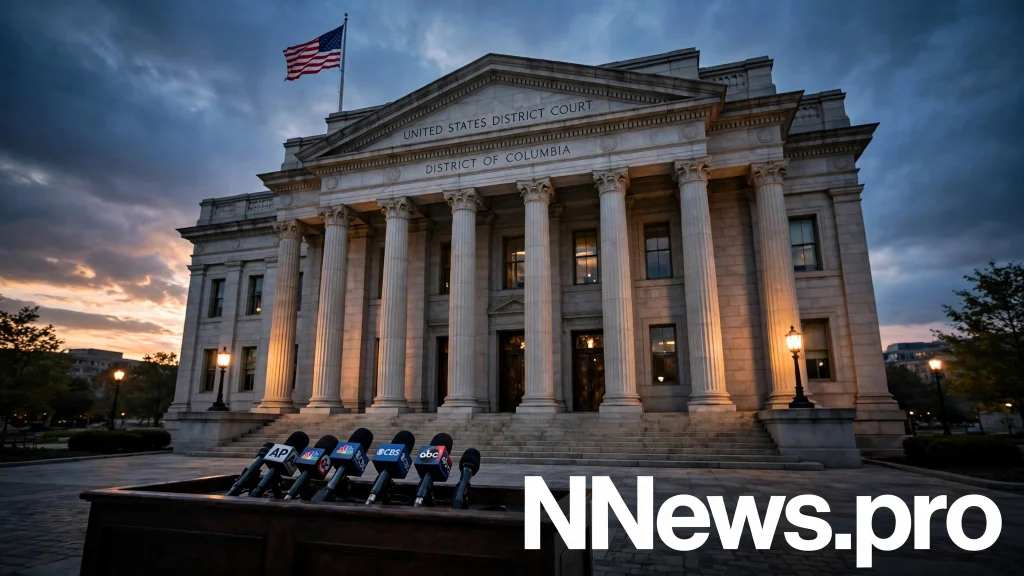
A unanimous federal appeals court ruled on Tuesday that Kari Lake, the Trump administration official who leads the U.S. Agency for Global Media, illegally fired the director of Voice of America, upholding a lower court order that has kept journalist Michael Abramowitz in his job for more than a year.
The three-judge panel of the U.S. Court of Appeals for the D.C. Circuit found that Lake was not authorized to remove Abramowitz without approval from the International Broadcasting Advisory Board, an independent body Congress created to shield the broadcaster’s leadership from political interference. The ruling is the latest in a series of court defeats for the administration’s effort to dismantle the international broadcaster.
Unanimous Panel Rejects the Administration’s Arguments
Writing for the panel, Judge Cornelia Pillard held that the law creating the independent board is “constitutionally valid,” rejecting the Justice Department’s claim that the requirement violates the president’s authority. Chief Judge Sri Srinivasan and Judge Florence Pan joined the opinion.
Pillard reasoned that President Donald Trump still retains control over Abramowitz, “albeit more indirectly than defendants would like,” because the president can fire members of the board at will. That indirect control, she wrote, is enough to satisfy the Constitution.
The court also rejected the government’s argument that Abramowitz’s challenge should have been sent to the Merit Systems Protection Board, the quasi-independent agency that handles federal employment disputes. Congress, the panel said, “gave no hint” that it wanted these kinds of claims routed through that system.
“The law creating the independent board is not a standard employment law, but a durable barrier against any breach of the firewall protecting the journalistic integrity of Voice of America and the affiliate networks,” Pillard wrote.
The decision upholds an August 2025 ruling by U.S. District Judge Royce Lamberth, a Ronald Reagan appointee, who issued a permanent injunction blocking Abramowitz’s removal. Lamberth had concluded that the requirements for firing the director “could not be clearer.” The appeals court had previously issued a temporary order barring the firing while the case was litigated, and Abramowitz has remained on administrative leave throughout.
How the Firing Unfolded
The dispute began in the summer of 2025, when officials at the U.S. Agency for Global Media, known as USAGM, ordered Abramowitz to accept a reassignment from Voice of America director to chief management officer in Greenville, North Carolina. When he declined, the agency sent him a letter on August 1 informing him that he had been removed.
Lake, then a senior adviser at USAGM, led the effort to remove him. Federal law requires approval from a majority of the International Broadcasting Advisory Board before the director of Voice of America can be removed. No such approval was obtained.
The firing came months after Trump signed a March 2025 executive order calling for the shutdown of USAGM and other agencies. In the weeks that followed, the agency placed about 1,300 Voice of America employees on indefinite leave and sharply reduced the broadcaster’s programming, part of a broader dismantling of the network that has drawn multiple lawsuits.
Congress created the board requirement after the chief executive of USAGM attempted to fire network leaders during the first Trump administration. The idea was to insulate the leadership of the government-funded broadcasters, which include Voice of America, Radio Free Europe/Radio Liberty and Radio Free Asia, from political retaliation.
Why This Matters
Voice of America was founded during World War II to broadcast uncensored news to audiences living under restrictive regimes, and it remains one of the largest international broadcasters funded by the United States. The ruling therefore reaches beyond one personnel dispute: it determines whether the White House can unilaterally remove the head of a news organization that Congress deliberately placed behind a legal firewall.
The decision also tests the limits of presidential power over independent agencies, an issue the courts have wrestled with repeatedly this year. In June, the Supreme Court allowed Federal Reserve Governor Lisa Cook to remain in her job while she fights the administration’s effort to fire her, but in a separate case the same day the court expanded the president’s power to remove other government officials. Tuesday’s ruling draws a line in a different direction, holding that Congress may require an independent board’s approval before the head of a journalistic institution can be dismissed.
For Abramowitz, the ruling clears the legal path back to the job he has held since his bipartisan appointment more than two years ago. In an email after the decision, he said he was “gratified by this result” and looked forward “to getting back to the important work Voice of America does worldwide on behalf of the American people.”
Related Articles


“My lawyers and I are carefully studying the decision to determine next steps. But there is no longer any reason for the government to prevent me from doing the job for which I was legally installed on a bipartisan basis more than two years ago,” he said.
What Happens Next
The ruling does not automatically restore Abramowitz to his office. He remains on administrative leave, and his lawyers are reviewing the decision to determine their next steps. The government has not said whether it will ask for further review, either from the full D.C. Circuit or from the Supreme Court.
One practical complication is the board itself. The International Broadcasting Advisory Board has lacked a quorum since January 2025, according to Politico, which means the body whose approval the law requires cannot currently act. That leaves the administration without a lawful route to remove Abramowitz, but also leaves questions about the board’s future unresolved.
The case is one of several lawsuits challenging the dismantling of Voice of America and USAGM. In a separate ruling in March of this year, Judge Lamberth found that Lake illegally served as head of USAGM while overseeing the agency’s dissolution. Other cases challenging workforce reductions and the suspension of programming are still pending.
The administration’s position that the war with Iran is effectively over has drawn similar questions about executive authority in recent weeks, and the Supreme Court’s recent border-wall ruling showed the justices are willing to let the administration move quickly on some fronts while restraining it on others. The VOA case adds a significant data point on the restraining side.
The case is Michael Abramowitz v. Kari Lake, D.C. Cir., No. 25-05314, decided November 10, 2026.
Frequently Asked Questions
Can Kari Lake still fire Michael Abramowitz?
No, not without approval from a majority of the International Broadcasting Advisory Board. The D.C. Circuit upheld a permanent injunction that blocks his removal unless the board approves it, and the court ruled the board requirement is constitutional.
Does the ruling mean Abramowitz returns to work immediately?
Not automatically. He remains on administrative leave while he and his lawyers study the decision and decide their next steps. The ruling removes the legal basis for his firing, but his return to the office will depend on further legal and administrative action.
What happens next in the case?
The government has not said whether it will seek further review, either an en banc rehearing before the full D.C. Circuit or an appeal to the Supreme Court. Separate lawsuits challenging the broader dismantling of Voice of America are still working their way through the courts.
Why did Congress require board approval to fire the VOA director?
Congress added the requirement after the head of the U.S. Agency for Global Media tried to fire network leaders during the first Trump administration. The board was designed as a firewall to protect the journalistic independence of Voice of America and the other government-funded broadcasters from political interference.
The ruling leaves the Trump administration with a choice: accept that it cannot remove the Voice of America director on its own, or ask a higher court to overturn a unanimous appeals panel. Either way, the decision is a significant legal setback for the effort to dismantle the broadcaster, and it keeps alive the question of whether Voice of America will return to full operation.
Sources
- Bloomberg Law — “Trump Official Can’t Fire Voice of America Head, Court Says” (Nov. 10, 2026): https://news.bloomberglaw.com/us-law-week/trump-official-cant-fire-voice-of-america-head-us-court-says
- Law Commentary — “Appeals Court Rules Kari Lake Illegally Fired Voice of America Director” (Nov. 10, 2026): https://www.lawcommentary.com/articles/kari-lake-illegally-fired-voice-of-america-director
- The Washington Post, via RAMP — “Appeals Court: VOA Director Fired Illegally” (Nov. 10, 2026): https://ramp247.com/programming/appeals-court-voa-director-fired-illegally/
- Politico — D.C. Circuit upholds order restoring Michael Abramowitz as Voice of America director (Nov. 10, 2026)