No, the Pentagon Has Not Warned of a 90-Day Blackout — What Its FORTRESS Plan Actually Says
Searches for a “Pentagon warning” surged across the United States on Saturday, driven by viral posts claiming the military has warned Americans to prepare for a power grid failure lasting 90 days. The claim is false. No federal agency, utility, or grid operator has announced a 90-day blackout for American homes, and no start date exists. What the Pentagon actually announced is a plan to make its own military bases self-sufficient — and the 90-day figure comes from reporting on documents that have not been made public.
What FORTRESS actually is
Defense Secretary Pete Hegseth announced the initiative, called FORTRESS — short for Federal Operations for Resilience, Troop Resources, Energy, Supply and Survivability — in his “State of the Force” address on September 30, 2026. The program is designed to reduce the military’s dependence on vulnerable civilian power grids and other outside infrastructure.
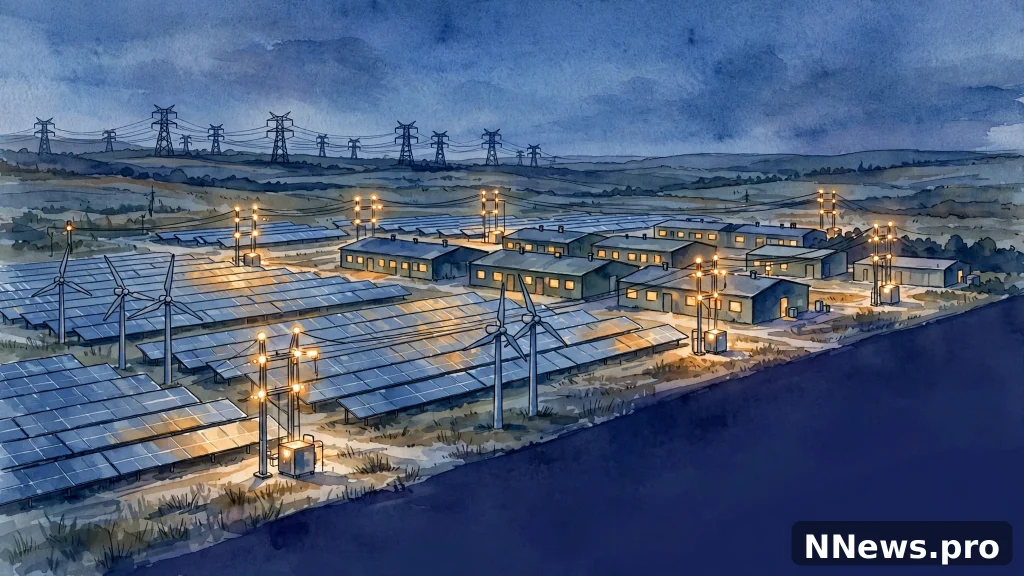
A Pentagon news story about the program, published October 29, says FORTRESS installations “will be designed to rely on their own infrastructure for 30 days, completely detached from external utilities in case the surrounding civilian grid collapses.” That is a worst-case planning target for bases, the way a hospital plans for losing power. It is not a forecast that the grid will fail, and the story gives no warning or advice for the public.
Hegseth’s September 30 memo ordered the Pentagon’s acquisition chief to stand up a FORTRESS America Program Office within 30 days, and an October 6 directive began that process. Neither document mentions 90 days, according to reporting on them.
Where the 90 days comes from
The 90-day figure traces to a Fox News Digital report published October 25, based on Pentagon documents the outlet says it reviewed. According to that report, every major military installation in the continental United States would be expected to sustain essential operations independently for at least 90 days — covering electricity, water, fuel, and communications — using portable nuclear reactors, large-scale battery storage, and microgrids that can disconnect a base from the civilian grid.
Pentagon chief spokesperson Sean Parnell told Fox News Digital: “We don’t want to rely on standard civilian municipal infrastructure to run our national defense.” He added: “Power is combat now. Without electricity, you lose communications, water, logistics, assembly lines and just basic military command structures.”
But the documents Fox reviewed have not been made public, and the 90-day figure does not appear in the Pentagon’s public announcements. At a conference in Tampa in late October, Dale Marks, the assistant secretary for energy, installations and environment, described the energy goal as powering bases for “30, 60, or even 90 days without a single watt of outside power,” and said the Pentagon is mandating “a 90-day sovereign stockpile of critical parts, fuels, propellants, ammunitions on site.” For power, he gave a range — not a single figure — and the stockpile figure refers to supplies stored on bases, not to civilian homes.
Reports also disagree over whether the Pentagon has confirmed the 90-day requirement at all. The Epoch Times described Parnell as having confirmed it in a social media post sharing the Fox article. Snopes, examining the same post, said it “does not explicitly confirm the 90-day operating requirement,” noting the quoted words do not mention 90 days. Hegseth has not said how long the goal would take to achieve, and Air & Space Forces Magazine reported it could take decades.
The idea of self-sufficient bases is not new. In 2017, the Army said its installations should be able to provide necessary energy and water for a minimum of 14 days. Parts of the plan are already moving: on August 26, the Army announced awards of up to a combined $2.2 billion for companies to own, build, and operate nuclear microreactors at five bases — Fort Bragg, Fort Campbell, Fort Hood, Fort Benning, and Fort Drum — aiming for the first reactor to operate on a base by September 2028.
The viral videos are fake
The claim spread further through videos shared on Facebook and Instagram since early November that appear to show President Donald Trump announcing that the country’s power grid will be down for 90 days. Snopes rated the videos Fake on November 10. It found that artificial intelligence had been used to alter Trump’s mouth movements and audio, and wrote: “The president never made any such announcement about an upcoming 90-day blackout.”
Snopes traced one clip, posted November 6 under the text “TRUMP CONFIRMS NO POWER FOR 90 DAYS,” to a real November 2 appearance at the Lincoln Memorial Reflecting Pool, where Trump was criticizing Democratic candidates before the midterm elections. Another clip came from November 7 remarks about Russia, Ukraine, and Iran. The clips promote crypto tokens, and Snopes said the accounts sharing them appear to be part of a coordinated effort. It also found AI-altered clips of Elon Musk, Taylor Swift, and Warren Buffett pushing the same rumor and offer.
In a December 2024 alert, the FBI warned that criminals use AI-generated videos of public figures “to bolster their fraud schemes,” and advised people not to send money, gift cards, cryptocurrency, or other assets to people they do not know or have met only online or over the phone.
What a retired general is actually warning about
A separate spark for the trend was an opinion piece published November 13 in The Hill by retired Lt. Gen. Russel L. Honoré, a former commander of the US First Army who led recovery efforts after Hurricane Katrina. Honoré wrote that the Pentagon has advised military bases to plan to operate off the grid for up to 90 days, but that America’s civilian leaders have been left out of the loop.
Related Articles



“It is no secret that we are in a war with Iran. Iran is not a backwater. It has been a pariah state for decades, but it does have the technical abilities and know-how to launch a cyberattack. Whether there is a specific threat that has raised concerns within the Department of Defense, or Secretary Pete Hegseth has just learned of his adversaries’ capabilities, we don’t know,” Honoré wrote.
He argued that if American civilians are at risk, they have a right to know, and that governors and mayors must be brought into planning. He also warned that three months without power “would mean far worse than the temporary loss of creature comforts,” including no heating and refrigeration and disruptions to food, water, and fuel supplies. His advice to households remained consistent with official guidance: several days of nonperishable food, multiple gallons of water for each family member for every anticipated day of disruption, batteries, filled prescriptions, and a battery-operated or hand-cranked radio.
Honoré’s piece is an opinion, not evidence of a civilian threat. It does not claim a blackout is coming, and it does not give a date. It argues that civilian leaders should be included in the Pentagon’s planning — a different claim from the viral warning that a 90-day blackout has been announced.
Why it matters
The distinction matters because people are acting on the false version. Fact-checkers tracking the rumor report that some consumers have begun buying supplies in response to the viral posts. Nothing in the Pentagon’s plan changes official advice for households: Ready.gov says families should be able to survive on their own for several days after an emergency, and the CDC recommends storing at least one gallon of water per person per day for three days — and a two-week supply if possible.
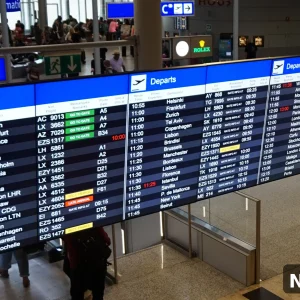
Hegseth has faced political pressure at home this month: the House blocked an effort to impeach him on November 10. The claim also spread in a week when Americans watched real infrastructure fail: the FAA halted all departures nationwide on Friday after a communications failure at air traffic control centers. Neither event is evidence of a coming 90-day blackout. The “pentagon warning” search trend remained active on Saturday, with more than 50,000 searches and interest up 1,000 percent over the past day, according to Google Trends. As of Saturday morning, the Pentagon’s news pages and the Energy Department’s newsroom had published no announcement of a blackout.
Frequently asked questions
Has the Pentagon warned of a 90-day blackout?
No. The Pentagon has not issued any warning of a 90-day blackout for civilians. The 90-day figure comes from Fox News reporting on Pentagon documents about military bases, and from a Pentagon official describing a range of 30, 60, or even 90 days for bases to run without outside power.
What is the FORTRESS plan?
FORTRESS is a Pentagon initiative announced September 30, 2026, to make military installations self-sufficient — able to run on their own power, water, fuel, and communications if civilian infrastructure fails. It covers bases, not homes, and its public materials describe a 30-day design target, not a 90-day civilian warning.
Are the videos of Trump announcing a blackout real?
No. Snopes rated them Fake on November 10, finding they were created with artificial intelligence by altering Trump’s mouth movements and audio. Trump never made such an announcement, and the clips appear designed to promote crypto tokens.
What should households actually do?
Official guidance is unchanged: keep supplies for several days, including food, water, batteries, and medications. The CDC recommends at least one gallon of water per person per day for three days, and a two-week supply if possible. There is no official advice to stockpile 90 days of supplies.
The bottom line is simple: the Pentagon is planning for its bases to survive without the grid. It has not told the public to expect the grid to fail. The 90-day number describes how long a base should be able to hold out — not how long your lights will be off.
Sources
- PreparedStates — 90-Day Blackout Warning 2026? Pentagon Plan Checked
- Orbit Prime News — What is the Pentagon’s 90-day blackout plan?
- Lt. Gen. Russel Honoré — Department of Defense’s 90-day warning signals possible attack
- Fox News Digital (October 25, 2026) — FORTRESS reporting, as cited by PreparedStates and Orbit Prime News
- Snopes (November 10, 2026) — AI Trump blackout videos rated Fake, as cited by PreparedStates
- The Hill — op-ed by Lt. Gen. Russel L. Honoré (November 13, 2026), as cited by Orbit Prime News and the author’s Substack
- US Department of War / Pentagon news story (October 29, 2026) — FORTRESS installations, as cited by PreparedStates
- Google Trends — “pentagon warning,” United States, November 14, 2026