European Leaders in Dublin Demand a Seat at Ukraine Peace Talks as Zelenskyy Is Briefed on Putin Meeting
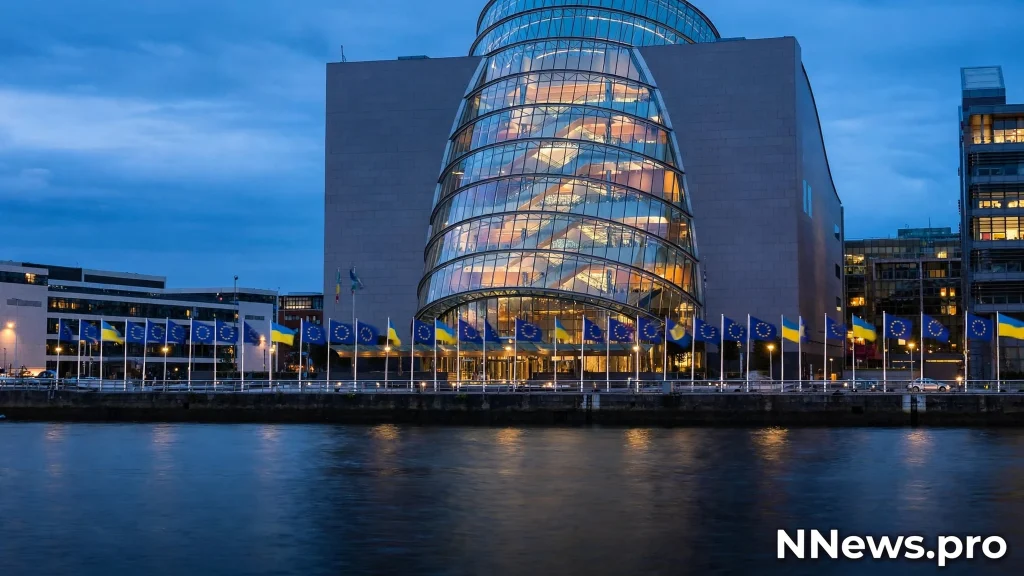
European leaders gathered in Dublin on Thursday threw their weight behind a declaration insisting that Ukraine’s future cannot be settled without Ukraine — and that Europe’s security cannot be negotiated without Europeans — as U.S. envoys flew in to brief President Volodymyr Zelenskyy on their meeting with Russian President Vladimir Putin.
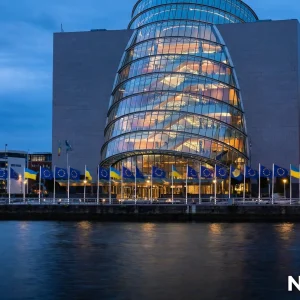
The draft European security declaration, discussed at the European Political Community summit in Dublin on November 12, was a direct answer to fears in European capitals that Washington and Moscow could reshape the continent’s security order over their heads. About 40 countries were expected to support its principles, although the final number of signatories had not been confirmed when Reuters reported on the text.
A declaration framed around participation
The Dublin draft sets out a simple premise: peace in Ukraine cannot be settled without Ukraine, and European security cannot be negotiated without European states. It also reaffirms the sovereign equality of states, the inviolability of borders, the right of countries to choose their security arrangements, human rights, democracy and the United Nations Charter.
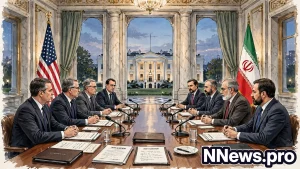
The document is not a peace treaty, a security guarantee or an agreement with Russia. It is a political statement of principles. But it comes at a sensitive moment: U.S. envoys Steve Witkoff and Jared Kushner held talks with Putin in Moscow on Thursday after U.S.-mediated discussions involving Russian and Ukrainian delegations in Abu Dhabi.
French President Emmanuel Macron said on arriving in Dublin that the declaration was important at a time when Europe risked being excluded from discussions about its own security and stability. The proposed text also supports later discussions on risk-management and risk-reduction mechanisms once conditions for peace have been restored.
The formulation does not spell out military commitments. It does not define a future force for Ukraine, establish a ceasefire line or specify the status of territories occupied by Russia. Its significance lies in putting a common European position into writing while parallel talks continue between Washington, Moscow and Kyiv.
The Moscow meeting and the Dublin debrief
Witkoff said progress was made in Moscow, telling CNN at Vnukovo Airport before departing: “People didn’t think that we were going to restart trilateral. We’ve restarted it. We’ve set a new meeting.” No date or venue for the next round was given.
Kushner said one aim in Moscow was to obtain Putin’s agreement to include European representatives in the process, which is moving toward the continent’s wider security arrangements. Witkoff said a European representative would be present at the next stage. Kremlin aide Yuri Ushakov called the Moscow talks constructive and said Putin will continue discussions with President Donald Trump at the APEC summit in China later this month. Ushakov also said Europe’s current approach would prolong the conflict, according to Reuters.
After the Moscow meeting, Witkoff and Kushner flew to Dublin, where they briefed Zelenskyy on Thursday evening. In a briefing in Dublin that evening, Zelenskyy said the trilateral format had been unblocked, according to Ukrainian media reports of his remarks, calling that step very important because it gave hope the war could be ended. He added that after the meeting there would be another, and that each meeting must produce results and bring peace closer.
Zelenskyy also told European leaders in Dublin that Russia had refused to discuss de-escalation and intended to keep striking energy infrastructure, and he said Europe must have a regular place at the negotiating table. He has described the moment as a “window of opportunity” and said a result could come by the beginning of 2027. Trump told a press conference on Monday that he sees “a very strong inclination” to end the war.
What happened in Abu Dhabi
The Dublin summit followed two days of U.S.-mediated talks in Abu Dhabi, the first direct negotiations involving Russian and Ukrainian officials in nine months. The Associated Press reported that the talks ended without a breakthrough, while the one concrete result was an agreement to exchange prisoners.
Zelenskyy said negotiators had discussed exchanging 1,000 prisoners from each side, or possibly 1,500. Kushner described the planned exchange as the biggest of the war. There was no ceasefire, no agreement on territory and no new European security framework.
Reuters reported that Russia controls about one-fifth of Ukraine. Kyiv has rejected Russian demands to cede the remaining parts of the Donbas that Moscow does not occupy. Moscow, for its part, has maintained that a settlement must address what it calls its security concerns, including NATO’s military posture.
Why this matters
The Dublin declaration matters because it tests whether the U.S.-led process will stay a three-way conversation between Washington, Moscow and Kyiv, or widen into the broader negotiation European governments say the continent’s future requires. Witkoff’s statement that Europeans could take part in the next meeting offered a possible opening after weeks in which European governments argued that they could not be excluded from negotiations about the continent’s postwar security architecture. But the Kremlin’s public position has been more guarded, and Russian officials did not immediately confirm the arrangement.
Irish Prime Minister Micheál Martin, who hosted the summit, said there can be no progress in reaching a peace agreement without European input, adding: “We are now potentially in a process on negotiations.” He said the European Union had “put down a very clear marker” on the security of the continent’s response to Russia’s war.
Related Articles
For Ukraine, the diplomacy has immediate military consequences. Zelenskyy said Starshield restrictions had disrupted operations across the front line, Reuters reported. SpaceX declined to comment. Russia has continued attacks on Ukrainian infrastructure and cities, while Ukraine has carried out strikes in Russia. In Dublin, the policy debate concerned the terms of a durable peace, but there was no announced ceasefire and no agreement on territorial issues.
Latest developments
European governments have made commitments to Ukraine outside the Dublin declaration. The European Union is preparing a 22nd sanctions package against Russia, alongside a proposal on Ukraine’s 2027 financing needs, to be presented before the European Council meets in Brussels on November 26-27. The United Kingdom announced new levies on Russia’s 10 largest oil producers, a measure Prime Minister Andy Burnham described as intended to squeeze Russian oil revenues.
The European Union’s Council extended the mandate of its military-assistance mission for Ukraine through November 15, 2028, with a budget of nearly 300 million euros for the extension. The mission trains Ukrainian personnel and is separate from any potential postwar security force. The British government says it has also announced 107 million pounds in energy support for Ukraine since September 2025 for repairs, replacement power generation and protective measures. The European Union has separately agreed to provide a 90 billion euro loan to Ukraine for 2026 and 2027.
Zelenskyy met European Council President António Costa and European Commission President Ursula von der Leyen in Dublin on November 12. The European Council said the leaders issued a joint statement after their meeting.
The European Political Community was created in 2022 after Russia’s full-scale invasion of Ukraine. It brings together EU member states and a wider group of European countries for political and strategic discussions. The Dublin meeting was the ninth summit and brought together more than 40 leaders, including Zelenskyy, NATO Secretary General Mark Rutte, British Prime Minister Andy Burnham and Canadian Prime Minister Mark Carney. The Irish government described it as the largest gathering of international leaders ever held in Ireland. Its agenda also included economic security, hybrid threats and connectivity.
What happens next
The next formal European event is an informal meeting of EU heads of state and government in Dublin on November 13. The European Council says leaders will discuss artificial intelligence, Ukraine, the peace talks and Europe’s role in diplomatic efforts, including the need for a coherent EU position.
For now, the concrete outcome of the Dublin initiative is a draft statement intended to put European and Ukrainian participation at the center of future security discussions. Whether that principle becomes part of a negotiating process depends on the next round of talks, for which European participation has been announced by the U.S. envoy but not yet confirmed in a joint statement by all parties.
Frequently Asked Questions
What is the Dublin declaration on Ukraine?
It is a draft European security declaration discussed at the European Political Community summit in Dublin on November 12. It states that Ukraine’s path to peace must be decided with Ukraine and that matters affecting Europe’s security must be decided with Europeans. It is a political statement of principles, not a peace treaty or a security guarantee.
Will Europeans join the next round of Ukraine peace talks?
U.S. envoy Steve Witkoff said after his Moscow meeting that a European representative would be present at the next stage, and Jared Kushner said securing Putin’s agreement for a European role was one aim of the Moscow talks. Russian officials did not immediately confirm the arrangement, and no date or venue for the next round has been announced.
What did the Abu Dhabi talks achieve?
The two days of U.S.-mediated talks between Russian and Ukrainian delegations ended on November 11 with an agreement in principle on a large-scale prisoner exchange, which Kushner called the biggest of the war. There was no ceasefire and no agreement on territory or security guarantees.
What did Zelenskyy say after being briefed in Dublin?
At a briefing in Dublin on Thursday evening, Zelenskyy said the trilateral negotiation format had been unblocked, according to Ukrainian media reports of his remarks. He also told European leaders that Russia had refused to discuss de-escalation and intended to keep striking energy infrastructure, and that Europe must have a regular place at the negotiating table.
European leaders leave Dublin with their position written down and a promise from Washington that they will be in the room next time. Whether Moscow accepts that widened table will decide whether the Dublin declaration becomes the framework for a settlement — or another statement the war outlasts.
Sources: Reuters (via Bytes Europe); PA Media (via The Oldham Times); The Private Banker (sourcing Time, CBC and Bloomberg); ANI (via Indian Economic Observer); The Curtain.