Witkoff Says ‘Progress Was Made’ in Putin Talks as US Sets New Ukraine Meeting With Europe at the Table
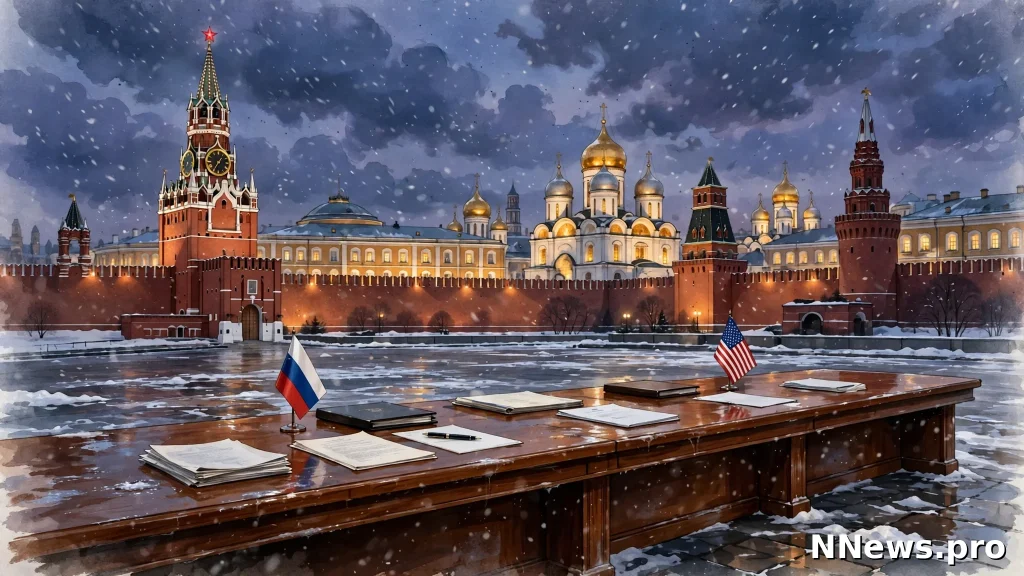
US envoy Steve Witkoff said “progress was made” in talks with Russian President Vladimir Putin in Moscow on Thursday, announcing that the stalled Ukraine peace process has been restarted, a new round of negotiations has been scheduled, and European allies will join the next round of talks.
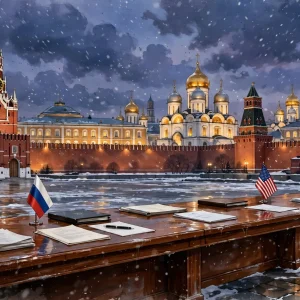
Witkoff and Jared Kushner, President Donald Trump’s son-in-law, met Putin at the Kremlin after arriving in Moscow on Thursday, carrying the unresolved questions from two days of talks in Abu Dhabi into the Russian capital. After the meeting, the two Americans flew on to Dublin to brief Ukrainian President Volodymyr Zelenskyy, who was attending a summit of more than 40 European leaders.
“We’ve Restarted It”
Speaking to reporters at Moscow’s Vnukovo Airport before departing, Witkoff sounded upbeat about the outcome. “I think progress was made. I think it was made earlier today,” he told CNN’s Frederik Pleitgen. “People didn’t think that we were going to restart trilateral. We’ve restarted it. We’ve set a new meeting.”
Witkoff confirmed that European representatives would take part in the next round of negotiations, a significant change from the talks so far, which have been conducted between the United States, Russia and Ukraine alone. The envoys’ account of the meeting also described the discussion as “very fulsome and detailed.”
The Kremlin meeting lasted about two hours, according to the Associated Press. Russian state media put the duration at about two and a half hours. It was the 10th time Witkoff has met Putin in person.
Europe’s Place at the Table
One of the main goals of the Moscow visit was to secure Putin’s blessing for European participation in the talks, which are also looking at the continent’s broader security arrangements. Kushner said the United States and Zelenskyy want Europe to appoint a single person to negotiate with Moscow.
Russia, meanwhile, does not want European countries involved in the direct negotiations, complaining that they are financing and supplying Ukraine’s military effort. The Europeans, for their part, are concerned about Russia’s conduct and broader intentions on the continent, and many in Europe see the inclusion of Moscow in discussions about postwar European security as an unwelcome concession.
Kushner said the Russian and Ukrainian delegations in Abu Dhabi “agreed on many of the principles, but are still apart on some of the way to accomplish” peace. He also said it would be “great” for Zelenskyy and Putin to meet in person, while acknowledging that Russia wants to see more progress before such a meeting happens.
Putin Draws a Red Line on European Troops
Despite the talk of progress, Putin used the meeting to restate one of Moscow’s hardest red lines. He told the US envoys that any European troops sent to Ukraine after a ceasefire would be “absolutely unacceptable” and that Russia would regard such a deployment as a security threat and legitimate targets.
“In other words, the war would resume immediately,” Putin said, according to the Associated Press account of his remarks.
Putin also said Russia regards its border with Ukraine as sealed by a prospective peace deal extending to cover the four Ukrainian regions Moscow annexed in 2022 but never fully controlled — a demand Kyiv has repeatedly rejected.
What Came Out of Abu Dhabi
The Moscow meeting followed two days of US-mediated talks in Abu Dhabi between Russian and Ukrainian delegations, the first direct discussions between the two sides in nine months. Those talks ended Wednesday with no major breakthrough on ending the war, aside from an agreement to swap a large number of prisoners, with the exact figure still to be announced.
Zelenskyy said Kyiv was awaiting a response from Moscow on an exchange involving either 1,000 or 1,500 prisoners from each side, which would make it the largest prisoner exchange of the war. Kushner described the Abu Dhabi discussions as “very substantive,” even if “pretty tough,” and acknowledged there is “no trust between the sides.”
Zelenskyy Sees a “Window of Opportunity”
Zelenskyy is in Dublin for the European Political Community summit, which also includes NATO Secretary-General Mark Rutte. Rutte said the United States, Europe and Ukraine are “very much aligned” on what security guarantees should look like. “But now of course we need the peace deal, or at least a ceasefire,” he said.
Related Articles
Zelenskyy said political changes, including Democrats taking over the US Congress in January following the midterm elections and balloting in France next year, could bring “a window of opportunity” for a peace deal. “The political landscape in Europe could change in 2027. … We also see changes already taking place in the United States,” he said in Dublin late Wednesday.
He called the proposed prisoner exchange a positive step but insisted Ukraine will not surrender Russian-occupied territory in return for peace.
Fighting Continues as Winter Approaches
Amid the diplomacy, the fighting has not paused along the roughly 1,200-kilometer (750-mile) front line. Russia’s Defense Ministry said its air defenses downed 71 Ukrainian drones overnight, while the Ukrainian air force said Russia launched missiles and 123 drones, 73 of them jet-powered, with hits recorded at 17 locations.
Zelenskyy also said Thursday that Ukraine is again experiencing Starshield speed restrictions — limits on the military-grade version of SpaceX’s Starlink service that Ukraine relies on to intercept Russian drones. Military units have recorded “significant disruptions,” including speed limits holding interceptor drones to 161 kph (100 mph), and a military investigation established that the restrictions were not random errors.
In a separate development, a Russian serviceman was killed in St. Petersburg early Thursday when his vehicle exploded, according to Russia’s Investigative Committee. The Fontanka news outlet said the victim was a colonel and that a bomb in his car exploded as he drove off. Several senior Russian military officers have been killed by bombings that Moscow blames on Ukraine.
Why This Matters
The Moscow meeting is the clearest sign yet that the Trump administration’s renewed push for a Ukraine settlement is gaining traction after months of stalemate. Restarting the trilateral format, setting a new meeting and bringing Europe into the process all point to a diplomatic effort that is moving again — even if the core disagreements over territory, security guarantees and the role of European troops remain unresolved.
For Ukraine, the test is whether the progress Witkoff described produces concrete proposals when the envoys brief Zelenskyy in Dublin. For Europe, the question is whether a single negotiator can be agreed and whether its seat at the table comes with real influence over the outcome.
Latest Developments
Witkoff and Kushner were expected to meet Zelenskyy in Dublin later on Thursday after the European Political Community summit. No date or venue has been announced for the next round of trilateral talks, and no final figure has been confirmed for the prisoner exchange agreed in Abu Dhabi.
Frequently Asked Questions
What did Witkoff announce after meeting Putin?
Witkoff said “progress was made” in the Moscow talks, that the trilateral peace process has been restarted, that a new meeting has been set, and that European representatives will join the next round of negotiations.
What was agreed in the Abu Dhabi talks?
The two days of talks between Russian and Ukrainian delegations, the first direct discussions in nine months, produced no breakthrough on ending the war but did agree a large-scale prisoner exchange, with the exact number still to be announced.
Why does Europe want a seat at the talks?
European leaders want a role in negotiations that will shape the continent’s security, including any security guarantees for Ukraine and the terms of a postwar settlement. The United States and Zelenskyy want Europe to appoint a single person to negotiate with Moscow.
What is Putin’s position on European troops in Ukraine?
Putin told the US envoys that any European troops sent to Ukraine after a ceasefire would be “absolutely unacceptable” and that Russia would treat them as legitimate targets, warning that “the war would resume immediately.”
What to Watch Next
The Dublin debrief with Zelenskyy will be the next test of whether the Moscow meeting produced anything concrete. Watch for the date and venue of the next trilateral round, the final prisoner-exchange figure, and whether Europe agrees on a single negotiator — as well as whether the fighting eases as winter sets in.
Sources: Associated Press (via EuropeSays); CNN reporting of Witkoff’s remarks at Vnukovo Airport (via summary); The Guardian live blog (via Bytes Europe).